Search News
Industry Portal
Popular Tags
Industrial Intelligence Solutions for Safer Process Control
Author
Time
Click Count
For quality and safety leaders, safer process control depends on more than isolated alarms or manual checks. Industrial intelligence solutions connect material performance data, automation signals, and operational benchmarks to help detect risk earlier, reduce variability, and support faster decisions across complex production environments. This article explores how intelligent, data-driven systems strengthen control, compliance, and resilience in modern industry.
What are industrial intelligence solutions, and why are they becoming central to safer process control?
Industrial intelligence solutions are integrated systems that turn raw operational data into practical guidance for production, quality, and safety decisions. In a modern plant, that data may come from sensors, PLCs, SCADA platforms, laboratory systems, inspection tools, maintenance records, material specifications, and supplier performance databases. Instead of treating each stream as a separate source, industrial intelligence solutions combine them into a unified decision layer that helps teams understand what is happening, why it is happening, and what should happen next.
For process control, the value is clear. Traditional safety approaches often rely on fixed thresholds, manual inspection rounds, and post-event investigation. Those methods still matter, but they are not enough in high-speed, interconnected production environments where small deviations in temperature, pressure, viscosity, feedstock consistency, or machine response can escalate quickly. Industrial intelligence solutions improve visibility by identifying patterns across multiple variables, which helps quality control personnel and safety managers recognize hidden instability before it becomes scrap, downtime, contamination, or an incident.
This is one reason why large industrial ecosystems increasingly treat intelligence platforms as part of operational infrastructure rather than optional analytics. For organizations such as G-AIE, which focus on technical benchmarking and the convergence of material science with intelligent automation, the importance is even greater. Safer process control now depends on connecting the physical behavior of materials with the digital behavior of production systems. When that connection is weak, risk remains fragmented. When it is strong, decisions become faster, more consistent, and easier to defend during audits or incident reviews.
Which risks can industrial intelligence solutions help quality and safety teams detect earlier?
The strongest industrial intelligence solutions do not just monitor obvious alarms. They help detect early-stage risk signals that are often missed because they sit between departments or systems. In many facilities, quality teams monitor product conformity, maintenance teams track equipment health, and safety teams review critical process variables. Risk, however, often forms where those domains overlap.
Examples include a gradual shift in raw material properties that changes mixing behavior, an increase in vibration that affects dimensional precision, or repeated operator overrides that indicate poor process stability. Each signal alone may seem manageable. Together, they may point to a deeper control weakness. Industrial intelligence solutions make these relationships visible through contextual analytics, trend correlation, benchmark comparison, and exception prioritization.
For safety managers, this means earlier warning of process drift, near-miss precursors, unsafe operating windows, and recurring deviations that can undermine permit compliance or emergency preparedness. For quality control professionals, it means faster detection of variance sources, more accurate root-cause analysis, and better containment before defects spread across multiple batches or lines. In both cases, industrial intelligence solutions reduce dependence on reactive firefighting.
A practical way to think about it is this: safer process control is rarely threatened by one dramatic failure alone. It is more often weakened by a series of small mismatches between material input, machine behavior, operator action, and expected output. An intelligence-driven environment catches those mismatches earlier and turns them into actionable signals.
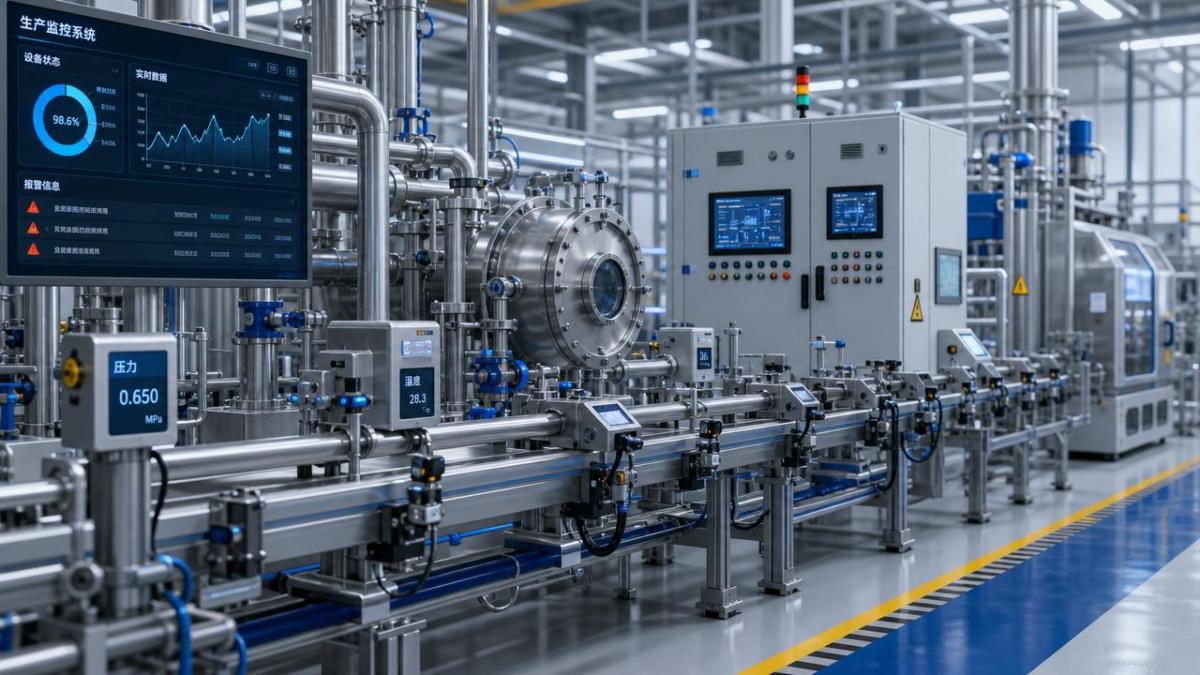
Where do industrial intelligence solutions deliver the most value across complex industrial environments?
Industrial intelligence solutions are especially valuable in environments where process stability depends on many interacting variables. This includes chemical processing, advanced materials manufacturing, electronics assembly, metal treatment, packaging, food processing, pharmaceuticals, energy systems, and other multi-stage industrial operations. The common factor is not one specific industry, but the operational challenge of maintaining safety and quality under changing conditions.
They are particularly useful when an organization faces one or more of the following conditions: frequent changeovers, variable raw materials, strict traceability requirements, globally distributed supply chains, aging assets, multi-site production, or pressure to reduce waste without increasing risk. In these settings, isolated dashboards do not provide enough clarity. Teams need a more intelligent model of operations that can compare expected performance with actual behavior in real time.
For procurement leaders and industrial developers, industrial intelligence solutions also support benchmarking. They help determine whether recurring issues come from equipment design, control logic, maintenance discipline, operator practice, or upstream material inconsistency. That matters because safer process control is not only about preventing incidents on the line. It is also about making better investment decisions across the broader industrial ecosystem.
From the perspective of G-AIE’s audience, this broader value is critical. When material science data and automation intelligence are connected, organizations can compare sites, suppliers, and production configurations more objectively. That improves resilience, especially when external disruptions force rapid changes in sourcing or operating conditions.
How can buyers and internal stakeholders evaluate industrial intelligence solutions without getting lost in technical claims?
Many vendors describe industrial intelligence solutions in broad terms such as AI, predictive analytics, digital transformation, or smart manufacturing. Those labels are not enough for a quality or safety decision. A more reliable evaluation starts with operational questions. Can the system integrate process, quality, and material data without heavy manual reconciliation? Can it detect multi-variable deviations, not just single-point alarms? Can it explain why a risk flag appears, so teams can trust and verify it? Can it support both real-time response and historical investigation?
Another key test is usability under pressure. Safer process control requires tools that frontline teams can actually use during abnormal conditions. If dashboards are overloaded, if alerts are poorly prioritized, or if recommendations are too abstract, the intelligence layer may add complexity rather than reduce risk. Good industrial intelligence solutions present the right context at the right time, with clear escalation logic and traceable evidence.
Buyers should also look closely at governance. Data quality, access control, model validation, and version management are not side issues. They determine whether the system can support regulated operations and cross-functional trust. A platform that predicts anomalies but cannot document model inputs, thresholds, or workflow actions may struggle in audit-heavy environments.
What are the most common mistakes companies make when adopting industrial intelligence solutions?
One common mistake is treating industrial intelligence solutions as a software purchase instead of an operational redesign effort. If a company installs new analytics without aligning process ownership, alarm philosophy, data governance, and escalation procedures, the result is often underuse. The platform may produce insights, but no one is accountable for converting them into action.
Another mistake is aiming first for maximum sophistication rather than immediate control improvement. Many organizations talk about advanced AI before they have stabilized sensor quality, naming conventions, event classification, or shift handover documentation. In practice, safer process control improves most when the first phase focuses on visibility, consistency, and trust. Advanced modeling should build on that foundation, not replace it.
A third mistake is ignoring material variability. In industries where feedstock properties change by source, lot, season, or supplier, process intelligence that focuses only on machine parameters can be incomplete. Industrial intelligence solutions should connect material science benchmarks with automation data, especially in operations where product quality and process safety are tightly linked.
Companies also underestimate change management. Quality and safety personnel need to know how alerts are generated, which indicators matter most, and when human judgment overrides automated recommendations. The goal is not to replace expertise. It is to strengthen expert decision-making with faster evidence and clearer context.
How long does implementation take, and what should teams prioritize first?
Implementation timelines vary based on site complexity, system maturity, data accessibility, and governance discipline. A focused pilot may begin delivering useful results within a few months, especially when it targets a known control problem such as recurring batch variation, unplanned shutdowns, or frequent out-of-spec events. A broader enterprise rollout, however, often takes longer because it involves cross-site harmonization, integration with legacy systems, and alignment between operations, EHS, IT, and procurement.
The best starting point is usually a high-value, measurable use case. For example, a team may target early detection of process drift in a critical production step, correlation between material inputs and defect rates, or predictive identification of unsafe operating conditions. This creates a clear baseline and helps prove whether industrial intelligence solutions can generate action, not just analysis.
Teams should prioritize five areas first: data reliability, variable selection, workflow integration, alert governance, and success metrics. Data reliability ensures signals are credible. Variable selection keeps the model tied to process reality. Workflow integration makes sure insights reach operators and supervisors in time. Alert governance prevents noise. Success metrics, such as reduced deviation frequency, faster root-cause closure, lower scrap, or improved compliance response time, demonstrate business value.
For many organizations, the quickest wins come not from building a fully autonomous system, but from improving decision speed in recurring risk scenarios. That is where industrial intelligence solutions often prove their value first.
How should quality and safety leaders decide whether an industrial intelligence solution is truly worth investing in?
The strongest investment case connects intelligence directly to control outcomes. Leaders should ask whether the current environment suffers from delayed risk detection, inconsistent investigations, limited traceability, repeated deviations, or poor coordination between departments. If those issues are frequent, then industrial intelligence solutions may offer a strong return by reducing loss events that traditional controls miss or address too late.
The decision should not rely only on promised efficiency gains. It should include the cost of unsafe drift, hidden quality loss, emergency maintenance, compliance exposure, and reputation damage. In complex industrial settings, one preventable process failure may justify a significant portion of the intelligence investment. At the same time, buyers should remain disciplined. The right solution is not necessarily the one with the most features, but the one that aligns with operating risk, data maturity, and cross-functional execution capacity.
For organizations working with global supply networks and advanced industrial ecosystems, the best industrial intelligence solutions also support benchmarking beyond a single line or site. They help compare suppliers, asset classes, process recipes, and operating models with greater technical confidence. That broader visibility supports resilience as much as safety.
What should you clarify before moving forward with a solution provider or internal project team?
Before moving ahead, quality and safety leaders should clarify several practical issues: which process risks matter most, which data sources are available and trustworthy, which users need real-time visibility, and how success will be measured after deployment. They should also define what level of explainability is required, how material variability will be represented, how alerts will be escalated, and how the system will support audits, investigations, and continuous improvement.
If procurement or partnership discussions are starting, useful questions include the expected implementation scope, integration requirements, validation approach, governance model, training plan, pilot timeline, and support structure after go-live. These points reveal whether a provider understands safer process control as an operational discipline rather than a generic technology sale.
In the end, industrial intelligence solutions create the most value when they connect high-performance assets, material behavior, and actionable digital insight into one trusted framework. If you need to confirm a specific solution direction, technical parameters, deployment cycle, evaluation criteria, or collaboration model, the best next step is to discuss your highest-risk process, your current data landscape, and the decision gaps that most affect quality and safety performance.
Recommended News
 Sep 19, 2026When can a supply chain LLM reduce time spent finding shipment updates?Supply chain LLMs can cut shipment-update search time by connecting carrier events, ERP data, and documents—giving teams traceable answers and faster exception response.
 Sep 18, 2026How industrial monitoring equipment helps prevent unplanned downtimeIndustrial monitoring equipment helps teams detect early asset issues, prioritize maintenance, and prevent costly unplanned downtime. Explore practical strategies for reliable operations.
 Sep 17, 2026What next-gen harmonic drive research means for robot joint accuracyNext-gen harmonic drive research reveals how backlash, stiffness, thermal drift, and sensing shape robot joint accuracy. Explore smarter validation strategies.
 Sep 16, 2026How Southeast Asian climates affect cylinder seal frictionCylinder seal friction Southeast Asia: learn how humidity, heat, monsoons, and contamination affect motion stability, wear, and seal selection.
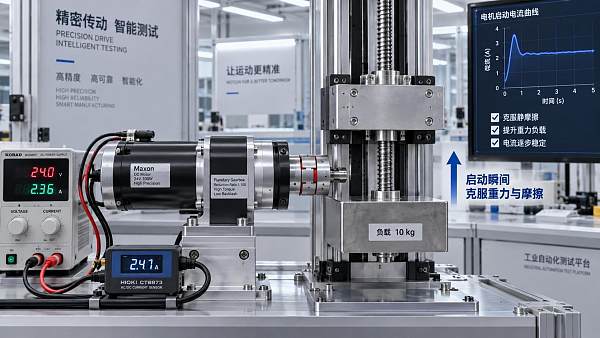
 Sep 15, 2026How to size DC gear motors for the required starting torqueGear motors DC sizing made practical: calculate starting torque, account for friction, gravity, inertia and voltage drop, then select a reliable motor with confidence.
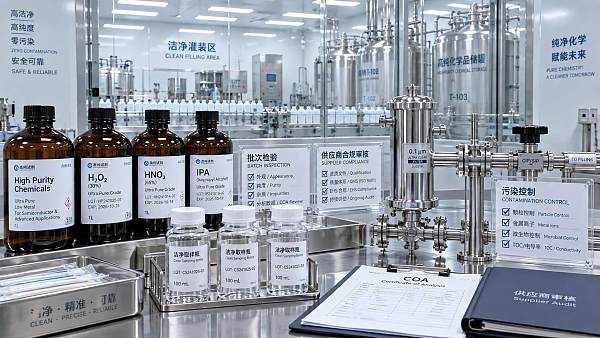
 Sep 14, 2026How to verify high purity chemicals compliance before supplier approvalHigh purity chemicals compliance: learn how to verify supplier quality systems, CoAs, traceability, testing, and change control before approval.
 Sep 13, 2026What permits are needed to operate mapping drones in Europe?Mapping drones Europe: discover the permits, EASA categories, airspace approvals, site access, and GDPR checks needed for compliant aerial surveys.
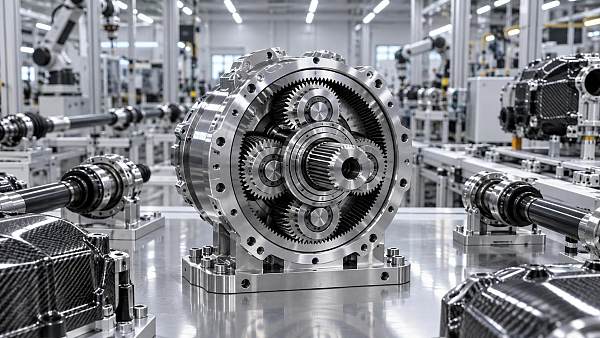
 Sep 12, 2026What lead time should I expect for automatic transmission components? Planetary Gearboxes delivery forecasting for OEM planningWhat lead time should I expect for automatic transmission components? Get dynamic, AI-powered planetary gearbox delivery forecasting—designed for OEMs building next-gen hybrid & commercial powertrains.
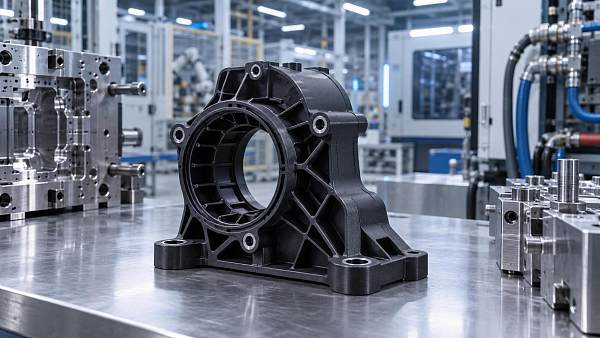
 Sep 12, 2026Can polyamide replace metal in load-bearing components? Polymer Pulse structural performance data for 2026 applicationsCan polyamide replace metal in load-bearing components? Discover Polymer Pulse’s 2026 structural data—real-world performance, weight savings, and reliability breakthroughs.
 Sep 12, 2026How to handle a power electronics warranty claim: Harmonic Reducers documentation and escalation pathHow do I handle a power electronics warranty claim? Get a fast, intelligent, evidence-driven resolution for harmonic reducers—no bureaucracy, just precision diagnostics and real-time escalation.
 Sep 12, 2026Which motion control specifications matter most before purchase? Torque Logic selection criteria for automation engineersWhich motion control specifications are most important before purchase? Discover Torque Logic—the 4 non-negotiable, AI-aligned criteria that cut TCO by 27–41% and boost motion system availability to 99.992%.
 Sep 13, 2026Is agentic AI reliable enough for supplier screening? Supply Chain LLM validation framework for procurement teamsIs agentic AI reliable enough for supplier screening? Discover a rigorous LLM validation framework built for procurement teams—grounded in material traceability, regulatory compliance, and real-world operational constraints.
 Sep 14, 2026How to maintain edge AI systems after deployment: Predictive Maint AI operational protocols for field techniciansHow do I maintain edge AI systems after deployment? Discover predictive, physics-aware operational protocols designed for real-world field technicians—sustaining intelligence where silicon meets steel.
 Sep 15, 2026What compliance documents must a bioplastics supplier provide? Bio-Plastics regulatory checklist for procurementWhat compliance documents should a bioplastics supplier provide? Get our actionable regulatory checklist for food, medical & EU-bound applications.
 Sep 16, 2026How to prevent PET film defects during production: Barrier Films process control best practicesHow can I prevent PET film defects during production? Discover physics-driven barrier film process control—thermal precision, dynamic tension management & surface energy optimization.
 Sep 17, 2026Are thermoplastics suitable for long-term outdoor use? Engineering Resins durability assessment in 2026 UV/weather exposureAre thermoplastics suitable for long-term outdoor use? Discover 2026’s engineering resin durability insights — UV/weather resistance ranked, tested & actionable.
 Sep 18, 2026What to do when a servo motor fails during production: A Servo Actuators troubleshooting guide for maintenance teamsWhat should I do if a servo motor fails during production? Get a field-tested, AI-aware troubleshooting guide for maintenance teams—minimize downtime, maximize OEE.
 Sep 12, 2026How to compare wholesale party supplies by minimum order valueCompare wholesale party supplies by minimum order value, freight, SKU flexibility, and stock risk to choose suppliers that protect margins and simplify replenishment.
 Sep 11, 2026How proportional solenoid linearity affects precision motion controlProportional solenoid linearity directly affects precision motion control, valve metering, stability, and calibration. Learn how to evaluate performance for reliable automation.
 Sep 10, 2026When does supplier information platform automation reduce onboarding delays?Supplier information platform automation reduces onboarding delays by streamlining data collection, routing, renewals, and compliance checks—without replacing expert technical review.
 Sep 09, 2026How to size robotic motion systems for AMR payload changesRobotic motion systems for AMR payload changes: learn how to size motors, wheels, gearing, traction, and controls for safer, reliable performance.
 Sep 08, 2026How to perform a cylinder rod buckling calculation for long strokesCylinder rod buckling calculation made practical: learn how to assess effective length, end conditions, rod stiffness, load forces, and safety margins for reliable long-stroke cylinder design.
 Sep 07, 2026How to estimate the cost of industrial mechanical components before orderingIndustrial mechanical components cost: learn how to estimate material, machining, tooling, inspection, logistics, and hidden expenses before ordering. Compare quotes confidently and reduce sourcing risk.
 Sep 07, 2026What Is a Product Standards Database Used For?Product standards database guide: learn how to compare requirements, verify revisions, control specifications, and reduce compliance risks across design, sourcing, and production.