Search News
Industry Portal
Popular Tags
WISE 2026 Adds Dedicated Anti-Drone Gear Zone in Shanghai

Author
Time
Click Count
On May 5, 2026, the Organizing Committee of the World Intelligent Systems Expo (WISE) announced the launch of a dedicated ‘Anti-Drone Gear’ exhibition zone at the Shanghai New International Expo Centre in September 2026 — marking the first time this category will be showcased independently. This development is particularly relevant for defense procurement agencies, security system integrators, and critical infrastructure protection providers globally.
Event Overview
On May 5, 2026, the WISE Organizing Committee confirmed the establishment of a standalone ‘Anti-Drone Gear’ exhibition zone at the 2026 World Intelligent Systems Expo (WISE), scheduled for September 2026 at the Shanghai New International Expo Centre. Thirty-two Chinese manufacturers have been confirmed as exhibitors, covering the full technical chain: detection, jamming, and drone capture systems. The event has been designated by the U.S. Department of Homeland Security (DHS) and the UAE General Civil Aviation Authority (GCAA) as an annual procurement observation activity. For overseas government buyers and security system integrators, the zone serves as a centralized venue to assess the compliance, interoperability, and cost-effectiveness of high-performance Chinese counter-drone equipment.
Industries Affected
Government Procurement Agencies (e.g., DHS, GCAA, national defense ministries)
These entities rely on standardized evaluation windows to vet emerging technologies against operational requirements and regulatory frameworks. The designation of WISE 2026 as an official procurement observation activity signals formal recognition of its utility in pre-qualification screening — potentially shortening internal assessment timelines for future tenders involving anti-drone systems.
Security System Integrators
Integrators deploying layered airspace security solutions for airports, power plants, or government facilities must verify compatibility between detection, command-and-control, and neutralization subsystems. With 32 Chinese vendors exhibiting across the full stack, the zone offers a rare opportunity to conduct side-by-side interoperability checks — especially where legacy systems require upgrades or modular expansion.
Export-Oriented Defense & Dual-Use Equipment Distributors
Distributors serving markets with evolving counter-UAS regulations (e.g., EU, ASEAN, GCC) face increasing demand for certified, field-tested solutions. The presence of DHS and GCAA observers adds third-party validation weight; however, actual procurement decisions remain subject to national certification processes — meaning distributors must distinguish between observation status and formal approval.
Critical Infrastructure Operators (Aviation, Energy, Public Venues)
Operators responsible for physical and airspace security are under growing pressure to mitigate unauthorized drone incursions. The zone provides access to end-to-end technical documentation, real-world deployment case summaries (where publicly shared), and direct vendor engagement — supporting risk-informed technology selection ahead of local regulatory deadlines.
What Relevant Enterprises or Practitioners Should Focus On
Monitor official procurement guidance from DHS and GCAA post-event
Neither DHS nor GCAA has issued formal procurement eligibility lists tied to WISE 2026. Analysis shows that inclusion in their observation programs reflects interest — not endorsement. Stakeholders should track any follow-up bulletins, test reports, or vendor evaluation summaries released by these agencies after September 2026.
Verify technical specifications against local regulatory thresholds
Anti-drone systems often involve RF jamming or kinetic interception — both tightly regulated. From industry perspective, it is essential to cross-check exhibited products’ frequency bands, effective range, and authorization scope against national licensing requirements (e.g., FCC Part 15/90 in the U.S., Ofcom IR 2030 in the UK). Compliance cannot be assumed from exhibition alone.
Distinguish between technical readiness and supply-chain readiness
While 32 Chinese vendors cover the full technical chain, delivery lead times, export license processing, and after-sales support localization remain variable. Observably, some exhibitors may offer only OEM modules — not turnkey systems. Buyers should request documented evidence of export compliance history, spare parts availability, and service-level agreements before engaging in commercial discussions.
Prepare for interoperability verification early
Given the multi-vendor, multi-layer nature of anti-drone deployments, stakeholders planning integration should identify interface standards (e.g., STANAG 4671, NATO AEP-74) in advance and request API documentation or gateway compatibility statements directly from exhibitors during the event.
Editorial Perspective / Industry Observation
This announcement is better understood as a signal — not yet an outcome. It reflects institutional acknowledgment of China’s growing capacity in integrated counter-UAS technology, but does not equate to market access or regulatory acceptance. Analysis shows that the value lies less in immediate sales and more in structured exposure: for foreign buyers, it streamlines initial due diligence; for Chinese vendors, it establishes a benchmark for international technical credibility. Continued relevance depends on whether participating vendors publish verifiable performance data, adhere to internationally referenced test protocols, and demonstrate responsiveness to post-event technical inquiries — all of which remain to be observed.
Conclusion
The introduction of a dedicated Anti-Drone Gear zone at WISE 2026 marks a procedural milestone in how global procurement ecosystems engage with Chinese-origin counter-UAS capabilities. It does not signify automatic market entry, nor does it override national certification regimes. Rather, it functions as a curated, high-signal evaluation touchpoint — one that gains practical utility only when matched with disciplined technical due diligence and clear alignment with local regulatory and operational constraints.
Source Attribution
Main source: WISE 2026 Organizing Committee official announcement (May 5, 2026).
Points requiring ongoing observation: Post-event technical disclosures from exhibitors; follow-up publications or procurement guidance from DHS and GCAA; public release of interoperability test results or certification pathways for exhibited systems.

Recommended News
 May 11, 202673% Signing Rate for Chinese Digital Twin AI Solutions at Hannover Messe 2026Digital Twin AI solutions from China achieved a 73% signing rate at Hannover Messe 2026—key for OEMs, energy operators & rail integrators seeking certified, lightweight twin models.
 May 11, 2026FDA-EFSA Set Nano-Silver Migration Limit for Bio-PlasticsFDA-EFSA sets strict 0.005 mg/kg nano-silver migration limit for bio-plastics—critical for exporters, suppliers & brands targeting US/EU food packaging, infant, and medical markets.
 May 11, 2026ISWG Raises BAF on East Asia–Southeast Asia Routes to 18%BAF raised to 18% on East Asia–Southeast Asia routes—+22% total freight costs. Urgent air cargo demand surges 41%. Optimize logistics now.
 May 11, 2026TÜV Rheinland Launches Express Vibration Testing for Planetary Gearboxes in ChinaTÜV Rheinland’s Express Vibration Testing for planetary gearboxes in China slashes validation time to 5 days—fast-track ISO 10816-3 & DIN 3990 certification for EV, robotics & industrial drive suppliers.
 May 11, 2026Vietnam Enforces Trilingual SDS & Toxicity Re-Testing for Industrial CatalystsVietnam enforces trilingual SDS & toxicity re-testing for industrial catalysts—urgent compliance guidance for exporters, importers, and refineries.
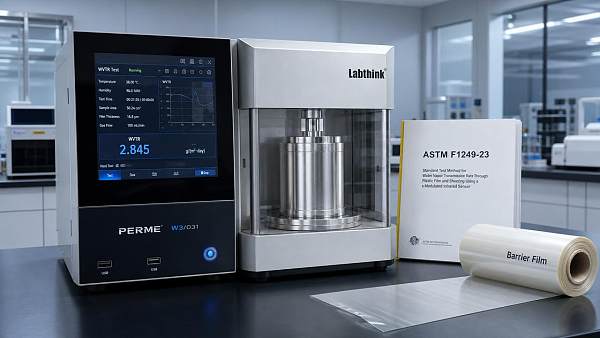
 May 11, 2026SABIC Updates GCC Certification for Barrier Films: WVTR Testing Now Requires ASTM F1249-23SABIC updates GCC certification: Barrier films now require ASTM F1249-23 WVTR testing—critical for Chinese food, pharma & battery packaging exporters. Act now to avoid delays!
 May 11, 2026Japan METI Adds ICP-MS Isotope Analysis for E-Grade HF ImportsICP-MS isotope analysis now mandatory for e-grade HF imports to Japan—key compliance update for Chinese exporters. Act now to meet METI’s 72-hour data submission rule.
 May 11, 2026Global Engineering Resins Prices Rise 1.3% Amid Record-Low InventoryEngineering resins prices surge 1.3% as port inventory hits record low—critical for automotive electronics, 5G, and precision molding teams. Act now.
 May 11, 2026EU Nano-REACH Coating Archive Deadline: Sept 1, 2026EU Nano-REACH coating archive deadline is Sept 1, 2026 — submit SIP & Nanoform Dossiers now to avoid EU customs rejection. Critical for exporters, formulators & OEMs.
 May 11, 2026BIS Extends Public Comment Period for Torque Logic Export Controls to May 22Torque Logic export controls extended to May 22, 2026—key update for robotics, servo systems & Chinese actuator suppliers. Act now to secure compliance.
![]() May 10, 2026China's Digital Twin AI Solutions Achieve 73% Signing Rate at Hannover Messe 2026Digital Twin AI solutions from China hit 73% signing rate at Hannover Messe 2026 — discover how Siemens’ new Joint Innovation Centers reshape global manufacturing.
May 10, 2026China's Digital Twin AI Solutions Achieve 73% Signing Rate at Hannover Messe 2026Digital Twin AI solutions from China hit 73% signing rate at Hannover Messe 2026 — discover how Siemens’ new Joint Innovation Centers reshape global manufacturing. May 10, 2026FDA-EFSA Set Nano-Silver Migration Limit for Bio-PlasticsFDA-EFSA sets first nano-silver migration limit (0.005 mg/kg) for bio-plastics — critical for exporters, formulators & testers. Act now before Oct 1, 2026.
 May 10, 2026SABIC Updates GCC Certification for Barrier Films: ASTM F1249-23 Mandatory for WVTR TestingSABIC GCC certification update: ASTM F1249-23 now mandatory for WVTR testing of barrier films—ensure compliance before July 1, 2026 to avoid shipment delays.
 May 10, 2026Japan METI Adds ICP-MS Spectra Requirement for Electronic-Grade HFJapan METI now mandates ICP-MS spectral data for electronic-grade HF imports — full spectra, calibration & baseline from CNAS/JIS labs, due in 72h. Stay compliant.
 May 10, 2026ISWG Raises BAF to 18% on East Asia–Southeast Asia RoutesBAF surges to 18% on East Asia–Southeast Asia routes—impacting electronics, medtech & chemical shippers. Drone air freight inquiries up 41%. Act now.
 May 10, 2026Vietnam Enforces Trilingual SDS + Toxicology Re-Testing for Industrial CatalystsVietnam enforces trilingual SDS + toxicology re-testing for industrial catalysts—act now to avoid import delays, license denial, and supply chain disruption.
 May 10, 2026TÜV Rheinland Launches Localized Vibration Durability Fast-Track Testing for Planetary GearboxesVibration durability fast-track testing for planetary gearboxes—now localized in Shanghai, Singapore & Mexico City. Get ISO 10816-3/DIN 3990 certification in just 7 days.
 May 10, 2026Global Engineering Resins Prices Up 1.3% Amid Record-Low InventoryEngineering resins prices surge 1.3% amid record-low inventory—critical insight for automotive electronics, AI hardware & polymer procurement teams.
 May 10, 2026EU Nano-REACH Transition Period Starts: Functional Coatings Must Submit Nanodossiers by September 2026Nano-REACH transition is live: Functional coatings exporters must submit nanodossiers by Sep 2026 to clear EU customs—act now to avoid shipment bans.
 May 10, 2026BIS Extends Comment Period for Torque Logic Export Controls to May 22Torque Logic export controls: BIS extends public comment period to May 22, 2026. Critical for robotics, automation & China-bound supply chains—act now.
 May 09, 2026Quick Release Coupling Factory Signs That Lead Times Will SlipQuick release coupling factory warning signs often appear before major delays. Learn how to spot lead-time risks early, verify supplier stability, and protect critical delivery plans.
 May 09, 2026Hydraulic Rotary Actuator OEM Selection for High-Torque MotionHydraulic rotary actuator OEM selection made practical: compare torque, pressure, seal life, customization, and support to reduce downtime and choose a reliable high-torque solution.
 May 09, 2026Hydraulic Steering Unit Factory Checklist for Stable Batch QualityHydraulic steering unit factory checklist for stable batch quality: review traceability, machining, testing, and compliance to reduce risk and choose a reliable supplier.
 May 09, 2026How to Read Piston Pump Volumetric Efficiency Data CorrectlyPiston pump volumetric efficiency data explained clearly: learn how to read test conditions, spot hidden flow loss, avoid misdiagnosis, and improve hydraulic maintenance decisions.