Search News
Industry Portal
Popular Tags
How Southeast Asian climates affect cylinder seal friction
Author
Time
Click Count
High humidity, persistent heat, monsoon exposure, and inconsistent contamination control can make cylinder seal friction less stable in Southeast Asia than it appears during a dry, temperature-controlled qualification test. The effect is rarely a simple increase in friction. In many cases, the larger problem is variation: breakaway force changes after downtime, running force drifts as lubricant condition changes, and seal wear accelerates when moisture and particles enter the cylinder system together.
For technical evaluators, cylinder seal friction in Southeast Asia deserves attention whenever pneumatic or hydraulic cylinders must maintain repeatable motion, hold position accurately, cycle frequently, or operate with limited maintenance access. A seal that performs acceptably in a clean laboratory may still produce stick-slip, leakage, slow response, or premature rod damage when exposed to humid plant air, outdoor washdown, coastal corrosion, or seasonal dust and water ingress.
The climate itself does not determine seal performance. It changes the operating conditions around the seal: fluid viscosity, lubricant retention, moisture loading, corrosion behavior, contaminant transport, and the chance that maintenance practices fall behind actual exposure. Selection should therefore focus on friction stability across the expected environment, rather than on a single low-friction value stated in a catalogue.
Humidity affects the system before it affects the seal
In pneumatic cylinders, compressed air quality is usually the first climate-related friction issue. Ambient air in tropical environments can carry substantial moisture. Compression concentrates that moisture load, and poorly drained receivers, undersized dryers, or long distribution lines can allow water to reach the actuator. Condensate may dilute or displace applied lubrication, carry particulate contamination, and promote corrosion on internal metal surfaces.
A dry-running pneumatic seal is not automatically unsuitable for humid service. Many modern elastomer and thermoplastic seal systems are intended to operate with little or no added lubricant. But dry-running capability should not be confused with tolerance for wet, dirty air. Water droplets, compressor oil carryover, pipe-scale particles, and oxidation products can change the friction regime at the seal lip. The cylinder may continue to move, but its breakaway behavior can become less predictable after a stop period.
This is particularly relevant for pick-and-place equipment, pneumatic clamps, dosing mechanisms, packaging machinery, and positioning devices. In these applications, a moderate rise in steady-state friction may be manageable. A higher and inconsistent breakaway force is often more disruptive because it affects the first movement command. The result can be delayed actuation, overshoot after release, or apparent control instability that is incorrectly blamed on valves or software.
Hydraulic systems are affected differently. The fluid circuit is largely closed, so external humidity does not directly enter in the same manner as pneumatic air. However, moisture can still enter through reservoir breathing, poor storage of replacement fluid, damaged breathers, cylinder rod exposure, and maintenance activities. Water contamination can impair lubricant film behavior, contribute to corrosion, and shorten fluid life. At the rod seal, external moisture becomes important when wet deposits, abrasive residue, or corrosive contaminants are carried across the rod surface during retraction.
Heat changes friction through materials and lubrication
Elevated ambient temperature is common across much of Southeast Asia, especially in enclosed plants, near process equipment, and in outdoor installations exposed to solar loading. Cylinder temperature can be appreciably higher than the nominal room temperature once fluid heating, rapid cycling, radiant heat, and restricted ventilation are considered.
Temperature affects friction in several interacting ways. Lubricants and hydraulic fluids become less viscous as temperature rises, which can reduce resistance to motion at first but may also reduce the thickness of the lubricating film at the sealing interface. Elastomer compounds soften as their operating temperature increases, changing contact pressure and deformation behavior. Thermoplastic seal elements may also exhibit altered stiffness and creep resistance depending on material grade and load duration.
Lower viscosity is not inherently harmful. A hydraulic cylinder operating within its intended temperature range can still maintain effective lubrication and seal performance. Problems emerge when the combination of temperature, pressure, surface finish, speed, and contamination pushes the contact zone away from the condition assumed during design. A seal may then show reduced wear resistance, extrusion risk at pressure gaps, or friction drift across long duty cycles.
Technical reviews should distinguish between ambient temperature and actual seal-interface conditions. A cylinder mounted beside a furnace, beneath a roof with poor airflow, or inside a sealed production enclosure should not be evaluated using only a regional weather average. The relevant question is how hot the rod, barrel, fluid, and gland region become during the most demanding operating period.
Material choice follows from that question. Nitrile rubber may be appropriate for many conventional mineral-oil hydraulic applications, but its suitability depends on the actual fluid, temperature range, and additive package. Fluorocarbon elastomers may offer stronger resistance in some higher-temperature or chemically demanding environments, while polyurethane can provide excellent wear resistance in many hydraulic rod-seal duties. None of these material labels is a universal answer. Friction response is also shaped by seal geometry, interference, surface roughness, counterface hardness, and lubrication conditions.
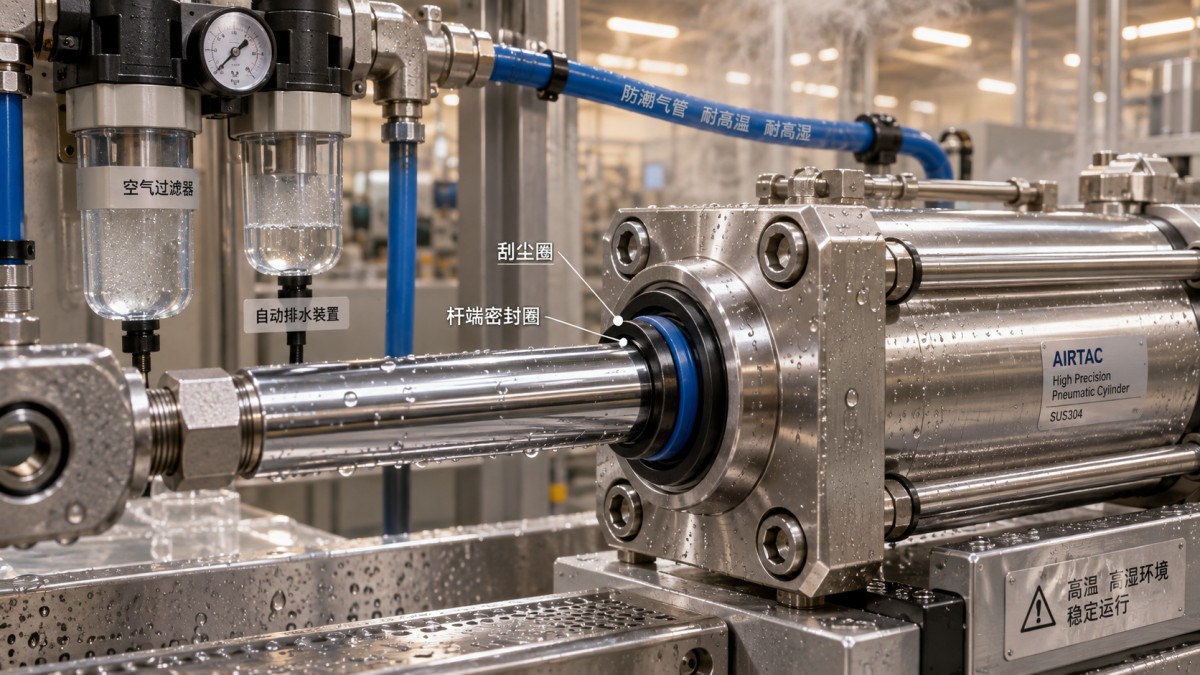
Monsoon conditions increase the cost of weak contamination control
Seasonal rainfall does not need to enter a cylinder directly to cause problems. It changes the contamination pathway around the machine. Wet floors can increase splash exposure. Outdoor equipment may remain damp for extended periods. Dust can become an abrasive slurry. Maintenance crews may need to service actuators under less controlled conditions, increasing the chance that moisture or debris reaches open hydraulic connections, rod surfaces, or pneumatic fittings.
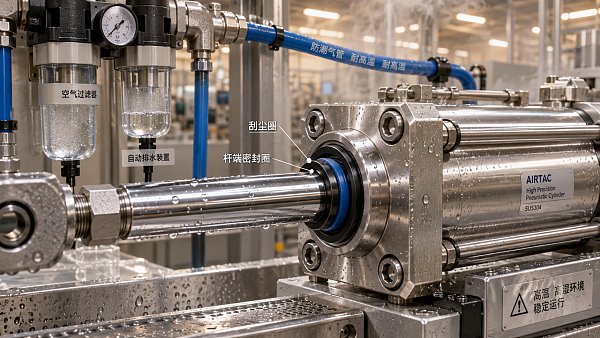
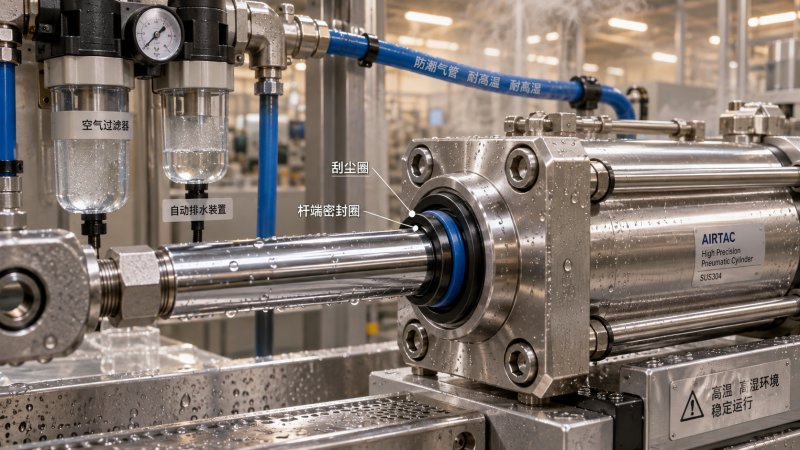
For rod-type cylinders, the rod seal and wiper should be assessed as a pair. The rod seal is responsible for retaining fluid or pressure; the wiper protects the rod and internal sealing system from external contamination. A strong rod seal cannot compensate for a wiper that allows wet abrasive contamination to accumulate and travel inward. Conversely, a highly aggressive wiper may add drag or damage a poorly specified rod surface.
Corrosion is a related but separate concern. In humid coastal zones, chloride-bearing air can accelerate corrosion on exposed steel components. Once a rod develops pitting, rust nodules, or roughened areas, every stroke can abrade the seal lip. Leakage may appear to be a seal-material failure even though the initiating issue was rod-surface degradation. Chromium plating condition, alternative rod coatings, storage protection, and the placement of cylinders relative to washdown or salt-laden airflow all deserve review.
The risk is often greatest during intermittent operation. A continuously cycling cylinder may keep its contact surfaces lubricated and prevent water from remaining in one location for long periods. A standby cylinder exposed to humidity, contamination, and temperature swings can develop corrosion or lubricant redistribution while idle. When it is called into service, breakaway friction and seal damage may be more severe than expected.
Why a low-friction catalogue claim is insufficient
Seal friction is normally described through breakaway force, running force, or a friction-versus-pressure-and-speed relationship. These measures are useful, but their value depends on the test condition. A low-friction result obtained with clean fluid, a polished test rod, stable temperature, and continuous motion may not predict performance after a humid shutdown or under contaminated air supply conditions.
Evaluators should ask how friction was characterized, not simply what number was reported. Useful questions include:
- Was friction measured during first movement after a dwell period, or only during continuous cycling?
- What fluid, lubricant, pressure range, rod finish, and operating temperature were used?
- Were both extension and retraction forces measured?
- How did the seal behave at the minimum operating pressure, where friction can consume a larger share of available force?
- Did testing include side load, pressure pulsation, low-speed movement, or realistic contamination exposure?
- Is the quoted result for a complete seal package, including wear rings and wipers, or for one seal element in isolation?
These questions matter because friction is a system characteristic. A cylinder can produce unstable motion even when the primary seal is technically within specification. Misalignment can increase side loading. A rough rod can create high local drag. An overly tight guide arrangement can add resistance. Contaminated pneumatic air can alter the behavior of seals that were designed around clean supply conditions. Treating the seal as the only variable can lead to an ineffective corrective action.
Low-speed control is where climate-related friction becomes visible
Many climate-driven sealing problems become evident first at low speed. At higher velocity, inertial forces and a more established lubricating film can mask moderate friction variation. At very low velocity, the actuator must overcome static friction before it can begin to move. If the resistance falls sharply once movement starts, the cylinder may jump forward. This stick-slip behavior is especially difficult in filling, cutting, inspection, tensioning, metering, and precision handling operations.
In a humid environment, the difference between static and dynamic friction may widen after downtime because surface moisture, corrosion films, lubricant displacement, or deposits have changed the initial contact condition. For pneumatic systems, supply-pressure variation can compound the effect. For hydraulic systems, fluid temperature and viscosity may change across shifts, changing the response of a cylinder that was tuned under cooler conditions.
It is tempting to address this only by increasing pressure or fitting a larger cylinder. That can restore motion force, but it may conceal the root cause and introduce new issues such as harder end-of-stroke impacts, increased energy consumption, or accelerated wear. A better assessment checks whether the available force margin remains sufficient under the lowest expected supply pressure, highest expected temperature, longest dwell time, and most unfavorable contamination condition.
A practical qualification approach for Southeast Asian service
A useful evaluation begins by classifying the exposure rather than treating “Southeast Asia” as one uniform operating environment. An indoor electronics plant with dried compressed air has different sealing demands from a food-processing washdown line, a port-side bulk-handling system, or mobile equipment operating through wet and dusty seasonal conditions.
For each cylinder location, document the factors that change friction or wear:
- Ambient temperature range and likely equipment heat exposure.
- Whether the actuator is indoors, outdoors, sheltered, washed down, or exposed to salt-bearing air.
- Compressed-air drying, filtration, drainage, and oil carryover control for pneumatic equipment.
- Hydraulic fluid storage, reservoir breathing, water-control practices, and fluid-temperature behavior for hydraulic equipment.
- Rod material, coating condition, surface finish, and likelihood of external abrasive contamination.
- Duty cycle, dwell time, speed range, side-load conditions, and required positional repeatability.
- Maintenance accessibility and the practical ability to inspect wipers, drains, filters, rod surfaces, and leakage signs.
Where motion quality is important, qualification should include more than a leakage check. Run a dwell-and-restart sequence at representative temperature. Assess breakaway response at the lowest expected operating pressure. Include realistic cycle rates and a period long enough for the cylinder and fluid to reach normal operating temperature. If washdown, dust, or outdoor service is expected, inspect the wiper and rod interface after representative exposure rather than relying solely on a clean endurance cycle.
For pneumatic systems, air-treatment capacity should be reviewed alongside the seal specification. A premium cylinder cannot maintain friction consistency if condensate is routinely carried downstream. For hydraulic cylinders, assess rod protection and contamination exclusion with the same seriousness as seal chemistry. In humid and coastal settings, a small investment in breather management, protective boots where appropriate, drainage, rod-surface inspection, and timely wiper replacement can prevent failures that would otherwise be attributed to the wrong component.
Selection decisions should prioritize stability over an isolated friction minimum
The best cylinder seal arrangement for Southeast Asian climates is usually the one that maintains predictable friction across expected temperature, moisture, contamination, and idle-time conditions. That may involve a different seal material, but it can also require a revised wiper design, improved rod coating, cleaner air preparation, better fluid control, or a cylinder geometry that reduces side load.
Technical teams should avoid making a seal decision from material name alone. Request the operating limits for the complete sealing arrangement, then compare them with the actual cylinder environment and motion profile. Pay particular attention to restart behavior, rod condition, and contamination control where production depends on repeatable low-speed movement.
In this context, cylinder seal friction in Southeast Asia is not only a component-level concern. It is an indicator of whether the actuator, its media supply, and its surrounding environment have been specified as one operating system. When those conditions are evaluated together, friction-related failures become easier to predict before they become leakage, quality, or uptime problems.
Recommended News
 Sep 19, 2026When can a supply chain LLM reduce time spent finding shipment updates?Supply chain LLMs can cut shipment-update search time by connecting carrier events, ERP data, and documents—giving teams traceable answers and faster exception response.
 Sep 18, 2026How industrial monitoring equipment helps prevent unplanned downtimeIndustrial monitoring equipment helps teams detect early asset issues, prioritize maintenance, and prevent costly unplanned downtime. Explore practical strategies for reliable operations.
 Sep 17, 2026What next-gen harmonic drive research means for robot joint accuracyNext-gen harmonic drive research reveals how backlash, stiffness, thermal drift, and sensing shape robot joint accuracy. Explore smarter validation strategies.
 Sep 16, 2026How Southeast Asian climates affect cylinder seal frictionCylinder seal friction Southeast Asia: learn how humidity, heat, monsoons, and contamination affect motion stability, wear, and seal selection.
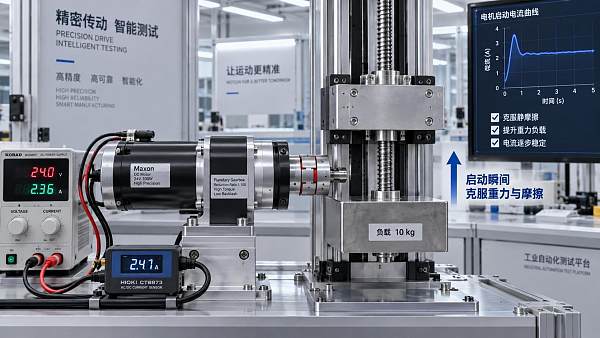
 Sep 15, 2026How to size DC gear motors for the required starting torqueGear motors DC sizing made practical: calculate starting torque, account for friction, gravity, inertia and voltage drop, then select a reliable motor with confidence.
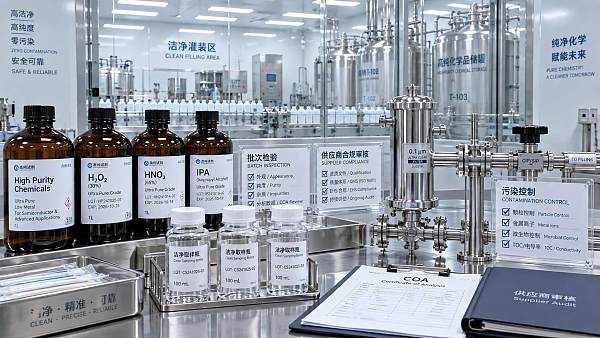
 Sep 14, 2026How to verify high purity chemicals compliance before supplier approvalHigh purity chemicals compliance: learn how to verify supplier quality systems, CoAs, traceability, testing, and change control before approval.
 Sep 13, 2026What permits are needed to operate mapping drones in Europe?Mapping drones Europe: discover the permits, EASA categories, airspace approvals, site access, and GDPR checks needed for compliant aerial surveys.
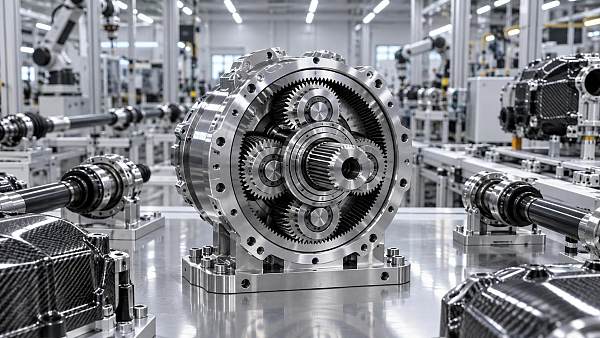
 Sep 12, 2026What lead time should I expect for automatic transmission components? Planetary Gearboxes delivery forecasting for OEM planningWhat lead time should I expect for automatic transmission components? Get dynamic, AI-powered planetary gearbox delivery forecasting—designed for OEMs building next-gen hybrid & commercial powertrains.
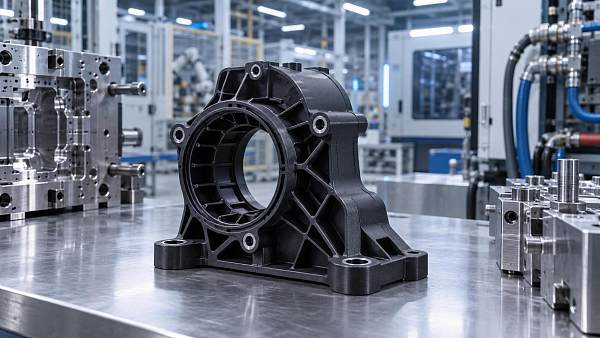
 Sep 12, 2026Can polyamide replace metal in load-bearing components? Polymer Pulse structural performance data for 2026 applicationsCan polyamide replace metal in load-bearing components? Discover Polymer Pulse’s 2026 structural data—real-world performance, weight savings, and reliability breakthroughs.
 Sep 12, 2026How to handle a power electronics warranty claim: Harmonic Reducers documentation and escalation pathHow do I handle a power electronics warranty claim? Get a fast, intelligent, evidence-driven resolution for harmonic reducers—no bureaucracy, just precision diagnostics and real-time escalation.
 Sep 12, 2026Which motion control specifications matter most before purchase? Torque Logic selection criteria for automation engineersWhich motion control specifications are most important before purchase? Discover Torque Logic—the 4 non-negotiable, AI-aligned criteria that cut TCO by 27–41% and boost motion system availability to 99.992%.
 Sep 13, 2026Is agentic AI reliable enough for supplier screening? Supply Chain LLM validation framework for procurement teamsIs agentic AI reliable enough for supplier screening? Discover a rigorous LLM validation framework built for procurement teams—grounded in material traceability, regulatory compliance, and real-world operational constraints.
 Sep 14, 2026How to maintain edge AI systems after deployment: Predictive Maint AI operational protocols for field techniciansHow do I maintain edge AI systems after deployment? Discover predictive, physics-aware operational protocols designed for real-world field technicians—sustaining intelligence where silicon meets steel.
 Sep 15, 2026What compliance documents must a bioplastics supplier provide? Bio-Plastics regulatory checklist for procurementWhat compliance documents should a bioplastics supplier provide? Get our actionable regulatory checklist for food, medical & EU-bound applications.
 Sep 16, 2026How to prevent PET film defects during production: Barrier Films process control best practicesHow can I prevent PET film defects during production? Discover physics-driven barrier film process control—thermal precision, dynamic tension management & surface energy optimization.
 Sep 17, 2026Are thermoplastics suitable for long-term outdoor use? Engineering Resins durability assessment in 2026 UV/weather exposureAre thermoplastics suitable for long-term outdoor use? Discover 2026’s engineering resin durability insights — UV/weather resistance ranked, tested & actionable.
 Sep 18, 2026What to do when a servo motor fails during production: A Servo Actuators troubleshooting guide for maintenance teamsWhat should I do if a servo motor fails during production? Get a field-tested, AI-aware troubleshooting guide for maintenance teams—minimize downtime, maximize OEE.
 Sep 12, 2026How to compare wholesale party supplies by minimum order valueCompare wholesale party supplies by minimum order value, freight, SKU flexibility, and stock risk to choose suppliers that protect margins and simplify replenishment.
 Sep 11, 2026How proportional solenoid linearity affects precision motion controlProportional solenoid linearity directly affects precision motion control, valve metering, stability, and calibration. Learn how to evaluate performance for reliable automation.
 Sep 10, 2026When does supplier information platform automation reduce onboarding delays?Supplier information platform automation reduces onboarding delays by streamlining data collection, routing, renewals, and compliance checks—without replacing expert technical review.
 Sep 09, 2026How to size robotic motion systems for AMR payload changesRobotic motion systems for AMR payload changes: learn how to size motors, wheels, gearing, traction, and controls for safer, reliable performance.
 Sep 08, 2026How to perform a cylinder rod buckling calculation for long strokesCylinder rod buckling calculation made practical: learn how to assess effective length, end conditions, rod stiffness, load forces, and safety margins for reliable long-stroke cylinder design.
 Sep 07, 2026How to estimate the cost of industrial mechanical components before orderingIndustrial mechanical components cost: learn how to estimate material, machining, tooling, inspection, logistics, and hidden expenses before ordering. Compare quotes confidently and reduce sourcing risk.
 Sep 07, 2026What Is a Product Standards Database Used For?Product standards database guide: learn how to compare requirements, verify revisions, control specifications, and reduce compliance risks across design, sourcing, and production.