Search News
Industry Portal
Popular Tags
Miniature Hydraulic Pump OEM Selection for Compact Systems

Author
Time
Click Count
Selecting the right miniature hydraulic pump OEM is critical for compact systems where space, efficiency, and reliability must align under demanding operating conditions. For technical evaluators, the decision goes beyond basic specifications to include pressure stability, material compatibility, lifecycle performance, and supplier engineering capability. This guide outlines the key criteria that help industrial teams compare OEM partners with greater confidence and technical precision.
Why miniature hydraulic pump OEM selection matters in compact industrial systems

In compact systems, the hydraulic pump is not just a power component. It shapes packaging constraints, thermal behavior, duty-cycle stability, maintenance intervals, and the feasibility of downstream automation.
That is why miniature hydraulic pump OEM evaluation often becomes a cross-functional decision involving design engineering, sourcing, quality, and operations. A pump that looks acceptable on paper may still fail under vibration, fluid contamination, intermittent pressure spikes, or variable ambient temperatures.
For technical evaluators in the broader industrial sector, common pain points include unclear OEM differentiation, incomplete validation data, uncertain lead times, and inconsistent support for customization. These risks increase when the compact system must fit into mobile equipment, robotic tooling, laboratory devices, or integrated smart manufacturing assemblies.
- Small dimensional tolerances can create large system effects, especially where reservoir volume, hose routing, and heat dissipation are restricted.
- Pressure ripple and flow instability can reduce actuator precision, which matters in automated fixtures and compact intelligent machinery.
- An OEM’s engineering responsiveness often determines whether a project reaches stable production without repeated redesign cycles.
G-AIE supports this evaluation process by connecting material science, benchmarking logic, and intelligent automation priorities. Instead of treating pump sourcing as a simple catalog match, technical teams can compare OEM capability through application fit, lifecycle risk, and manufacturability impact.
What should technical evaluators check first when screening a miniature hydraulic pump OEM?
The first stage is not pricing. It is application definition. A miniature hydraulic pump OEM should be assessed against the actual operating window rather than nominal maximum values.
Core screening criteria
- Required pressure range, including normal operating pressure, startup spikes, and emergency conditions.
- Flow demand by duty cycle, not only peak flow. Compact systems often run pulsed or intermittent cycles that affect motor sizing and fluid temperature.
- Fluid compatibility with seals, housings, and internal wear surfaces. This becomes critical with specialty hydraulic fluids or mixed-environment exposure.
- Noise, vibration, and thermal performance where the pump is installed near sensors, operator zones, or electronics.
- OEM manufacturing consistency, test documentation, and change-control discipline for long-term supply continuity.
A capable miniature hydraulic pump OEM should provide more than a datasheet. Technical evaluators should expect guidance on operating envelope, mounting orientation, contamination sensitivity, expected wear mechanisms, and design trade-offs between compactness and service life.
The following table helps structure an early-stage qualification review for compact-system programs where failure cost is high and redesign time is limited.
This framework also reveals whether a miniature hydraulic pump OEM behaves like a transactional supplier or a development partner. For evaluators managing complex programs, that difference directly affects schedule reliability and total project cost.
Which application scenarios demand stricter OEM evaluation?
Not every compact hydraulic application carries the same risk profile. Some systems can tolerate moderate variation. Others require very tight control over flow, pressure, size, or environmental resistance.
Typical high-scrutiny scenarios
- Compact robotic end effectors where weight, response speed, and repeatability are tightly coupled.
- Portable industrial tools that face shock, vibration, and changing duty cycles in field conditions.
- Laboratory and testing equipment where pressure consistency influences measurement repeatability.
- Integrated machine modules with limited airflow, where heat accumulation can shorten component life.
- Specialized fluid-handling systems that require strict seal and body material compatibility.
For readers comparing a miniature hydraulic pump OEM across several compact-system use cases, the table below links application conditions to the evaluation focus.
Application-linked questioning improves selection accuracy. It also helps procurement and engineering teams avoid generic supplier comparisons that overlook real operating constraints.
How to compare miniature hydraulic pump OEM options beyond the datasheet
Many suppliers can list pressure ratings and dimensions. Fewer can show how those figures hold across a realistic duty cycle. A better OEM comparison method combines component performance, system fit, and supplier process maturity.
Comparison areas that often change the final decision
- Engineering communication quality: Are answers specific, documented, and consistent across sales and technical teams?
- Prototype support: Can the OEM provide samples, review mounting layouts, and comment on fluid path design?
- Manufacturing control: Is there evidence of repeatability, incoming material control, and traceable inspection steps?
- Lifecycle support: Are spare parts, revision control, and end-of-life communication handled systematically?
G-AIE’s technical benchmarking perspective is especially useful here. By linking materials, operating stress, and automation context, evaluators can see whether a miniature hydraulic pump OEM is likely to support stable deployment in modern industrial ecosystems rather than isolated part delivery.
What technical performance details are most often overlooked?
Compact-system teams frequently focus on headline pressure and flow, yet field failures often come from secondary characteristics. These details deserve early review because they influence integration and long-term reliability.
Often-missed performance factors
- Pressure ripple profile, which can disturb proportional control or create mechanical noise in small actuator systems.
- Priming behavior and startup response, especially when the reservoir is small or orientation changes during operation.
- Volumetric efficiency at elevated temperature, because compact enclosures usually experience greater heat concentration.
- Seal wear under intermittent operation, where repeated starts and stops may create more stress than steady-state duty.
- Sensitivity to contamination class, since micro-scale internal clearances can accelerate wear if filtration is underspecified.
A strong miniature hydraulic pump OEM should be able to discuss these points in practical terms. If a supplier cannot explain how performance shifts with viscosity, temperature, or load cycling, the technical evaluation remains incomplete.
Procurement guide: a practical OEM selection workflow for technical evaluators
When deadlines are tight, teams often jump from specification review to quotation. A more reliable method is to follow a staged selection workflow that separates feasibility from commercial negotiation.
Recommended evaluation sequence
- Define the real operating profile, including continuous load, peak events, fluid type, ambient temperature, and enclosure limits.
- Shortlist miniature hydraulic pump OEM candidates by technical fit, not just by unit price or nominal pressure claim.
- Request supporting documents such as pressure-flow curves, material details, inspection methods, and sample availability.
- Run prototype tests that reflect actual duty cycle, thermal buildup, and installation orientation.
- Evaluate supply readiness, including lead time, change management, packaging, and service communication pathways.
- Only after technical acceptance should cost, volume pricing, and longer-term supply terms be finalized.
This workflow reduces the common mistake of approving a miniature hydraulic pump OEM based on catalog confidence rather than application evidence. It also helps technical teams justify decisions internally with a clear audit trail.
Cost, alternatives, and total risk: how should buyers judge trade-offs?
The lowest purchase price rarely produces the lowest system cost. In compact hydraulic assemblies, hidden costs usually appear in redesign effort, qualification delays, fluid leakage, thermal instability, or unplanned maintenance.
Trade-off questions worth asking
- Will a lower-cost pump require extra damping, filtration, cooling, or mounting redesign?
- Can an alternative technology such as electro-mechanical actuation replace hydraulics, or does force density still favor a compact hydraulic layout?
- Does the OEM support customization that removes secondary parts and lowers total assembly complexity?
For many compact systems, the right miniature hydraulic pump OEM is the one that minimizes system compromise. That may mean paying more for validated materials, better thermal behavior, or stronger engineering support during integration.
Standards, compliance, and documentation expectations
Compliance requirements vary by sector, geography, and end-use equipment, but technical evaluators should still ask structured questions early. The goal is not to assume a supplier has every certification. The goal is to confirm documentation discipline and compatibility with project requirements.
Documentation areas to verify
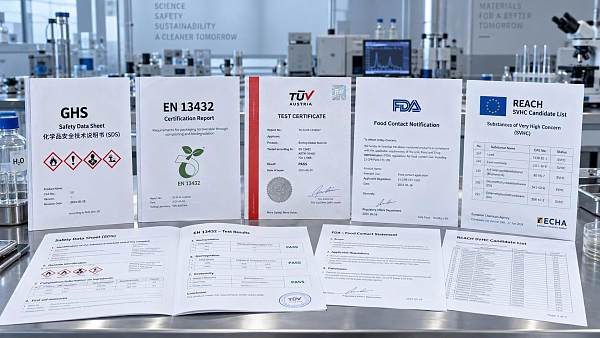
- Material declarations for seals, housings, and wetted components where chemical compatibility or environmental compliance matters.
- Inspection and traceability records that support quality review for industrial procurement programs.
- Test protocols relevant to pressure verification, leakage control, and durability assessment.
- Configuration control documents for projects requiring stable revision management over multiple production lots.
Within the G-AIE context, compliance is closely linked to benchmarking maturity. Suppliers that document material behavior, test logic, and process changes more clearly are easier to integrate into data-driven industrial procurement systems.
FAQ: common questions about miniature hydraulic pump OEM evaluation
How do I know whether a miniature hydraulic pump OEM can handle my duty cycle?
Ask for performance information tied to real operating conditions: pressure range, flow at temperature, cycle frequency, and expected fluid viscosity. If the supplier only shares maximum ratings, request clarification on continuous operation and thermal derating.
What matters more in compact systems: pressure rating or thermal performance?
Both matter, but thermal performance is often underestimated. A pump that meets pressure targets can still cause enclosure overheating, viscosity drift, or shortened seal life. Compact installations usually magnify thermal problems.
Which miniature hydraulic pump OEM signals suggest lower integration risk?
Look for clear engineering responses, sample support, traceable test practices, and realistic discussion of limitations. Strong suppliers explain trade-offs and installation constraints instead of promising universal suitability.
How long does OEM evaluation usually take?
It depends on customization level and validation depth. Simple catalog-based reviews can move quickly, but compact systems with specialized fluids, space constraints, or strict performance targets usually need structured sample testing and cross-functional review.
Why choose us for miniature hydraulic pump OEM benchmarking and sourcing support
G-AIE helps technical evaluators make better miniature hydraulic pump OEM decisions by combining industrial benchmarking, material science awareness, and intelligent automation context. This is especially valuable when the pump must fit into a compact system with high reliability expectations and limited tolerance for trial-and-error sourcing.
We support practical decision points that matter to engineering and procurement teams, including parameter confirmation, application-fit screening, compact-system selection logic, supplier comparison structure, documentation review, and communication around lead time or sample planning.
- Need help confirming pressure, flow, fluid compatibility, or installation constraints? We can help organize the technical checklist.
- Need a clearer comparison between miniature hydraulic pump OEM candidates? We can frame the evaluation around lifecycle risk and compact-system fit.
- Need support on delivery timing, sample requests, customization scope, or documentation expectations? We can help structure the supplier discussion.
- Need a quote-oriented conversation without losing technical rigor? We can align commercial inquiry with the right validation questions from the start.
If your team is evaluating a miniature hydraulic pump OEM for a compact industrial system, contact us with your operating parameters, application scenario, expected delivery window, and any compliance or customization requirements. That makes it easier to move from general sourcing to a technically defensible decision.
Recommended News
 Sep 19, 2026When can a supply chain LLM reduce time spent finding shipment updates?Supply chain LLMs can cut shipment-update search time by connecting carrier events, ERP data, and documents—giving teams traceable answers and faster exception response.
 Sep 18, 2026How industrial monitoring equipment helps prevent unplanned downtimeIndustrial monitoring equipment helps teams detect early asset issues, prioritize maintenance, and prevent costly unplanned downtime. Explore practical strategies for reliable operations.
 Sep 17, 2026What next-gen harmonic drive research means for robot joint accuracyNext-gen harmonic drive research reveals how backlash, stiffness, thermal drift, and sensing shape robot joint accuracy. Explore smarter validation strategies.
 Sep 16, 2026How Southeast Asian climates affect cylinder seal frictionCylinder seal friction Southeast Asia: learn how humidity, heat, monsoons, and contamination affect motion stability, wear, and seal selection.
 Sep 15, 2026How to size DC gear motors for the required starting torqueGear motors DC sizing made practical: calculate starting torque, account for friction, gravity, inertia and voltage drop, then select a reliable motor with confidence.
 Sep 14, 2026How to verify high purity chemicals compliance before supplier approvalHigh purity chemicals compliance: learn how to verify supplier quality systems, CoAs, traceability, testing, and change control before approval.
 Sep 13, 2026What permits are needed to operate mapping drones in Europe?Mapping drones Europe: discover the permits, EASA categories, airspace approvals, site access, and GDPR checks needed for compliant aerial surveys.
 Sep 12, 2026What lead time should I expect for automatic transmission components? Planetary Gearboxes delivery forecasting for OEM planningWhat lead time should I expect for automatic transmission components? Get dynamic, AI-powered planetary gearbox delivery forecasting—designed for OEMs building next-gen hybrid & commercial powertrains.
 Sep 12, 2026Can polyamide replace metal in load-bearing components? Polymer Pulse structural performance data for 2026 applicationsCan polyamide replace metal in load-bearing components? Discover Polymer Pulse’s 2026 structural data—real-world performance, weight savings, and reliability breakthroughs.
 Sep 12, 2026How to handle a power electronics warranty claim: Harmonic Reducers documentation and escalation pathHow do I handle a power electronics warranty claim? Get a fast, intelligent, evidence-driven resolution for harmonic reducers—no bureaucracy, just precision diagnostics and real-time escalation.
 Sep 12, 2026Which motion control specifications matter most before purchase? Torque Logic selection criteria for automation engineersWhich motion control specifications are most important before purchase? Discover Torque Logic—the 4 non-negotiable, AI-aligned criteria that cut TCO by 27–41% and boost motion system availability to 99.992%.
 Sep 13, 2026Is agentic AI reliable enough for supplier screening? Supply Chain LLM validation framework for procurement teamsIs agentic AI reliable enough for supplier screening? Discover a rigorous LLM validation framework built for procurement teams—grounded in material traceability, regulatory compliance, and real-world operational constraints.
 Sep 14, 2026How to maintain edge AI systems after deployment: Predictive Maint AI operational protocols for field techniciansHow do I maintain edge AI systems after deployment? Discover predictive, physics-aware operational protocols designed for real-world field technicians—sustaining intelligence where silicon meets steel.
 Sep 15, 2026What compliance documents must a bioplastics supplier provide? Bio-Plastics regulatory checklist for procurementWhat compliance documents should a bioplastics supplier provide? Get our actionable regulatory checklist for food, medical & EU-bound applications.
 Sep 16, 2026How to prevent PET film defects during production: Barrier Films process control best practicesHow can I prevent PET film defects during production? Discover physics-driven barrier film process control—thermal precision, dynamic tension management & surface energy optimization.
 Sep 17, 2026Are thermoplastics suitable for long-term outdoor use? Engineering Resins durability assessment in 2026 UV/weather exposureAre thermoplastics suitable for long-term outdoor use? Discover 2026’s engineering resin durability insights — UV/weather resistance ranked, tested & actionable.
 Sep 18, 2026What to do when a servo motor fails during production: A Servo Actuators troubleshooting guide for maintenance teamsWhat should I do if a servo motor fails during production? Get a field-tested, AI-aware troubleshooting guide for maintenance teams—minimize downtime, maximize OEE.
 Sep 12, 2026How to compare wholesale party supplies by minimum order valueCompare wholesale party supplies by minimum order value, freight, SKU flexibility, and stock risk to choose suppliers that protect margins and simplify replenishment.
 Sep 11, 2026How proportional solenoid linearity affects precision motion controlProportional solenoid linearity directly affects precision motion control, valve metering, stability, and calibration. Learn how to evaluate performance for reliable automation.
 Sep 10, 2026When does supplier information platform automation reduce onboarding delays?Supplier information platform automation reduces onboarding delays by streamlining data collection, routing, renewals, and compliance checks—without replacing expert technical review.
 Sep 09, 2026How to size robotic motion systems for AMR payload changesRobotic motion systems for AMR payload changes: learn how to size motors, wheels, gearing, traction, and controls for safer, reliable performance.
 Sep 08, 2026How to perform a cylinder rod buckling calculation for long strokesCylinder rod buckling calculation made practical: learn how to assess effective length, end conditions, rod stiffness, load forces, and safety margins for reliable long-stroke cylinder design.
 Sep 07, 2026How to estimate the cost of industrial mechanical components before orderingIndustrial mechanical components cost: learn how to estimate material, machining, tooling, inspection, logistics, and hidden expenses before ordering. Compare quotes confidently and reduce sourcing risk.
 Sep 07, 2026What Is a Product Standards Database Used For?Product standards database guide: learn how to compare requirements, verify revisions, control specifications, and reduce compliance risks across design, sourcing, and production.