Search News
Industry Portal
Popular Tags
Industrial convergence sounds efficient, but where do costs rise?
Author
Time
Click Count
Industrial convergence can improve speed, visibility, and coordination across manufacturing, materials, automation, and supply chain systems. But in practice, costs often rise in the integration layers: data standardization, cross-system interoperability, workforce adaptation, compliance, and sustainability reporting. For researchers and operators, the key question is not whether convergence is efficient in theory, but where hidden cost accumulation begins and how to evaluate it before it erodes ROI.
In advanced industrial environments, especially where smart materials, intelligent automation, and digital supply chain tools intersect, the biggest risks usually come from underestimated complexity rather than from any single technology purchase. Understanding those pressure points helps teams make better decisions on manufacturing technology investments, operational rollout, and long-term resilience.
What is the real search intent behind “where do costs rise” in industrial convergence?
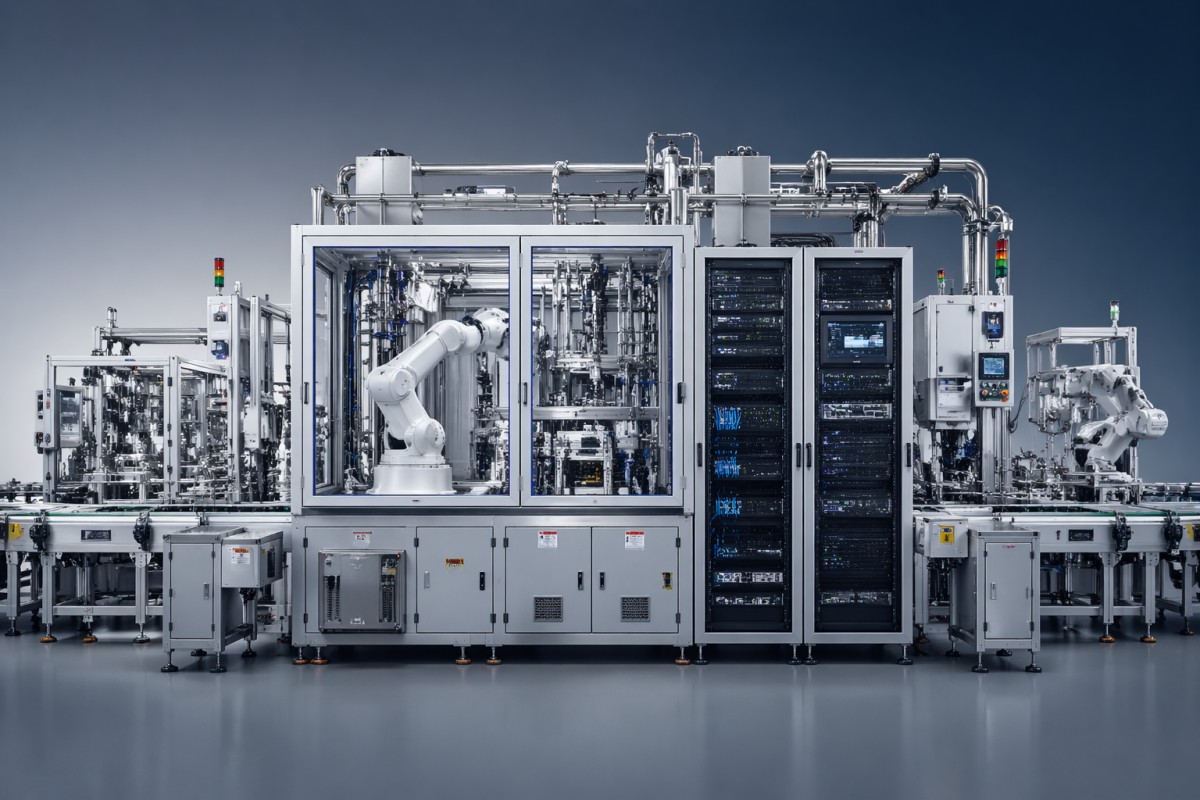
Most readers searching this topic are not looking for a generic definition of industrial convergence. They want a practical answer to a decision problem: if connected industrial systems are supposed to create efficiency, why do budgets, workloads, and operating friction often increase after implementation?
For information researchers and operators, that intent usually breaks down into four real concerns:
- Where hidden costs appear during convergence projects
- Which costs are temporary transition costs versus structural long-term costs
- How AI-driven manufacturing integration affects labor, maintenance, and system reliability
- How to judge whether the efficiency promise is still worth the investment
This is why the most useful analysis is not broad industry commentary. It is a grounded look at cost escalation points across systems, workflows, governance, and sustainability obligations.
Why do costs rise even when industrial convergence improves efficiency?
Industrial convergence often does create measurable benefits: faster process control, better asset utilization, reduced manual handoffs, stronger forecasting, and more coordinated procurement. However, efficiency gains and cost increases can happen at the same time.
The reason is simple: convergence removes some forms of waste while introducing new layers of dependency. A plant may reduce standalone software tools yet spend more on integrating MES, ERP, quality systems, supplier platforms, edge devices, and AI analytics. A procurement team may gain supply chain intelligence but also inherit higher data management, vendor coordination, and audit requirements.
In other words, cost rises when operational simplification at the user level depends on technical and organizational complexity underneath. This pattern is common in digital supply chain complexity and advanced automation programs.
Where do hidden costs rise first in real industrial environments?
The earliest and most underestimated costs usually appear before full deployment. They emerge during alignment, redesign, and system preparation.
1. Data normalization and system interoperability
Different plants, suppliers, and business units often use inconsistent naming conventions, quality definitions, material specifications, and machine data formats. Before any industrial AI or orchestration platform can deliver value, teams must clean, map, validate, and govern that data.
This can raise costs through:
- Manual data remediation
- Middleware and API development
- Longer commissioning timelines
- Repeat integration work across sites
For many organizations, interoperability is the first major budget expansion area because it is rarely fully visible in initial business cases.
2. Process redesign, not just software installation
Industrial convergence changes how decisions are made. That means workflows for maintenance, sourcing, quality response, inventory planning, and production scheduling often need redesign. If old processes remain in place while new systems are added, teams end up operating both models at once.
This creates:
- Dual process overhead
- Extra validation steps
- Temporary productivity drops
- Confusion over decision ownership
3. Workforce adaptation and operational training
Operators and technical users do not just need tool access. They need confidence in alerts, dashboards, model outputs, and exception handling. If training is too shallow, staff may bypass new systems, duplicate manual checks, or distrust automation recommendations.
That increases cost through:
- Longer learning curves
- More supervision requirements
- Lower early-stage adoption
- Higher error correction workload
4. Cybersecurity, traceability, and compliance expansion
As systems converge, the attack surface grows. More connected equipment, supplier portals, cloud interfaces, and data-sharing links mean more governance effort. At the same time, sustainability and traceability expectations are increasing across industrial sectors.
Costs can rise in:
- Identity and access controls
- Network segmentation
- Audit preparation
- Material traceability systems
- Environmental reporting infrastructure
This is especially relevant where industrial sustainability goals must be measured, documented, and linked to procurement or production decisions.
Which cost increases are normal transition effects, and which are long-term structural risks?
Not every cost increase is a warning sign. Some are expected and can produce future gains. The important distinction is between short-term enablement costs and durable operating burdens.
Usually temporary or planned transition costs
- Initial integration engineering
- Workflow migration support
- User onboarding and retraining
- Pilot-to-scale change management
- Short-term output disruption during implementation
These costs are often acceptable if they decline after standardization and adoption stabilize.
More serious structural cost risks
- Permanent dependence on custom integration layers
- Ongoing low-quality data remediation
- Multiple overlapping vendor ecosystems
- Persistent manual exception handling
- AI systems requiring continuous high-cost tuning without measurable operational impact
If these conditions remain after rollout, industrial convergence may be creating a fragile cost structure rather than a scalable efficiency model.
How do AI-driven manufacturing integration and automation specifically increase costs?
AI and automation do not only add software intelligence. They change maintenance logic, inspection routines, material control, and escalation paths. This creates value when deployed in stable, high-quality environments, but cost inflation appears when the surrounding system is not ready.
Common cost drivers include:
Model maintenance and drift management
AI tools in manufacturing require retraining, validation, and ongoing monitoring. Changes in raw materials, machine conditions, operator practices, or product mix can reduce model performance over time.
False confidence or false alerts
If predictive systems generate low-quality alerts, teams spend time investigating noise. If they trust inaccurate recommendations, quality or uptime can suffer. Both outcomes are expensive.
Edge-to-cloud architecture complexity
Connecting sensors, PLCs, machine vision systems, local compute, and enterprise platforms creates architecture costs that are often underestimated in early ROI models.
Automation exception handling
Automated systems work best under controlled conditions. But industrial operations are full of exceptions: variable inputs, changing tolerances, supplier shifts, rework conditions, and maintenance events. The more exceptions that must be handled manually, the lower the efficiency gain.
For operators, this means the question is not simply whether automation is advanced. It is whether the automation can perform reliably under real production variability.
Why do sustainability goals sometimes increase industrial operating costs?
Industrial sustainability is often treated as a long-term efficiency strategy, which it can be. Better materials, lower waste, lower energy intensity, and improved lifecycle control can all support competitiveness. But sustainability integration also adds cost when organizations move faster on reporting commitments than on operational readiness.
Costs commonly rise in three areas:
Measurement infrastructure
Tracking emissions, energy, recycled input ratios, waste streams, and material provenance requires data systems that many industrial environments were not originally built to support.
Supplier qualification and verification
Sustainable sourcing standards often require deeper supplier assessment, documentation checks, and performance benchmarking.
Material and process substitution risk
Switching to lower-impact materials or new process conditions can introduce yield, durability, or compatibility issues before optimization catches up.
This does not mean sustainability undermines efficiency. It means that sustainable industrial transformation must be evaluated as both a technical and economic transition, not as a branding layer added on top.
What should researchers and operators evaluate before approving or expanding convergence projects?
To make better manufacturing technology investments, readers should focus on a practical evaluation framework rather than a purely strategic narrative.
Ask where complexity is being moved
If a new platform simplifies one team’s work, where does the added complexity go? IT, engineering, procurement, quality, suppliers, or plant operators may absorb hidden workload.
Separate visible CapEx from invisible OpEx
Hardware, software licenses, and implementation fees are usually visible. Ongoing support, data governance, vendor coordination, retraining, and exception management are often less visible but more persistent.
Measure site-level variability
A convergence model that works in one facility may cost far more to replicate across different assets, regional compliance environments, or supplier networks.
Test interoperability early
Do not treat integration as a final deployment step. It should be stress-tested early, especially where materials, automation technology, and supply chain intelligence must work together.
Define operational proof, not just technical proof
A project is not validated just because systems connect successfully. It should demonstrate improvements in downtime, throughput, forecast accuracy, material traceability, quality response speed, or inventory efficiency.
How can organizations control rising costs without giving up the benefits of convergence?
The most resilient approach is selective convergence, not total convergence at any price. Organizations tend to perform better when they connect systems in stages tied to measurable operational outcomes.
Useful practices include:
- Prioritize high-friction workflows with clear economic impact
- Standardize data models before scaling AI applications
- Reduce unnecessary customization across sites
- Build governance for model performance, access control, and reporting early
- Use phased rollout with operational checkpoints, not only technical milestones
- Benchmark supplier and platform dependencies before lock-in deepens
For a B2B industrial environment, this is where technical benchmarking becomes critical. It helps teams compare not only headline performance claims, but also implementation burden, maintenance intensity, interoperability readiness, and long-term cost behavior.
Bottom line: industrial convergence is efficient, but only if complexity is managed deliberately
Industrial convergence does not fail because the concept is wrong. Costs rise because organizations often underestimate the operational burden of connecting materials, automation, data, supply chains, and sustainability requirements into one functioning ecosystem.
The biggest cost increases usually come from integration work, process redesign, training, governance, compliance, and exception handling. For researchers and operators, the most useful decision lens is this: where will complexity accumulate after the efficiency story is sold?
If that question is answered early and measured well, convergence can deliver real value. If not, efficiency at the dashboard level may conceal rising cost at the system level. The strongest industrial strategies are therefore not the most connected ones, but the ones that make cost, resilience, and operational reality visible from the start.
Recommended News
![]() Jun 04, 2026Sports Equipment Material Innovation: What Improves SafetySports equipment safety starts with smarter materials. Discover how polymers, foams, and composites improve impact protection, durability, and product reliability.
Jun 04, 2026Sports Equipment Material Innovation: What Improves SafetySports equipment safety starts with smarter materials. Discover how polymers, foams, and composites improve impact protection, durability, and product reliability.![]() Jun 04, 2026Digital Asset Risks and Control Points for 2026Digital asset risks in 2026 go far beyond cybersecurity. Discover key control points to protect value, improve resilience, support compliance, and strengthen smarter investment decisions.
Jun 04, 2026Digital Asset Risks and Control Points for 2026Digital asset risks in 2026 go far beyond cybersecurity. Discover key control points to protect value, improve resilience, support compliance, and strengthen smarter investment decisions.![]() Jun 04, 2026Toy Trends in 2026: What Will Actually SellToy trends for 2026: discover what will actually sell, from AI-enhanced play and licensed collectibles to sustainable toys—plus the retail and supply insights that drive repeat demand.
Jun 04, 2026Toy Trends in 2026: What Will Actually SellToy trends for 2026: discover what will actually sell, from AI-enhanced play and licensed collectibles to sustainable toys—plus the retail and supply insights that drive repeat demand.![]() Jun 04, 2026Material Innovation Trends Shaping Bio-Plastics in 2026Material innovation is reshaping bio-plastics in 2026 with smarter feedstocks, better performance, and traceable compliance. Explore the trends driving scalable industrial advantage.
Jun 04, 2026Material Innovation Trends Shaping Bio-Plastics in 2026Material innovation is reshaping bio-plastics in 2026 with smarter feedstocks, better performance, and traceable compliance. Explore the trends driving scalable industrial advantage.![]() Jun 04, 2026How to Compare a Precision Cycloidal Gear Factory in 2026Precision cycloidal gear factory comparison in 2026 starts with accuracy, traceability, automation, and resilience. Discover practical criteria to choose a reliable supplier with confidence.
Jun 04, 2026How to Compare a Precision Cycloidal Gear Factory in 2026Precision cycloidal gear factory comparison in 2026 starts with accuracy, traceability, automation, and resilience. Discover practical criteria to choose a reliable supplier with confidence.![]() Jun 04, 2026U.S. Cuts Tariffs on Metals and Farm MachineryU.S. Cuts Tariffs on Metals and Farm Machinery from June 1, 2026. See how lower duties on steel, aluminum, copper, and ag equipment may reshape sourcing costs, delivery plans, and supply chains.
Jun 04, 2026U.S. Cuts Tariffs on Metals and Farm MachineryU.S. Cuts Tariffs on Metals and Farm Machinery from June 1, 2026. See how lower duties on steel, aluminum, copper, and ag equipment may reshape sourcing costs, delivery plans, and supply chains.![]() Jun 04, 2026Guinea Curbs Bauxite Exports, Coatings Costs RiseGuinea curbs bauxite exports, sending alumina prices up 8.3% and raising Functional Coatings costs. See how quotas, tax changes, and supplier price hikes may impact sourcing and margins.
Jun 04, 2026Guinea Curbs Bauxite Exports, Coatings Costs RiseGuinea curbs bauxite exports, sending alumina prices up 8.3% and raising Functional Coatings costs. See how quotas, tax changes, and supplier price hikes may impact sourcing and margins.![]() Jun 04, 2026Humanoid Robot Exports Lift Harmonic Reducer DemandHumanoid robot exports are lifting harmonic reducer demand as overseas orders surge. See how longer lead times, capacity booking, and supplier shifts could reshape global robotics sourcing.
Jun 04, 2026Humanoid Robot Exports Lift Harmonic Reducer DemandHumanoid robot exports are lifting harmonic reducer demand as overseas orders surge. See how longer lead times, capacity booking, and supplier shifts could reshape global robotics sourcing.![]() Jun 04, 2026China to Inspect Electronic Grade Chemical ExportsChina to Inspect Electronic Grade Chemical Exports from June 1, 2026. Learn how 100% batch checks, CNAS reports, and packaging seal rules may affect exporters and supply chains.
Jun 04, 2026China to Inspect Electronic Grade Chemical ExportsChina to Inspect Electronic Grade Chemical Exports from June 1, 2026. Learn how 100% batch checks, CNAS reports, and packaging seal rules may affect exporters and supply chains.![]() Jun 04, 2026EU Proposes PFAS Limit for Barrier Films Under REACHEU Proposes PFAS Limit for Barrier Films Under REACH: learn how the proposed ≤25 ppb rule may impact packaging, battery, and industrial film exports to the EU—and what companies should prepare now.
Jun 04, 2026EU Proposes PFAS Limit for Barrier Films Under REACHEU Proposes PFAS Limit for Barrier Films Under REACH: learn how the proposed ≤25 ppb rule may impact packaging, battery, and industrial film exports to the EU—and what companies should prepare now. Jun 03, 2026China Tightens Electronic Chemical Export ChecksChina tightens electronic chemical export checks from June 2026, reshaping compliance for semiconductor, OLED, and advanced packaging supply chains.
 Jun 03, 2026Humanoid Robot Orders Lift Reducer DemandHumanoid robot orders are driving harmonic reducer demand, extending lead times to 16–20 weeks and creating new sourcing opportunities across global supply chains.
 Jun 03, 2026Guinea Bauxite Controls Raise Coating Cost RisksGuinea bauxite controls may raise alumina-linked Functional Coatings costs, affecting wind tower, PV support, and automotive coating quotations and delivery planning.
 Jun 03, 2026EU Draft Adds PFAS Limit for Barrier FilmsBarrier Films face a proposed EU PFAS migration limit under REACH Annex XVII. Learn what exporters should prepare for testing, documentation, and 2027 compliance readiness.
 Jun 03, 2026U.S. Lowers Tariffs on Metals and Farm MachineryU.S. lowers tariffs on metals and farm machinery, impacting exporters, smart farming suppliers, component makers, compliance planning, and U.S.-bound cost strategies.
 Jun 03, 2026CE Compliance in 2026: Documentation Gaps That Delay LaunchesCE compliance in 2026 demands traceable evidence across design, software, materials, and suppliers. Discover key documentation gaps that delay European launches.
 Jun 03, 2026Private Label Skincare Manufacturer Costs Beyond Unit PricePrivate label skincare manufacturer costs go beyond unit price. Learn how finance teams assess MOQ, quality, compliance, lead times, and hidden risks before approval.
 Jun 03, 2026MTTF for Hydraulic Components: What Failure Data Really ShowsMTTF for hydraulic components reveals real failure risks, from contamination to pressure cycling, helping engineers choose reliable parts and cut lifecycle costs.
 Jun 03, 2026Toy Inspection Checklist: Safety Risks Before Mass ShipmentToy inspection checklist for QC teams: identify safety risks, labeling gaps, packaging failures, and compliance issues before mass shipment to prevent recalls and protect your brand.
 Jun 03, 2026How to Vet a Fishing Lures Manufacturer for Material DurabilityFishing lures manufacturer vetting guide: verify resin, coatings, hooks, corrosion resistance, testing data, and supplier controls before mass production.
 Jun 02, 2026Baby Gear Safety Checks Before Daily UseBaby gear safety starts before every use. Learn quick checks for strollers, car seats, cribs, carriers, and high chairs to reduce risks and keep daily care safer.
 Jun 02, 2026Baby Skincare Ingredients Parents Should Check FirstBaby skincare starts with the right ingredients. Learn what parents should check first for bathing, moisturizing, diaper care, outdoor protection, and sensitive skin.
 Jun 02, 2026How to Choose an Eyeshadow Palette ManufacturerEyeshadow palette manufacturer selection guide: evaluate formulas, compliance, packaging, MOQ, lead time, and quality controls to launch reliable, market-ready palettes.
 Jun 02, 2026Wholesale Freeze Dried Pet Food Cost Factors in 2026Wholesale freeze dried pet food costs in 2026 go beyond unit price. Discover key factors—ingredients, packaging, testing, logistics, MOQs, and supplier risk—to protect margins.