Search News
Industry Portal
Popular Tags
Private Label Skincare Manufacturer Costs Beyond Unit Price

Author
Time
Click Count
Selecting a private label skincare manufacturer is rarely just a unit-price decision. For financial approvers, the real cost structure extends into formulation stability, compliance documentation, packaging validation, minimum order quantities, lead-time risk, quality failures, and inventory cash flow. A low quoted price can quickly erode margins if hidden operational, regulatory, or supply chain costs are not modeled upfront. This article breaks down the cost factors that procurement and finance teams should evaluate before approving a manufacturing partner.
For finance leaders, the challenge is not simply approving a purchase order. It is determining whether a manufacturer can protect gross margin, working capital, regulatory continuity, and brand reliability across 12 to 36 months of commercial activity.
Why Unit Price Is an Incomplete Cost Signal
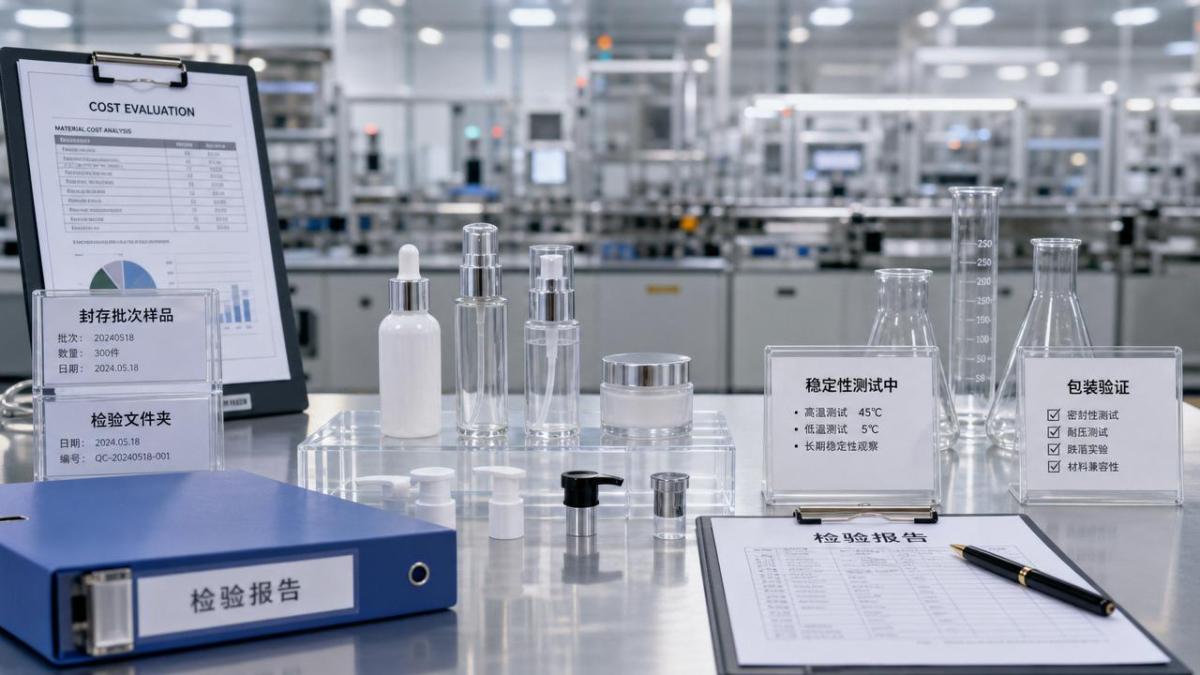
A quoted unit price usually reflects bulk production, filling, basic packaging labor, and an assumed order volume. It often excludes development iterations, stability testing, secondary packaging, freight volatility, inspection costs, and obsolete inventory exposure.
A private label skincare manufacturer may offer an attractive ex-works price, but finance teams need to convert that price into landed cost, launch cost, and lifecycle cost. These 3 views often tell different stories.
The 3 Cost Layers Finance Should Separate
- Quoted production cost: formula batching, filling, primary labor, and standard factory overhead.
- Commercial launch cost: sampling, artwork review, packaging trials, claims support, and initial quality checks.
- Operational lifecycle cost: reorders, batch variance control, returns, rework, slow-moving stock, and regulatory updates.
The lowest quotation can be rational for a short promotional run. It may be unsuitable for a hero SKU expected to ship 50,000 to 300,000 units annually with repeatable quality requirements.
Unit Cost Versus Margin Protection
If a $0.08 saving per unit increases rejection risk by even 2% on a 100,000-unit batch, the apparent saving may be offset by reinspection, repacking, expedited freight, or delayed revenue recognition.
Key Cost Drivers Beyond the Factory Quote
When evaluating a private label skincare manufacturer, finance and procurement teams should treat every quote as a cost model input, not a final economic answer. The following variables frequently reshape total cost.
The table below organizes the most common hidden cost categories, how they arise, and what financial approvers should request before approving supplier onboarding.
The key conclusion is practical: the best private label skincare manufacturer is not always the lowest bidder. It is the partner whose process reduces unmodeled expenses and makes cost assumptions auditable.
Formulation Stability Can Become a Balance Sheet Issue
A serum, cream, toner, or cleanser must remain commercially acceptable over its intended shelf life. Separation, discoloration, odor shift, or viscosity drift can convert finished goods into impaired inventory.
Financial approvers should ask whether the private label skincare manufacturer uses controlled stability protocols, retained samples, batch records, and packaging compatibility checks before releasing production quantities.
Compliance Documentation Has Real Processing Cost
Skincare products can require ingredient lists, product specifications, safety-related documents, batch traceability, allergen information, and market-specific label support. Missing documentation delays retailer onboarding and customs clearance.
A capable manufacturer should provide document packages within defined service windows, commonly 3–10 business days after technical confirmation. Slow documentation can delay first sales and strain launch budgets.
MOQ, Lead Time, and Working Capital Exposure
Minimum order quantity is one of the most important variables for finance. A lower unit price tied to a 20,000-unit MOQ may create more risk than a higher price at 5,000 units.
The private label skincare manufacturer should be evaluated against forecast confidence, SKU complexity, seasonal demand, and cash conversion cycle. Unit economics are incomplete without inventory velocity.
Inventory Cash Flow Questions
- How many days of stock does each MOQ create at current sales velocity?
- Can the supplier support phased releases across 2–4 shipments?
- What deposits are required before production, packaging purchase, and final release?
- Are reorder lead times stable during peak production months?
For an emerging skincare line, 180 days of inventory may be acceptable for a proven moisturizer, but dangerous for a new active serum with uncertain sell-through and evolving claims strategy.
Lead-Time Risk Is a Cost, Not Just a Schedule Issue
Typical private label skincare timelines can range from 6–16 weeks, depending on formula readiness, packaging procurement, testing scope, and queue capacity. Delays can trigger stockouts or late retailer launches.
Finance teams should quantify late-delivery exposure by estimating lost contribution margin, expedited logistics, promotional penalties, and the cost of holding safety stock equal to 4–8 weeks of demand.
Quality Failures and Regulatory Risk Allocation
Quality risk is often underpriced during supplier selection. A cosmetic defect may seem minor, but a microbial concern, incorrect label, or failed pump mechanism can freeze an entire batch.
Before signing with a private label skincare manufacturer, financial approvers should confirm who carries the cost of inspection, quarantine, rework, replacement, destruction, and customer claims when defects occur.
Cost Allocation Should Be Written, Not Assumed
A purchase agreement should define acceptance standards, batch release criteria, dispute timelines, and evidence requirements. Without these controls, a 3-week quality dispute can disrupt revenue and cash planning.
The following checklist helps finance teams compare risk governance among candidate manufacturers in a structured and measurable way.
The financial lesson is clear: quality systems convert uncertainty into manageable exposure. A supplier with disciplined controls may justify a higher price through lower failure probability.
Regulatory Readiness Varies by Market
A skincare product sold through e-commerce, retail chains, spas, or export distributors may face different documentation expectations. Finance should budget for market-specific review before committing to volume production.
If a private label skincare manufacturer cannot support ingredient transparency and batch documentation, the brand may need third-party consultants, adding cost and slowing commercialization by 2–8 weeks.
A Finance-Led Evaluation Framework
Financial approval should integrate procurement, quality, regulatory, logistics, and commercial planning. A practical scorecard makes the selection process less subjective and easier to defend internally.
For B2B decision teams, G-AIE’s benchmarking mindset is useful: compare physical production capabilities with data quality, process transparency, and operational resilience before committing capital.
Recommended 5-Step Approval Process
- Build a landed-cost model covering unit price, freight, duties, testing, packaging, and inspection.
- Request technical documentation, sample batch records, and quality release templates.
- Run a packaging and formula risk review before approving the first commercial PO.
- Model cash tied to MOQ, deposit structure, and 90-day or 180-day sell-through assumptions.
- Negotiate responsibility for rework, replacement, late delivery, and nonconforming batches.
This 5-step process reduces the likelihood of approving a private label skincare manufacturer based only on attractive pricing. It also creates a documented rationale for board or budget review.
Supplier Scoring Metrics
A balanced scorecard can assign 30% to quality and compliance, 25% to total cost, 20% to delivery reliability, 15% to technical capability, and 10% to communication responsiveness.
The exact weighting can change by business model. A clinical-positioned skincare brand may weight documentation higher, while a fast-moving retail brand may prioritize lead time and reorder flexibility.
Common Mistakes That Distort Cost Approval
Many cost overruns begin before production. They arise when teams compare quotes without normalizing assumptions, testing responsibilities, packaging source, deposit timing, and batch acceptance rules.
Financial approvers can prevent these errors by requiring a quote comparison worksheet with at least 6 categories: production, development, testing, packaging, logistics, and post-production quality support.
Mistake 1: Treating All Formulas as Equal
A simple rinse-off cleanser and an active-rich serum do not carry the same production risk. Viscosity, pH, preservative system, fragrance load, and packaging format all affect manufacturing complexity.
Mistake 2: Ignoring Packaging as a Technical Component
Airless pumps, glass bottles, jars, tubes, and sachets create different validation needs. A packaging issue can affect fill speed, leakage rate, consumer experience, and return costs.
Mistake 3: Approving MOQ Without Demand Discipline
A high MOQ can improve unit economics but weaken cash flow. If sell-through takes 12 months instead of 4 months, storage, discounting, and obsolescence may absorb the saving.
Mistake 4: Overlooking Change Control
Raw material substitutions, packaging supplier changes, or process adjustments should trigger notification and approval. Without change control, a repeat order may not match the approved launch batch.
When a Higher Quote May Be the Better Financial Decision
A higher quote can be financially sensible if it includes stronger release testing, lower MOQ, clearer documentation, predictable lead times, and better accountability for quality issues.
For example, a supplier charging $0.15 more per unit may still be preferable if it reduces safety stock by 30 days, prevents one failed production run, or accelerates market entry by 3 weeks.
Decision Indicators for Approval
- The manufacturer provides transparent cost breakdowns rather than a single bundled quote.
- Testing, documentation, and batch release responsibilities are defined before purchase order issuance.
- MOQ aligns with forecasted inventory turns and does not overload working capital.
- The supplier can support reorders within a practical 4–10 week planning window.
- Quality dispute procedures include evidence standards, timelines, and financial remedies.
These indicators help finance teams shift from price approval to risk-adjusted partner selection. That shift is essential for brands operating across volatile supply chains and demanding retail channels.
Final Guidance for Financial Approvers
Selecting a private label skincare manufacturer should be treated as a capital discipline exercise. The supplier influences margin, inventory exposure, compliance readiness, customer satisfaction, and launch reliability.
The strongest financial decision is rarely based on unit price alone. It comes from modeling total landed cost, operational risk, quality governance, documentation capability, and reorder stability.
G-AIE supports procurement directors, supply chain teams, and financial approvers with structured industrial intelligence and benchmarking perspectives across material science, manufacturing systems, and automation-enabled operations.
If your team is comparing manufacturing partners, refining supplier scorecards, or building a cost model for private label skincare production, contact us to discuss a tailored evaluation framework and explore more solutions.
Recommended News
 Sep 19, 2026When can a supply chain LLM reduce time spent finding shipment updates?Supply chain LLMs can cut shipment-update search time by connecting carrier events, ERP data, and documents—giving teams traceable answers and faster exception response.
 Sep 18, 2026How industrial monitoring equipment helps prevent unplanned downtimeIndustrial monitoring equipment helps teams detect early asset issues, prioritize maintenance, and prevent costly unplanned downtime. Explore practical strategies for reliable operations.
 Sep 17, 2026What next-gen harmonic drive research means for robot joint accuracyNext-gen harmonic drive research reveals how backlash, stiffness, thermal drift, and sensing shape robot joint accuracy. Explore smarter validation strategies.
 Sep 16, 2026How Southeast Asian climates affect cylinder seal frictionCylinder seal friction Southeast Asia: learn how humidity, heat, monsoons, and contamination affect motion stability, wear, and seal selection.
 Sep 15, 2026How to size DC gear motors for the required starting torqueGear motors DC sizing made practical: calculate starting torque, account for friction, gravity, inertia and voltage drop, then select a reliable motor with confidence.
 Sep 14, 2026How to verify high purity chemicals compliance before supplier approvalHigh purity chemicals compliance: learn how to verify supplier quality systems, CoAs, traceability, testing, and change control before approval.
 Sep 13, 2026What permits are needed to operate mapping drones in Europe?Mapping drones Europe: discover the permits, EASA categories, airspace approvals, site access, and GDPR checks needed for compliant aerial surveys.
 Sep 12, 2026What lead time should I expect for automatic transmission components? Planetary Gearboxes delivery forecasting for OEM planningWhat lead time should I expect for automatic transmission components? Get dynamic, AI-powered planetary gearbox delivery forecasting—designed for OEMs building next-gen hybrid & commercial powertrains.
 Sep 12, 2026Can polyamide replace metal in load-bearing components? Polymer Pulse structural performance data for 2026 applicationsCan polyamide replace metal in load-bearing components? Discover Polymer Pulse’s 2026 structural data—real-world performance, weight savings, and reliability breakthroughs.
 Sep 12, 2026How to handle a power electronics warranty claim: Harmonic Reducers documentation and escalation pathHow do I handle a power electronics warranty claim? Get a fast, intelligent, evidence-driven resolution for harmonic reducers—no bureaucracy, just precision diagnostics and real-time escalation.
 Sep 12, 2026Which motion control specifications matter most before purchase? Torque Logic selection criteria for automation engineersWhich motion control specifications are most important before purchase? Discover Torque Logic—the 4 non-negotiable, AI-aligned criteria that cut TCO by 27–41% and boost motion system availability to 99.992%.
 Sep 13, 2026Is agentic AI reliable enough for supplier screening? Supply Chain LLM validation framework for procurement teamsIs agentic AI reliable enough for supplier screening? Discover a rigorous LLM validation framework built for procurement teams—grounded in material traceability, regulatory compliance, and real-world operational constraints.
 Sep 14, 2026How to maintain edge AI systems after deployment: Predictive Maint AI operational protocols for field techniciansHow do I maintain edge AI systems after deployment? Discover predictive, physics-aware operational protocols designed for real-world field technicians—sustaining intelligence where silicon meets steel.
 Sep 15, 2026What compliance documents must a bioplastics supplier provide? Bio-Plastics regulatory checklist for procurementWhat compliance documents should a bioplastics supplier provide? Get our actionable regulatory checklist for food, medical & EU-bound applications.
 Sep 16, 2026How to prevent PET film defects during production: Barrier Films process control best practicesHow can I prevent PET film defects during production? Discover physics-driven barrier film process control—thermal precision, dynamic tension management & surface energy optimization.
 Sep 17, 2026Are thermoplastics suitable for long-term outdoor use? Engineering Resins durability assessment in 2026 UV/weather exposureAre thermoplastics suitable for long-term outdoor use? Discover 2026’s engineering resin durability insights — UV/weather resistance ranked, tested & actionable.
 Sep 18, 2026What to do when a servo motor fails during production: A Servo Actuators troubleshooting guide for maintenance teamsWhat should I do if a servo motor fails during production? Get a field-tested, AI-aware troubleshooting guide for maintenance teams—minimize downtime, maximize OEE.
 Sep 12, 2026How to compare wholesale party supplies by minimum order valueCompare wholesale party supplies by minimum order value, freight, SKU flexibility, and stock risk to choose suppliers that protect margins and simplify replenishment.
 Sep 11, 2026How proportional solenoid linearity affects precision motion controlProportional solenoid linearity directly affects precision motion control, valve metering, stability, and calibration. Learn how to evaluate performance for reliable automation.
 Sep 10, 2026When does supplier information platform automation reduce onboarding delays?Supplier information platform automation reduces onboarding delays by streamlining data collection, routing, renewals, and compliance checks—without replacing expert technical review.
 Sep 09, 2026How to size robotic motion systems for AMR payload changesRobotic motion systems for AMR payload changes: learn how to size motors, wheels, gearing, traction, and controls for safer, reliable performance.
 Sep 08, 2026How to perform a cylinder rod buckling calculation for long strokesCylinder rod buckling calculation made practical: learn how to assess effective length, end conditions, rod stiffness, load forces, and safety margins for reliable long-stroke cylinder design.
 Sep 07, 2026How to estimate the cost of industrial mechanical components before orderingIndustrial mechanical components cost: learn how to estimate material, machining, tooling, inspection, logistics, and hidden expenses before ordering. Compare quotes confidently and reduce sourcing risk.
 Sep 07, 2026What Is a Product Standards Database Used For?Product standards database guide: learn how to compare requirements, verify revisions, control specifications, and reduce compliance risks across design, sourcing, and production.