Search News
Industry Portal
Popular Tags
Vietnam Advances SDS Labeling Deadline for Industrial Catalysts to July 2026
Author
Time
Click Count
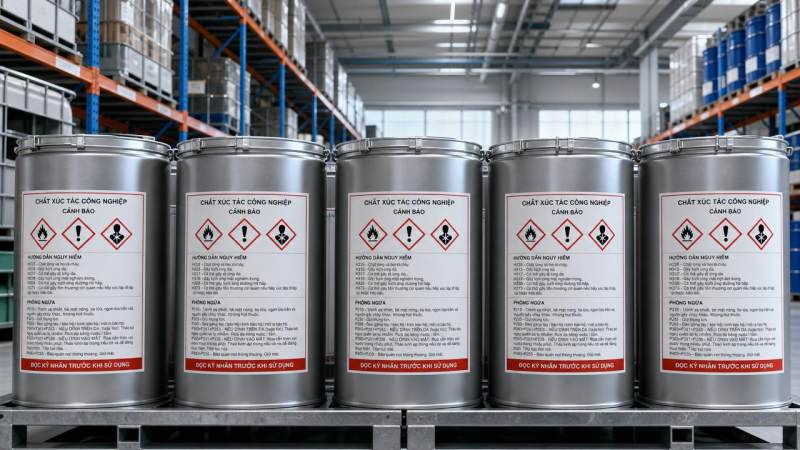
Vietnam’s Ministry of Industry and Trade (MOIT) has accelerated the enforcement date for Vietnamese-language Safety Data Sheets (SDS) and labels for imported industrial catalysts — moving it forward from January 2027 to 1 July 2026. Announced on 2 May 2026, this abrupt regulatory shift directly affects exporters, importers, distributors, and supply chain operators engaged in the industrial catalyst trade between China and Vietnam.
Event Overview
On 2 May 2026, Vietnam’s Ministry of Industry and Trade (MOIT) issued an urgent notice mandating that all imported industrial catalysts must be accompanied by MOIT-recognized Vietnamese-language Safety Data Sheets (SDS), effective 1 July 2026. This replaces the originally scheduled implementation date of 1 January 2027. The notice requires every shipment to include a compliant SDS in Vietnamese format approved by MOIT; non-compliant consignments will be rejected at warehousing facilities in Vietnam.
Which Subsectors Are Affected
Direct Exporters (e.g., Chinese Chemical Manufacturers)
Exporters supplying industrial catalysts to Vietnam must now ensure each batch includes a MOIT-recognized Vietnamese SDS. Failure to do so may result in customs delays, cargo rejection, or re-export costs. Since SDS translation and format validation require time and official review, last-minute preparation is no longer viable.
Distributors and Importers in Vietnam
Vietnamese distributors handling industrial catalysts face immediate operational risk: goods without valid Vietnamese SDS will be refused entry into warehouses. This impacts inventory planning, order fulfillment timelines, and contractual obligations with downstream customers such as petrochemical or polymer producers.
Supply Chain & Compliance Service Providers
Third-party SDS translation, regulatory consulting, and labeling service providers are seeing a surge in urgent requests. However, MOIT’s recognition process for SDS templates remains opaque — meaning service providers cannot guarantee approval timelines without direct coordination with MOIT-accredited reviewers.
What Relevant Companies or Practitioners Should Focus On Now
Confirm MOIT’s Official SDS Template and Submission Process
The notice references MOIT-recognized SDS formats but does not publicly link to the template or outline the validation pathway. Companies should monitor MOIT’s official portal and contact MOIT’s Chemical Management Department directly to obtain current filing requirements and turnaround expectations.
Prioritize High-Volume or High-Risk Catalyst Categories
Not all industrial catalysts carry equal regulatory scrutiny. Those used in petroleum refining, ammonia synthesis, or emission control systems are more likely to undergo stricter documentation checks. Exporters should identify and fast-track SDS compliance for these priority categories first.
Initiate Supplier Alignment and Internal Documentation Review
Chinese manufacturers must verify whether their existing SDS authoring tools support Vietnamese-language output and MOIT-mandated section sequencing. Concurrently, procurement and logistics teams should update internal checklists to include SDS verification before shipment release — treating it as a mandatory pre-shipment gate.
Editorial Perspective / Industry Observation
Observably, this policy acceleration signals Vietnam’s broader push toward harmonizing chemical regulatory infrastructure with ASEAN GHS frameworks — but implementation is outpacing guidance. Analysis shows the move is less about new hazard classification and more about enforcing language localization as a de facto market access requirement. From an industry perspective, it functions primarily as a procedural barrier rather than a technical safety upgrade. Current enforcement appears focused on documentation readiness, not on substance-level re-evaluation of catalysts. That said, the compressed timeline suggests MOIT may be testing responsiveness ahead of wider SDS mandates across other chemical subcategories.
Consequently, this development is best understood not as a one-off deadline shift, but as an early indicator of tightening administrative controls over chemical imports — especially for products with industrial-scale applications and cross-border supply chains rooted in China.
Conclusion
This notice marks a material change in documentation compliance timing for industrial catalyst trade with Vietnam. It underscores the growing importance of proactive regulatory alignment — particularly around language-specific SDS — in export-dependent chemical supply chains. Rather than representing a technical revision, it reflects an administrative enforcement pivot. Companies are advised to treat the 1 July 2026 date as operationally binding and begin validation workflows immediately — not as contingency planning, but as core logistics protocol.
Information Sources
Main source: Official urgent notice issued by Vietnam’s Ministry of Industry and Trade (MOIT), dated 2 May 2026.
Note: MOIT’s publicly available SDS template, recognition procedure, and list of accredited reviewers remain pending formal publication. These elements require ongoing monitoring.
Recommended News
 May 22, 2026Oil Viscosity Effect on Pump Performance Across Cold and Hot StartsOil viscosity effect on pump performance explained for cold and hot starts. Learn how viscosity impacts efficiency, wear, pressure stability, and how to choose the right oil for reliable operation.
 May 22, 2026Hydraulic Motor Torque Density: When Higher Output Is Worth the CostHydraulic motor torque density explained: learn when higher output justifies higher cost, how it boosts compact machine design, and where it delivers real system value.
 May 22, 2026Hydraulic Manifold Flow Resistance Data for Smarter Block DesignHydraulic manifold flow resistance data helps teams design smarter blocks with lower pressure loss, better stability, and stronger cost control. Learn what to measure and how to compare options.
![]() May 22, 2026Accumulator Precharge Metrics: A Fast Check Before Pressure DropsAccumulator precharge metrics help maintenance teams spot charge drift early, avoid pressure-related downtime, and make faster, safer service decisions before performance drops.
May 22, 2026Accumulator Precharge Metrics: A Fast Check Before Pressure DropsAccumulator precharge metrics help maintenance teams spot charge drift early, avoid pressure-related downtime, and make faster, safer service decisions before performance drops. May 22, 2026Cylinder Seal Friction Metrics That Predict Leakage and DriftCylinder seal friction metrics reveal early signs of leakage, stick-slip, and actuator drift. Learn which friction trends matter most to reduce downtime and improve rebuild decisions.
 May 22, 2026Hose Burst Pressure Safety Data: When Margins Are Too TightHose burst pressure safety data reveals when safety margins are too tight. Learn how to reduce failure risk, improve compliance, and make smarter industrial decisions.
 May 22, 2026Servo Valve Frequency Response Data: What Good Tracking Looks LikeServo valve frequency response data reveals how well a valve tracks commands across real operating conditions. Learn what good tracking looks like, spot early drift, and improve control stability.
 May 22, 2026How System Thermal Balance Data Reveals Hidden Energy LossSystem thermal balance data reveals hidden energy loss across industrial systems, helping leaders cut waste, improve efficiency, and prioritize high-impact actions with confidence.
 May 22, 2026Valve Response Time Benchmarks for Stable Motion Control in 2026Valve response time benchmarks for 2026 reveal how timing consistency improves stable motion control, supplier evaluation, and deployment confidence across automated industrial systems.
 May 22, 2026ISO 4406 Hydraulic Contamination Limits That Prevent Early Valve WearHydraulic system contamination standards (ISO 4406) help prevent early valve wear, reduce downtime, and improve reliability. Learn how cleaner oil limits protect hydraulic performance.
 May 22, 2026New Phytosanitary Rules for African Dried Chilies & Functional Coatings OpportunityNew phytosanitary rules for African dried chilies open functional coatings opportunity—GB 4806.10-compliant solutions gain regulatory recognition for drying trays in China-bound spice supply chains.
 May 22, 2026SpaceX to Build 10-GW Solar Factory in Texas, Boosting Demand for Inspection Drones and Anti-Drone SystemsSpaceX’s 10-GW Texas solar factory fuels urgent global demand for inspection drones and anti-drone systems—key export opportunity with defense-grade specs.
: Export Controls on 5 Chinese Firms for US-Bound Electronic Grade Chemicals and Catalyst Precursors") May 22, 2026MOFCOM Notice No. 21 (2026): Export Controls on 5 Chinese Firms for US-Bound Electronic Grade Chemicals and Catalyst PrecursorsMOFCOM Notice No. 21 (2026) imposes export controls on 5 Chinese firms for US-bound electronic grade chemicals & catalyst precursors—key insights, affected sectors, and compliance actions revealed.
May 22, 2026MOFCOM Notice No. 21 (2026): Export Controls on 5 Chinese Firms for US-Bound Electronic Grade Chemicals and Catalyst PrecursorsMOFCOM Notice No. 21 (2026) imposes export controls on 5 Chinese firms for US-bound electronic grade chemicals & catalyst precursors—key insights, affected sectors, and compliance actions revealed. May 22, 2026UK Consumer Confidence Rises, Boosting Gearbox Export OutlookGearbox exporters: UK consumer confidence hits −23—highest since Oct 2025—boosting demand from industrial integrators. Act now to capitalise.
 May 22, 2026MSCI to Release 2026 Global Market Accessibility Review on June 18MSCI 2026 Global Market Accessibility Review (June 18) raises ESG transparency stakes for harmonic reducers & servo actuators exporters — act now to secure EU/US procurement access.
 May 22, 2026China Unveils Textile & Auto Materials Brand PlanChina's new Textile & Auto Materials Brand Plan prioritizes PA66-GF, PP-LGF, and UV-resistant coatings—unlock faster export green channels & global NEV opportunities.
 May 22, 2026EU Unveils 2026 UAS Interoperability Framework DraftEU's 2026 UAS Interoperability Framework draft mandates EN 17890:2026 compliance—key for drone exporters, suppliers & integrators targeting EU market access.
 May 22, 2026FDA Updates USP<661.2> Migration Limits for Plastic PackagingFDA updates USP<661.2> migration limits for plastic packaging—critical for medical & semiconductor exporters. Act now to ensure Al, Cr, Ni compliance.
 May 22, 2026Six Ministries Expand Duty-Free Shopping for Foreign VisitorsSix Ministries expand duty-free shopping for foreign visitors—unlock tax refunds on industrial catalysts, electronic-grade chemicals & more. Boost inbound B2B procurement now.
 May 22, 2026SCIE 2026 Prep Announced at State Council Press BriefingSCIE 2026 prep announced: Discover how Supply Chain LLMs, Digital Twin AI, cargo drones & G-AIE readiness reshape global procurement and compliance.
 May 21, 2026Piston Pump Volumetric Efficiency Data: What Counts as Acceptable Loss?Piston pump volumetric efficiency data helps you judge whether loss is normal or a warning sign. Learn acceptable ranges, trend signals, and practical maintenance actions.
 May 21, 2026Quick Release Coupling Factory Checklist for Faster Field MaintenanceQuick release coupling factory checklist for faster field maintenance. Compare quality, compatibility, traceability, and support to reduce downtime and source with confidence.
 May 21, 2026Low Noise Hydraulic Pump Wholesale: When Noise Reduction Cuts DowntimeLow noise hydraulic pump wholesale helps cut downtime, improve safety, and boost system reliability. Learn how smarter sourcing reduces maintenance risk and supports stable industrial performance.
 May 21, 2026Hydraulic Steering Unit Factory: Lead Time, Testing, and Warranty GapsHydraulic steering unit factory checklist: compare lead time stability, testing depth, traceability, and hidden warranty gaps before sourcing. Reduce risk and choose with confidence.