Search News
Industry Portal
Popular Tags
Crumb Distribution Control in Commercial Fried Food Coatings
Author
Time
Click Count
What Crumb Distribution Means
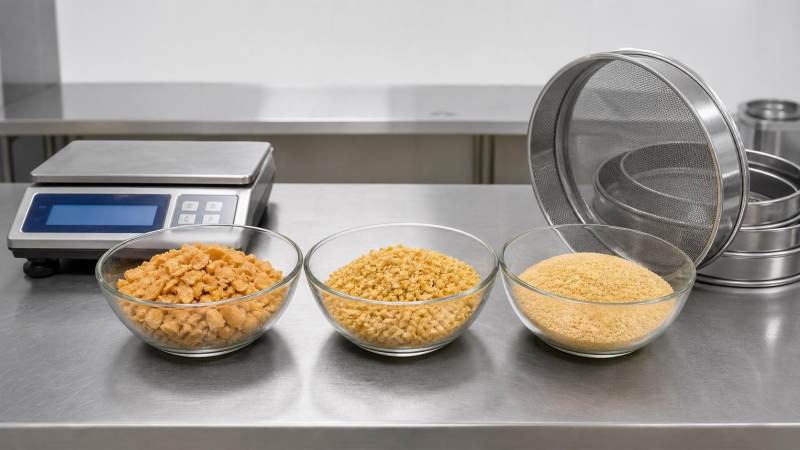
Crumb distribution describes how coarse particles, medium particles, fine particles, and dust are balanced in a coating material. In commercial fried foods, this balance affects adhesion, surface coverage, crunch, visual texture, oil impression, and waste at the breading station. It is a technical control point, not only a visual preference.
A coating with too many large particles may look textured but may not adhere evenly. A coating with too many fine particles may cover the surface but produce a dense bite. A well-designed distribution gives enough structure for crispness while still allowing the coating system to cover the food uniformly.
Particle Size and Adhesion
Adhesion depends on the interaction between food surface, predust, batter, and dry coating. Larger particles need enough tack from the batter layer to stay attached. Fine particles can fill gaps, but excess fines may absorb moisture and create pasty areas. This is why the same crumb may behave differently on chicken, seafood, vegetables, or prepared snacks.
Technical testing should separate adhesion failure from distribution mismatch. If large particles fall away, the batter may be too thin or the line may be too aggressive. If the surface looks flat, the distribution may contain too many fines or the crumb may be broken during handling. Observing the failure mode is more useful than simply changing suppliers.
Batter Viscosity and Pickup
Batter viscosity controls how much dry coating can attach. A thin batter may not hold coarse particles, while a thick batter can create a heavy crust. For consistent coating pickup, the dry blend and the wet layer must be matched. Production teams should track batter condition during the shift because viscosity can change with time, temperature, and use.
When fried chicken coating powder is used with crumbs or crispy blends, buyers should ask how the supplier expects the powder to interact with batter and particle texture. A technical conversation can prevent using the right ingredient in the wrong process.
Dust Control and Waste
Excess dust can create poor workplace handling, uneven coating, darker frying residue, and higher waste. Some fines are useful because they fill spaces and support coverage, but too many fines can reduce the open texture that buyers expect from crispy coatings. Dust can also increase when packaging is crushed or material is handled roughly.
Quality teams should inspect the coating before use and after transfer into the breading station. If the distribution changes during production, the cause may be vibration, repeated reuse, moisture pickup, or operator handling. Good crumb distribution control includes both supplier specification and on-site handling.
Technical Control Table
The following table summarizes how distribution variables affect fried food coating performance.
Testing Methods for Buyers
Buyers do not always need laboratory equipment to make better decisions. A simple sieve check, tray observation, pickup comparison, cooked appearance review, and fall-off measurement can reveal whether the particle profile is suitable. For larger programs, more formal particle-size data and retained samples may be useful.
Test the coating on the actual product. Chicken strips, shrimp, fish fillets, and vegetable pieces expose different weaknesses. Record the result after cooking and after holding. If the product is frozen or reheated, test after those steps as well. Distribution control is only meaningful when connected to the finished food.
QA Checklist
- Define the desired texture profile.
- Confirm whether coarse, medium, fine, and dust fractions are suitable.
- Match batter viscosity to particle size.
- Inspect packaging for crushing.
- Avoid returning exposed coating to sealed stock.
- Compare new lots with retained approved samples.
- Record fall-off, color, bite, and waste during trials.
- Train operators to notice distribution changes during production.
Implementation Notes for This Article Type
For a technical-analysis article, the buyer needs a mechanism-level explanation without pretending that every facility uses the same formula or equipment. The useful question is how variables interact. In coating systems, particle size interacts with batter viscosity. In sauce systems, emulsion structure interacts with dosing and holding. In fruit ingredients, water activity and structure interact with packaging and texture.
Technical review should connect measurements with decisions. A number or observation is useful only if it changes how the buyer selects, stores, applies, or approves the material. For example, a particle profile can guide coating method, a viscosity observation can guide pump choice, and a storage note can guide package size. This keeps the article practical for procurement and QA readers.
Testing should reproduce the real stress points. A sample that performs in a small bench test may fail under line vibration, repeated opening, long service holding, delivery packaging, or export transport. Technical approval should therefore include both controlled evaluation and use-condition evaluation. The goal is not laboratory perfection; it is predictable behavior in the buyer's actual workflow.
A technical article should also mark the limits of the explanation. Without the buyer's exact formulation, equipment, and process conditions, no article should promise a guaranteed outcome. It should give a structured way to ask better questions, run better trials, and interpret supplier claims more carefully.
The final technical review should identify which variables are controlled by the supplier and which are controlled by the buyer. This distinction keeps communication fair. The supplier may control particle profile, formulation, or packaging, while the buyer controls storage, equipment settings, application sequence, and service conditions.
For fried-food coating work, the technical review should also include a simple before-and-after comparison. Look at the dry material before use, the coated food before cooking, the surface immediately after cooking, and the surface after holding. These four checkpoints show whether the issue begins in storage, application, frying, or service. Without that sequence, a team may see only the final defect and miss the step where the defect actually starts.
Technical teams should also decide what level of variation is acceptable. Food coatings are physical materials, so small differences in particle appearance can occur. The question is whether those differences affect pickup, color, bite, waste, or customer perception. A clear acceptance range makes future lot reviews faster and prevents arguments based only on subjective appearance.
Finally, technical notes should be written in language that procurement can use. If the recommendation is to change batter viscosity, reduce reuse time, protect packaging, or request a different particle profile, state that plainly. A technical article is most useful when it turns mechanisms into actions that buyers can discuss with suppliers and production teams.
QA teams can support this by keeping a small reference library: approved dry sample, cooked photo, package photo, and trial record. That reference library does not need to be complex. It simply gives future buyers and line teams a shared baseline when the same product is reordered.
It also helps new staff understand what acceptable coating behavior should look like.
That shared reference reduces subjective disputes during busy production reviews later.
FAQ
What is crumb distribution control?
It is the management of coarse, medium, fine, and dust particles so coating texture and adhesion remain consistent.
Why do large particles fall off?
The batter may not hold them, the food surface may be too wet, or handling may be too aggressive.
Are fine particles bad?
No. Fine particles help coverage, but too many can create dense texture and dust problems.
How can buyers test distribution?
Use sample observation, simple sieving, pickup tests, cooked appearance checks, and retained sample comparison.
Why does packaging matter?
Crushing and rough handling can break particles and change the distribution before production.
Editorial Review Note
This article is intended as buyer-facing guidance for foodservice, ingredient sourcing, and production teams. It avoids fabricated prices, unsupported performance claims, invented case numbers, and unverified certification statements.
Recommended News
 Sep 19, 2026When can a supply chain LLM reduce time spent finding shipment updates?Supply chain LLMs can cut shipment-update search time by connecting carrier events, ERP data, and documents—giving teams traceable answers and faster exception response.
 Sep 18, 2026How industrial monitoring equipment helps prevent unplanned downtimeIndustrial monitoring equipment helps teams detect early asset issues, prioritize maintenance, and prevent costly unplanned downtime. Explore practical strategies for reliable operations.
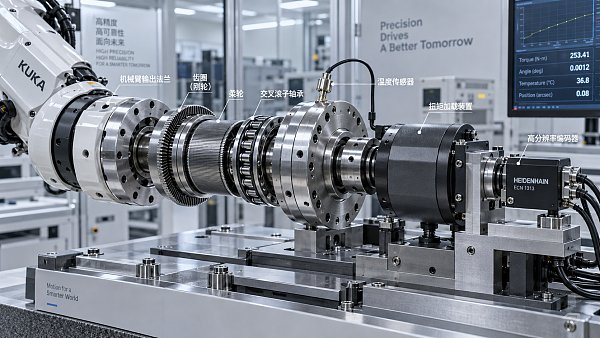
 Sep 17, 2026What next-gen harmonic drive research means for robot joint accuracyNext-gen harmonic drive research reveals how backlash, stiffness, thermal drift, and sensing shape robot joint accuracy. Explore smarter validation strategies.
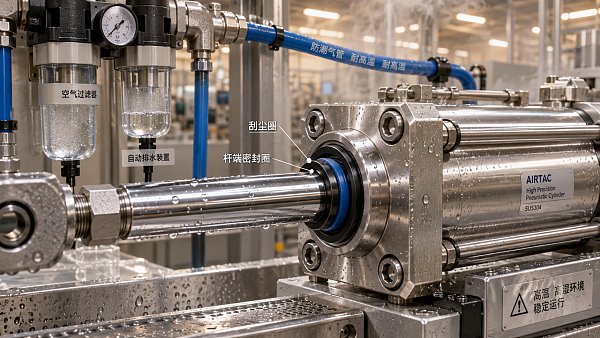
 Sep 16, 2026How Southeast Asian climates affect cylinder seal frictionCylinder seal friction Southeast Asia: learn how humidity, heat, monsoons, and contamination affect motion stability, wear, and seal selection.
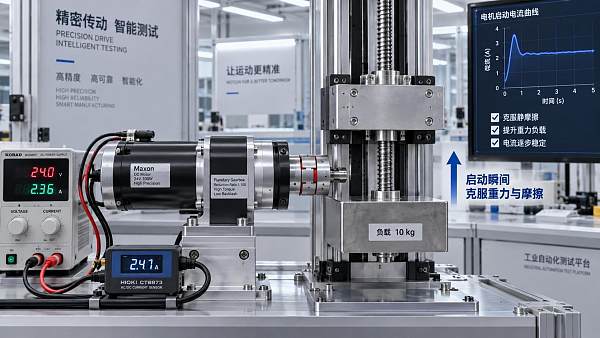
 Sep 15, 2026How to size DC gear motors for the required starting torqueGear motors DC sizing made practical: calculate starting torque, account for friction, gravity, inertia and voltage drop, then select a reliable motor with confidence.
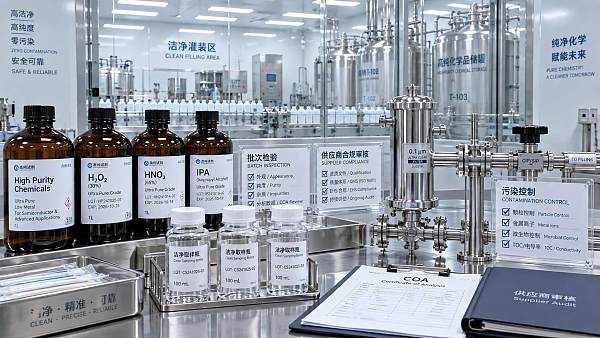
 Sep 14, 2026How to verify high purity chemicals compliance before supplier approvalHigh purity chemicals compliance: learn how to verify supplier quality systems, CoAs, traceability, testing, and change control before approval.
 Sep 13, 2026What permits are needed to operate mapping drones in Europe?Mapping drones Europe: discover the permits, EASA categories, airspace approvals, site access, and GDPR checks needed for compliant aerial surveys.
 Sep 12, 2026What lead time should I expect for automatic transmission components? Planetary Gearboxes delivery forecasting for OEM planningWhat lead time should I expect for automatic transmission components? Get dynamic, AI-powered planetary gearbox delivery forecasting—designed for OEMs building next-gen hybrid & commercial powertrains.
 Sep 12, 2026Can polyamide replace metal in load-bearing components? Polymer Pulse structural performance data for 2026 applicationsCan polyamide replace metal in load-bearing components? Discover Polymer Pulse’s 2026 structural data—real-world performance, weight savings, and reliability breakthroughs.
 Sep 12, 2026How to handle a power electronics warranty claim: Harmonic Reducers documentation and escalation pathHow do I handle a power electronics warranty claim? Get a fast, intelligent, evidence-driven resolution for harmonic reducers—no bureaucracy, just precision diagnostics and real-time escalation.
 Sep 12, 2026Which motion control specifications matter most before purchase? Torque Logic selection criteria for automation engineersWhich motion control specifications are most important before purchase? Discover Torque Logic—the 4 non-negotiable, AI-aligned criteria that cut TCO by 27–41% and boost motion system availability to 99.992%.
 Sep 13, 2026Is agentic AI reliable enough for supplier screening? Supply Chain LLM validation framework for procurement teamsIs agentic AI reliable enough for supplier screening? Discover a rigorous LLM validation framework built for procurement teams—grounded in material traceability, regulatory compliance, and real-world operational constraints.
 Sep 14, 2026How to maintain edge AI systems after deployment: Predictive Maint AI operational protocols for field techniciansHow do I maintain edge AI systems after deployment? Discover predictive, physics-aware operational protocols designed for real-world field technicians—sustaining intelligence where silicon meets steel.
 Sep 15, 2026What compliance documents must a bioplastics supplier provide? Bio-Plastics regulatory checklist for procurementWhat compliance documents should a bioplastics supplier provide? Get our actionable regulatory checklist for food, medical & EU-bound applications.
 Sep 16, 2026How to prevent PET film defects during production: Barrier Films process control best practicesHow can I prevent PET film defects during production? Discover physics-driven barrier film process control—thermal precision, dynamic tension management & surface energy optimization.
 Sep 17, 2026Are thermoplastics suitable for long-term outdoor use? Engineering Resins durability assessment in 2026 UV/weather exposureAre thermoplastics suitable for long-term outdoor use? Discover 2026’s engineering resin durability insights — UV/weather resistance ranked, tested & actionable.
 Sep 18, 2026What to do when a servo motor fails during production: A Servo Actuators troubleshooting guide for maintenance teamsWhat should I do if a servo motor fails during production? Get a field-tested, AI-aware troubleshooting guide for maintenance teams—minimize downtime, maximize OEE.
 Sep 12, 2026How to compare wholesale party supplies by minimum order valueCompare wholesale party supplies by minimum order value, freight, SKU flexibility, and stock risk to choose suppliers that protect margins and simplify replenishment.
 Sep 11, 2026How proportional solenoid linearity affects precision motion controlProportional solenoid linearity directly affects precision motion control, valve metering, stability, and calibration. Learn how to evaluate performance for reliable automation.
 Sep 10, 2026When does supplier information platform automation reduce onboarding delays?Supplier information platform automation reduces onboarding delays by streamlining data collection, routing, renewals, and compliance checks—without replacing expert technical review.
 Sep 09, 2026How to size robotic motion systems for AMR payload changesRobotic motion systems for AMR payload changes: learn how to size motors, wheels, gearing, traction, and controls for safer, reliable performance.
 Sep 08, 2026How to perform a cylinder rod buckling calculation for long strokesCylinder rod buckling calculation made practical: learn how to assess effective length, end conditions, rod stiffness, load forces, and safety margins for reliable long-stroke cylinder design.
 Sep 07, 2026How to estimate the cost of industrial mechanical components before orderingIndustrial mechanical components cost: learn how to estimate material, machining, tooling, inspection, logistics, and hidden expenses before ordering. Compare quotes confidently and reduce sourcing risk.
 Sep 07, 2026What Is a Product Standards Database Used For?Product standards database guide: learn how to compare requirements, verify revisions, control specifications, and reduce compliance risks across design, sourcing, and production.