Search News
Industry Portal
Popular Tags
What Packaging Buyers Should Know Before Ordering PET Film
Author
Time
Click Count
Industrial sourcing works best when the buyer connects product selection with real operating conditions. For thermoforming factories, food packaging buyers, printing converters, blister pack producers, and plastic sheet distributors, PET Film should be evaluated through application, inspection, delivery, storage, and after-arrival workflow. A catalog page can confirm the category, but the purchase order must explain how the item will be formed, installed, protected, maintained, or resold.
This article gives procurement teams a practical framework for evaluating the product without relying on fabricated prices, unsupported statistics, or exaggerated claims. It focuses on fields that can be checked before shipment: specification clarity, supplier communication, document control, packaging, and receiving discipline. The goal is to make the buying decision easier to review and safer to repeat.
Understand the Material Role
Understand the Material Role is where a buyer turns a product name into a practical specification. For thermoforming factories, food packaging buyers, printing converters, blister pack producers, and plastic sheet distributors, the material or component is usually tied to clear packaging, formed trays, printed sleeves, folding boxes, display packs, and general rigid film conversion. If the inquiry only lists a keyword and a target price, the supplier may not see the service condition, processing route, packing risk, or document requirement that determines whether the order works after arrival.
The main risk is unclear thickness range, poor flatness, haze variation, weak forming behavior, moisture exposure, and packaging damage. These issues are easier to prevent during quotation than to solve after shipment. A stronger request records the application, key technical fields, inspection expectations, label format, and packing method before the quotation is treated as final. This gives the buyer a fairer basis for comparing suppliers.
Buyers should treat clarity, stiffness, thickness, forming temperature, printability, roll handling, and storage discipline as connected decisions. When one field changes, the team should review its effect on cost, lead time, receiving, processing, installation, and resale. This habit is especially useful for repeat orders because it prevents silent specification drift between batches and keeps communication factual.
Match Film Properties to Packaging Use
Match Film Properties to Packaging Use is where a buyer turns a product name into a practical specification. For thermoforming factories, food packaging buyers, printing converters, blister pack producers, and plastic sheet distributors, the material or component is usually tied to clear packaging, formed trays, printed sleeves, folding boxes, display packs, and general rigid film conversion. If the inquiry only lists a keyword and a target price, the supplier may not see the service condition, processing route, packing risk, or document requirement that determines whether the order works after arrival.
The main risk is unclear thickness range, poor flatness, haze variation, weak forming behavior, moisture exposure, and packaging damage. These issues are easier to prevent during quotation than to solve after shipment. A stronger request records the application, key technical fields, inspection expectations, label format, and packing method before the quotation is treated as final. This gives the buyer a fairer basis for comparing suppliers.
Buyers should treat clarity, stiffness, thickness, forming temperature, printability, roll handling, and storage discipline as connected decisions. When one field changes, the team should review its effect on cost, lead time, receiving, processing, installation, and resale. This habit is especially useful for repeat orders because it prevents silent specification drift between batches and keeps communication factual.
Check Thickness and Flatness
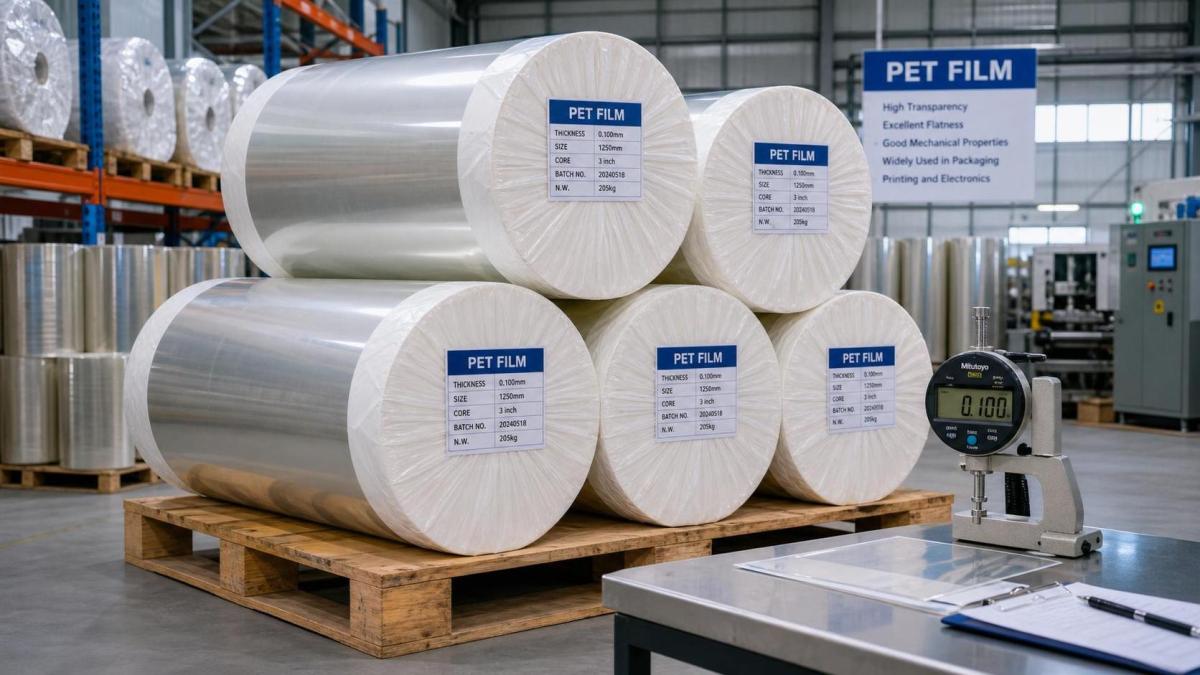
Check Thickness and Flatness is where a buyer turns a product name into a practical specification. For thermoforming factories, food packaging buyers, printing converters, blister pack producers, and plastic sheet distributors, the material or component is usually tied to clear packaging, formed trays, printed sleeves, folding boxes, display packs, and general rigid film conversion. If the inquiry only lists a keyword and a target price, the supplier may not see the service condition, processing route, packing risk, or document requirement that determines whether the order works after arrival.
The main risk is unclear thickness range, poor flatness, haze variation, weak forming behavior, moisture exposure, and packaging damage. These issues are easier to prevent during quotation than to solve after shipment. A stronger request records the application, key technical fields, inspection expectations, label format, and packing method before the quotation is treated as final. This gives the buyer a fairer basis for comparing suppliers.
Buyers should treat clarity, stiffness, thickness, forming temperature, printability, roll handling, and storage discipline as connected decisions. When one field changes, the team should review its effect on cost, lead time, receiving, processing, installation, and resale. This habit is especially useful for repeat orders because it prevents silent specification drift between batches and keeps communication factual.
Plan Printing and Forming Requirements
Plan Printing and Forming Requirements is where a buyer turns a product name into a practical specification. For thermoforming factories, food packaging buyers, printing converters, blister pack producers, and plastic sheet distributors, the material or component is usually tied to clear packaging, formed trays, printed sleeves, folding boxes, display packs, and general rigid film conversion. If the inquiry only lists a keyword and a target price, the supplier may not see the service condition, processing route, packing risk, or document requirement that determines whether the order works after arrival.
The main risk is unclear thickness range, poor flatness, haze variation, weak forming behavior, moisture exposure, and packaging damage. These issues are easier to prevent during quotation than to solve after shipment. A stronger request records the application, key technical fields, inspection expectations, label format, and packing method before the quotation is treated as final. This gives the buyer a fairer basis for comparing suppliers.
Buyers should treat clarity, stiffness, thickness, forming temperature, printability, roll handling, and storage discipline as connected decisions. When one field changes, the team should review its effect on cost, lead time, receiving, processing, installation, and resale. This habit is especially useful for repeat orders because it prevents silent specification drift between batches and keeps communication factual.
Protect Rolls During Storage
Protect Rolls During Storage is where a buyer turns a product name into a practical specification. For thermoforming factories, food packaging buyers, printing converters, blister pack producers, and plastic sheet distributors, the material or component is usually tied to clear packaging, formed trays, printed sleeves, folding boxes, display packs, and general rigid film conversion. If the inquiry only lists a keyword and a target price, the supplier may not see the service condition, processing route, packing risk, or document requirement that determines whether the order works after arrival.
The main risk is unclear thickness range, poor flatness, haze variation, weak forming behavior, moisture exposure, and packaging damage. These issues are easier to prevent during quotation than to solve after shipment. A stronger request records the application, key technical fields, inspection expectations, label format, and packing method before the quotation is treated as final. This gives the buyer a fairer basis for comparing suppliers.
Buyers should treat clarity, stiffness, thickness, forming temperature, printability, roll handling, and storage discipline as connected decisions. When one field changes, the team should review its effect on cost, lead time, receiving, processing, installation, and resale. This habit is especially useful for repeat orders because it prevents silent specification drift between batches and keeps communication factual.
Compare Suppliers With Practical Evidence
Compare Suppliers With Practical Evidence is where a buyer turns a product name into a practical specification. For thermoforming factories, food packaging buyers, printing converters, blister pack producers, and plastic sheet distributors, the material or component is usually tied to clear packaging, formed trays, printed sleeves, folding boxes, display packs, and general rigid film conversion. If the inquiry only lists a keyword and a target price, the supplier may not see the service condition, processing route, packing risk, or document requirement that determines whether the order works after arrival.
The main risk is unclear thickness range, poor flatness, haze variation, weak forming behavior, moisture exposure, and packaging damage. These issues are easier to prevent during quotation than to solve after shipment. A stronger request records the application, key technical fields, inspection expectations, label format, and packing method before the quotation is treated as final. This gives the buyer a fairer basis for comparing suppliers.
Buyers should treat clarity, stiffness, thickness, forming temperature, printability, roll handling, and storage discipline as connected decisions. When one field changes, the team should review its effect on cost, lead time, receiving, processing, installation, and resale. This habit is especially useful for repeat orders because it prevents silent specification drift between batches and keeps communication factual.
Practical Buyer Evaluation Table
Pre-Order Checklist
- Define the final application, service environment, and receiving process before asking for a final quotation.
- Confirm the core specification fields in writing, including size, grade, surface, model, coating, packaging, or structure as relevant.
- Ask which assumptions are included in the quotation and which items require separate confirmation.
- Request drawings, labels, inspection records, packing photos, or sample output when the order has project or resale risk.
- Plan unloading, storage, installation, and internal handling before the shipment arrives.
- Keep a repeat-order record so future purchases can follow the approved specification.
FAQ
Is PET film only used for food packaging?
No. It is widely used in food, retail, display, printing, and formed packaging, but food-contact applications require stricter material and handling confirmation.
Why does roll flatness matter?
Flatness affects printing, forming, slitting, and sheet cutting. Poor flatness can create waste even when thickness is correct.
What should buyers test before a large order?
Buyers should test forming behavior, print compatibility, cutting performance, clarity, and packing condition with the intended production workflow.
Recommended News
 Sep 19, 2026When can a supply chain LLM reduce time spent finding shipment updates?Supply chain LLMs can cut shipment-update search time by connecting carrier events, ERP data, and documents—giving teams traceable answers and faster exception response.
 Sep 18, 2026How industrial monitoring equipment helps prevent unplanned downtimeIndustrial monitoring equipment helps teams detect early asset issues, prioritize maintenance, and prevent costly unplanned downtime. Explore practical strategies for reliable operations.
 Sep 17, 2026What next-gen harmonic drive research means for robot joint accuracyNext-gen harmonic drive research reveals how backlash, stiffness, thermal drift, and sensing shape robot joint accuracy. Explore smarter validation strategies.
 Sep 16, 2026How Southeast Asian climates affect cylinder seal frictionCylinder seal friction Southeast Asia: learn how humidity, heat, monsoons, and contamination affect motion stability, wear, and seal selection.
 Sep 15, 2026How to size DC gear motors for the required starting torqueGear motors DC sizing made practical: calculate starting torque, account for friction, gravity, inertia and voltage drop, then select a reliable motor with confidence.
 Sep 14, 2026How to verify high purity chemicals compliance before supplier approvalHigh purity chemicals compliance: learn how to verify supplier quality systems, CoAs, traceability, testing, and change control before approval.
 Sep 13, 2026What permits are needed to operate mapping drones in Europe?Mapping drones Europe: discover the permits, EASA categories, airspace approvals, site access, and GDPR checks needed for compliant aerial surveys.
 Sep 12, 2026What lead time should I expect for automatic transmission components? Planetary Gearboxes delivery forecasting for OEM planningWhat lead time should I expect for automatic transmission components? Get dynamic, AI-powered planetary gearbox delivery forecasting—designed for OEMs building next-gen hybrid & commercial powertrains.
 Sep 12, 2026Can polyamide replace metal in load-bearing components? Polymer Pulse structural performance data for 2026 applicationsCan polyamide replace metal in load-bearing components? Discover Polymer Pulse’s 2026 structural data—real-world performance, weight savings, and reliability breakthroughs.
 Sep 12, 2026How to handle a power electronics warranty claim: Harmonic Reducers documentation and escalation pathHow do I handle a power electronics warranty claim? Get a fast, intelligent, evidence-driven resolution for harmonic reducers—no bureaucracy, just precision diagnostics and real-time escalation.
 Sep 12, 2026Which motion control specifications matter most before purchase? Torque Logic selection criteria for automation engineersWhich motion control specifications are most important before purchase? Discover Torque Logic—the 4 non-negotiable, AI-aligned criteria that cut TCO by 27–41% and boost motion system availability to 99.992%.
 Sep 13, 2026Is agentic AI reliable enough for supplier screening? Supply Chain LLM validation framework for procurement teamsIs agentic AI reliable enough for supplier screening? Discover a rigorous LLM validation framework built for procurement teams—grounded in material traceability, regulatory compliance, and real-world operational constraints.
 Sep 14, 2026How to maintain edge AI systems after deployment: Predictive Maint AI operational protocols for field techniciansHow do I maintain edge AI systems after deployment? Discover predictive, physics-aware operational protocols designed for real-world field technicians—sustaining intelligence where silicon meets steel.
 Sep 15, 2026What compliance documents must a bioplastics supplier provide? Bio-Plastics regulatory checklist for procurementWhat compliance documents should a bioplastics supplier provide? Get our actionable regulatory checklist for food, medical & EU-bound applications.
 Sep 16, 2026How to prevent PET film defects during production: Barrier Films process control best practicesHow can I prevent PET film defects during production? Discover physics-driven barrier film process control—thermal precision, dynamic tension management & surface energy optimization.
 Sep 17, 2026Are thermoplastics suitable for long-term outdoor use? Engineering Resins durability assessment in 2026 UV/weather exposureAre thermoplastics suitable for long-term outdoor use? Discover 2026’s engineering resin durability insights — UV/weather resistance ranked, tested & actionable.
 Sep 18, 2026What to do when a servo motor fails during production: A Servo Actuators troubleshooting guide for maintenance teamsWhat should I do if a servo motor fails during production? Get a field-tested, AI-aware troubleshooting guide for maintenance teams—minimize downtime, maximize OEE.
 Sep 12, 2026How to compare wholesale party supplies by minimum order valueCompare wholesale party supplies by minimum order value, freight, SKU flexibility, and stock risk to choose suppliers that protect margins and simplify replenishment.
 Sep 11, 2026How proportional solenoid linearity affects precision motion controlProportional solenoid linearity directly affects precision motion control, valve metering, stability, and calibration. Learn how to evaluate performance for reliable automation.
 Sep 10, 2026When does supplier information platform automation reduce onboarding delays?Supplier information platform automation reduces onboarding delays by streamlining data collection, routing, renewals, and compliance checks—without replacing expert technical review.
 Sep 09, 2026How to size robotic motion systems for AMR payload changesRobotic motion systems for AMR payload changes: learn how to size motors, wheels, gearing, traction, and controls for safer, reliable performance.
 Sep 08, 2026How to perform a cylinder rod buckling calculation for long strokesCylinder rod buckling calculation made practical: learn how to assess effective length, end conditions, rod stiffness, load forces, and safety margins for reliable long-stroke cylinder design.
 Sep 07, 2026How to estimate the cost of industrial mechanical components before orderingIndustrial mechanical components cost: learn how to estimate material, machining, tooling, inspection, logistics, and hidden expenses before ordering. Compare quotes confidently and reduce sourcing risk.
 Sep 07, 2026What Is a Product Standards Database Used For?Product standards database guide: learn how to compare requirements, verify revisions, control specifications, and reduce compliance risks across design, sourcing, and production.