Search News
Industry Portal
Popular Tags
precision splines wholesale: cost and tolerance basics
Author
Time
Click Count
Why does precision splines wholesale deserve closer cost review?
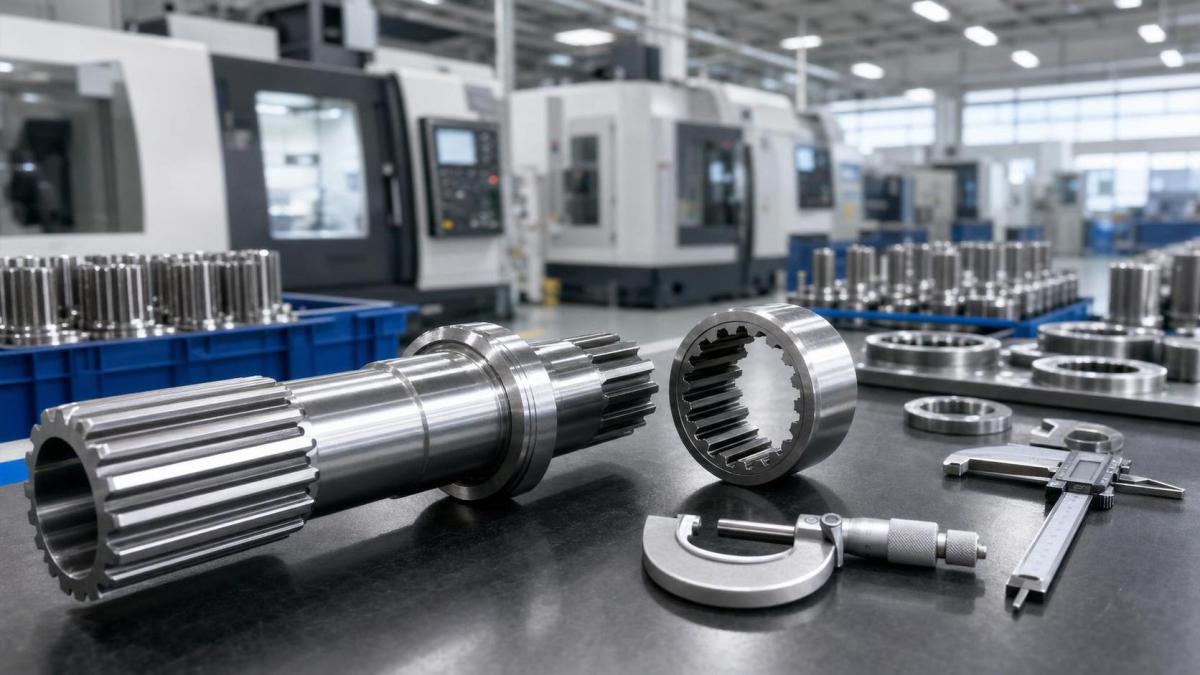
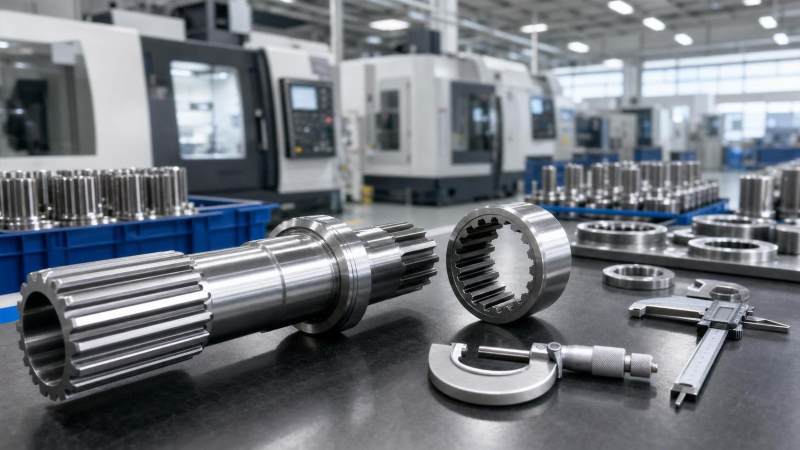
Precision splines look simple on a quote sheet, yet the real cost story sits behind geometry, tolerance, and repeatability.
That is why precision splines wholesale decisions often affect more than unit price. They shape assembly yield, field reliability, and rework exposure.
In practical terms, a cheaper spline can become expensive if mating parts seize, vibrate, or fail alignment checks.
A more useful question is not, “What is the lowest quote?” It is, “What will this part cost after production, inspection, and use?”
Within advanced industrial sourcing, that broader view matters. G-AIE benchmarking frameworks often emphasize the link between physical part consistency and digital production control.
For precision splines wholesale, that means cost approval should include tolerance discipline, supplier process capability, and traceable quality data.
When people ask about price, what are they really paying for?
The visible number on the quotation usually combines raw material, machining time, tooling wear, heat treatment, inspection, packaging, and order volume.
However, precision splines wholesale pricing also reflects hidden variables. Tight tolerances increase inspection steps, slower cycle times, and rejection risk.
Material choice changes cost in a similar way. Alloy steel, stainless steel, and specialty grades do not behave the same during cutting or heat treatment.
Broaching, hobbing, grinding, and shaping each carry different cost structures. The best method depends on profile complexity and finish requirements.
Order size matters, but not always in the obvious way. High-volume precision splines wholesale can reduce setup cost per piece, yet poor process stability can still erase savings.
A useful breakdown is below.
This is often where budget discussions improve. Instead of debating the total quote alone, compare which cost drivers are truly necessary.
How tight should spline tolerance actually be?
Not every application needs the tightest possible tolerance. In many assemblies, moderate precision delivers the best cost-to-performance balance.
The key is to connect tolerance to function. Torque transfer, backlash control, sliding fit, noise, and alignment each influence the acceptable range.
If the spline mates with high-speed or high-load components, tolerance errors can amplify wear and vibration quickly.
If the part sits in a less demanding mechanical interface, very tight limits may add cost without clear operational benefit.
That is why precision splines wholesale should be reviewed alongside mating component tolerances, not in isolation.
A common mistake is buying to a drawing that was never updated after prototype work. That often locks in unnecessary precision.
- Check whether the fit is fixed, sliding, or torque-critical.
- Confirm whether heat treatment shifts final dimensions.
- Review whether inspection covers profile, runout, and tooth spacing.
- Ask if the stated tolerance is process-capable at production scale.
In well-managed sourcing, the best tolerance is not the smallest number. It is the narrowest range that still makes economic sense.
Where do buyers usually underestimate risk in precision splines wholesale?
The biggest risk is assuming dimensional compliance on paper equals stable performance in production. It does not always work that way.
A supplier may pass first article inspection, then drift during larger runs because tooling, fixturing, or heat treatment controls are inconsistent.
Another common issue is incomplete quality documentation. Reports may list outer dimensions but miss spline-specific profile checks.
Lead time risk also deserves attention. Precision splines wholesale with custom tooling can look inexpensive until schedule changes trigger rush costs.
In global programs, packaging and corrosion protection can create avoidable losses. Surface damage during transit can destroy tolerance value before assembly begins.
The practical screening questions below often reveal more than a headline quote.
Seen this way, precision splines wholesale becomes a risk management exercise as much as a cost comparison exercise.
Is a lower unit price ever the better deal?
Yes, sometimes it is. But only when the lower price comes from efficient process design rather than reduced control.
For example, a supplier using mature tooling, stable automation, and consistent inspection may deliver better precision splines wholesale pricing without sacrificing fit.
That is the kind of efficiency G-AIE-style benchmarking tries to make visible. Better cost should come from capability, not uncertainty.
A higher quote can still be justified when the application has strict fatigue, safety, or service-life demands.
The better comparison method is total cost of ownership. Include incoming inspection, line stoppage risk, assembly fit loss, returns, and replacement cost.
If a part with a lower purchase price increases downstream waste by even a small percentage, the savings disappear quickly.
In actual sourcing reviews, three checks usually help.
- Compare quoted price against the required tolerance, not against unrelated parts.
- Estimate the cost of one failed batch in time, labor, and replacement material.
- Review whether the supplier can maintain the same price after volume changes.
That approach keeps precision splines wholesale decisions grounded in financial reality instead of headline savings.
What should be confirmed before approving a supplier?
Before approval, it helps to translate technical risk into a short checklist that supports clear internal review.
Start with the drawing package. Confirm that spline standards, material specifications, hardness targets, and inspection points are complete.
Then review process evidence. A capable precision splines wholesale source should explain how it controls variation across batches.
Ask for sample reports that show more than basic dimensions. Functional spline data is far more useful than generic pass marks.
It is also worth checking whether the supplier can support future engineering changes without major tooling disruption.
A short approval framework can keep decisions consistent.
- Specification clarity: Are fit, profile, and finish requirements fully defined?
- Process credibility: Is the chosen manufacturing route suitable for the target volume?
- Quality proof: Are inspection methods matched to spline geometry?
- Commercial stability: Do lead time, tooling terms, and volume assumptions align?
- Lifecycle view: Does the quote support acceptable total cost over repeated orders?
If those areas are documented well, precision splines wholesale approval becomes faster and far easier to defend later.
So what is the smartest next step?
Begin with the application, not the quote. Define what the spline must do, what tolerance actually protects that function, and what failure would cost.
Then compare precision splines wholesale options using the same evaluation logic across material, process, quality evidence, and supply risk.
Where possible, use benchmark data, especially for repeatability and inspection depth. That is where sourcing confidence usually improves.
A strong decision rarely comes from chasing the cheapest line item. It comes from matching cost, tolerance, and operational consequences.
If the next review includes a side-by-side matrix for tolerance need, process capability, and batch risk, the approval process becomes more objective.
That is the practical value of understanding precision splines wholesale basics: fewer surprises, better fit, and spending that holds up under scrutiny.
Recommended News
 Sep 19, 2026When can a supply chain LLM reduce time spent finding shipment updates?Supply chain LLMs can cut shipment-update search time by connecting carrier events, ERP data, and documents—giving teams traceable answers and faster exception response.
 Sep 18, 2026How industrial monitoring equipment helps prevent unplanned downtimeIndustrial monitoring equipment helps teams detect early asset issues, prioritize maintenance, and prevent costly unplanned downtime. Explore practical strategies for reliable operations.
 Sep 17, 2026What next-gen harmonic drive research means for robot joint accuracyNext-gen harmonic drive research reveals how backlash, stiffness, thermal drift, and sensing shape robot joint accuracy. Explore smarter validation strategies.
 Sep 16, 2026How Southeast Asian climates affect cylinder seal frictionCylinder seal friction Southeast Asia: learn how humidity, heat, monsoons, and contamination affect motion stability, wear, and seal selection.
 Sep 15, 2026How to size DC gear motors for the required starting torqueGear motors DC sizing made practical: calculate starting torque, account for friction, gravity, inertia and voltage drop, then select a reliable motor with confidence.
 Sep 14, 2026How to verify high purity chemicals compliance before supplier approvalHigh purity chemicals compliance: learn how to verify supplier quality systems, CoAs, traceability, testing, and change control before approval.
 Sep 13, 2026What permits are needed to operate mapping drones in Europe?Mapping drones Europe: discover the permits, EASA categories, airspace approvals, site access, and GDPR checks needed for compliant aerial surveys.
 Sep 12, 2026What lead time should I expect for automatic transmission components? Planetary Gearboxes delivery forecasting for OEM planningWhat lead time should I expect for automatic transmission components? Get dynamic, AI-powered planetary gearbox delivery forecasting—designed for OEMs building next-gen hybrid & commercial powertrains.
 Sep 12, 2026Can polyamide replace metal in load-bearing components? Polymer Pulse structural performance data for 2026 applicationsCan polyamide replace metal in load-bearing components? Discover Polymer Pulse’s 2026 structural data—real-world performance, weight savings, and reliability breakthroughs.
 Sep 12, 2026How to handle a power electronics warranty claim: Harmonic Reducers documentation and escalation pathHow do I handle a power electronics warranty claim? Get a fast, intelligent, evidence-driven resolution for harmonic reducers—no bureaucracy, just precision diagnostics and real-time escalation.
 Sep 12, 2026Which motion control specifications matter most before purchase? Torque Logic selection criteria for automation engineersWhich motion control specifications are most important before purchase? Discover Torque Logic—the 4 non-negotiable, AI-aligned criteria that cut TCO by 27–41% and boost motion system availability to 99.992%.
 Sep 13, 2026Is agentic AI reliable enough for supplier screening? Supply Chain LLM validation framework for procurement teamsIs agentic AI reliable enough for supplier screening? Discover a rigorous LLM validation framework built for procurement teams—grounded in material traceability, regulatory compliance, and real-world operational constraints.
 Sep 14, 2026How to maintain edge AI systems after deployment: Predictive Maint AI operational protocols for field techniciansHow do I maintain edge AI systems after deployment? Discover predictive, physics-aware operational protocols designed for real-world field technicians—sustaining intelligence where silicon meets steel.
 Sep 15, 2026What compliance documents must a bioplastics supplier provide? Bio-Plastics regulatory checklist for procurementWhat compliance documents should a bioplastics supplier provide? Get our actionable regulatory checklist for food, medical & EU-bound applications.
 Sep 16, 2026How to prevent PET film defects during production: Barrier Films process control best practicesHow can I prevent PET film defects during production? Discover physics-driven barrier film process control—thermal precision, dynamic tension management & surface energy optimization.
 Sep 17, 2026Are thermoplastics suitable for long-term outdoor use? Engineering Resins durability assessment in 2026 UV/weather exposureAre thermoplastics suitable for long-term outdoor use? Discover 2026’s engineering resin durability insights — UV/weather resistance ranked, tested & actionable.
 Sep 18, 2026What to do when a servo motor fails during production: A Servo Actuators troubleshooting guide for maintenance teamsWhat should I do if a servo motor fails during production? Get a field-tested, AI-aware troubleshooting guide for maintenance teams—minimize downtime, maximize OEE.
 Sep 12, 2026How to compare wholesale party supplies by minimum order valueCompare wholesale party supplies by minimum order value, freight, SKU flexibility, and stock risk to choose suppliers that protect margins and simplify replenishment.
 Sep 11, 2026How proportional solenoid linearity affects precision motion controlProportional solenoid linearity directly affects precision motion control, valve metering, stability, and calibration. Learn how to evaluate performance for reliable automation.
 Sep 10, 2026When does supplier information platform automation reduce onboarding delays?Supplier information platform automation reduces onboarding delays by streamlining data collection, routing, renewals, and compliance checks—without replacing expert technical review.
 Sep 09, 2026How to size robotic motion systems for AMR payload changesRobotic motion systems for AMR payload changes: learn how to size motors, wheels, gearing, traction, and controls for safer, reliable performance.
 Sep 08, 2026How to perform a cylinder rod buckling calculation for long strokesCylinder rod buckling calculation made practical: learn how to assess effective length, end conditions, rod stiffness, load forces, and safety margins for reliable long-stroke cylinder design.
 Sep 07, 2026How to estimate the cost of industrial mechanical components before orderingIndustrial mechanical components cost: learn how to estimate material, machining, tooling, inspection, logistics, and hidden expenses before ordering. Compare quotes confidently and reduce sourcing risk.
 Sep 07, 2026What Is a Product Standards Database Used For?Product standards database guide: learn how to compare requirements, verify revisions, control specifications, and reduce compliance risks across design, sourcing, and production.