Search News
Industry Portal
Popular Tags
Self Cleaning Litter Box: Cost, Noise, and Maintenance Compared
Author
Time
Click Count
Self Cleaning Litter Box: Cost, Noise, and Maintenance Compared
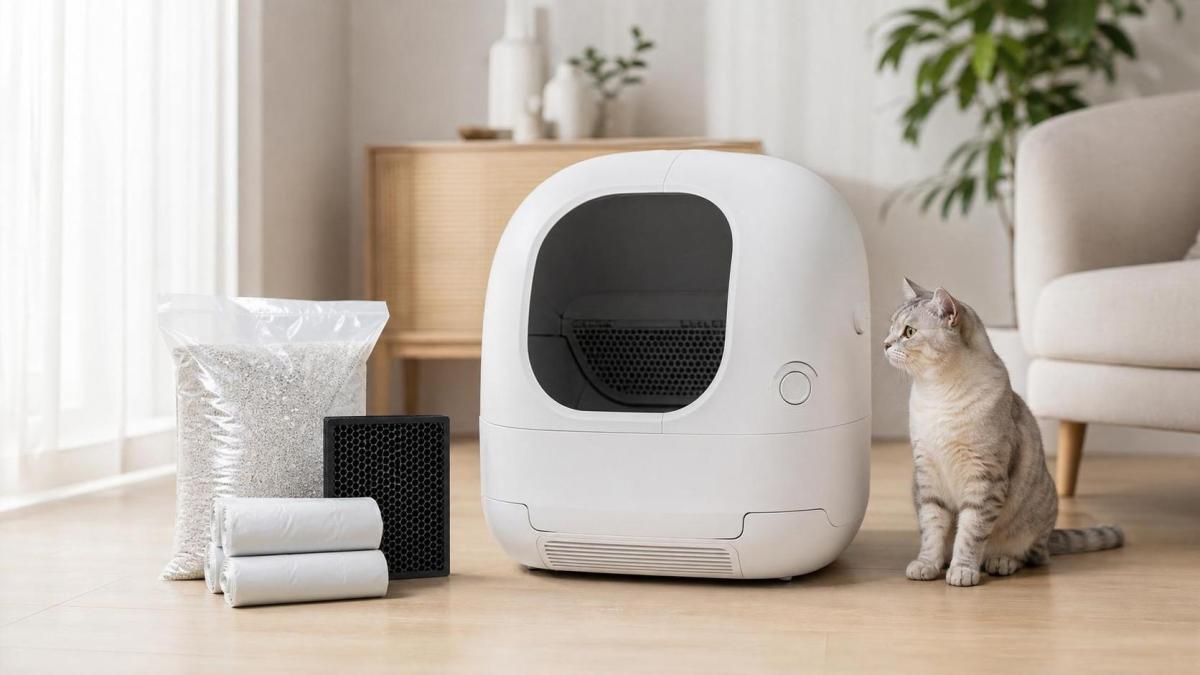
Choosing a self cleaning litter box sounds easy at first.
Then you start comparing prices, cleaning cycles, noise, and replacement parts.
That is where the decision gets more practical.
A good self cleaning litter box saves time, controls odor, and keeps daily scooping to a minimum.
A poor one can be loud, expensive, and surprisingly messy.
The real choice is not just about automation.
It is about matching the product to your budget, room layout, cat habits, and tolerance for upkeep.
This guide compares self cleaning litter box options through three issues that matter most.
Cost, noise, and maintenance usually decide whether ownership feels convenient or frustrating.
Once those trade-offs are clear, picking the right model becomes much easier.
Why a Self Cleaning Litter Box Costs More Than Expected
The first surprise is usually the price.
A self cleaning litter box often looks affordable until you count the ongoing supplies.
Entry-level units may cost less upfront.
However, they may use proprietary trays, liners, deodorizing cartridges, or waste receptacles.
That can push the total cost higher over a year.
Higher-end automatic litter box models usually cost more at checkout.
Still, some are cheaper to run if they work with standard clumping litter and basic trash bags.
This is why purchase price alone is not enough.
When comparing a self cleaning litter box, look at total ownership cost over twelve months.
- Upfront unit price
- Monthly litter consumption
- Replacement liners or trays
- Filters or odor-control refills
- Electricity use
- Expected part replacement
A practical rule helps here.
If the self cleaning litter box needs brand-specific consumables, check local availability before buying.
Low stock or shipping delays can turn convenience into a recurring problem.
In smaller homes, that inconvenience feels even bigger because there is less room for backup setups.
Cost Comparison by Type
From a value perspective, the cheapest self cleaning litter box is not always the lowest-cost option.
Long-term cost matters more than the sticker.
How Much Noise Is Normal?
Noise is often underestimated during purchase.
Yet it can become the biggest daily annoyance after installation.
Some self cleaning litter box systems produce a soft motor hum.
Others click, scrape, rotate, or pause loudly between cycles.
That difference matters in apartments, bedrooms, and work-from-home spaces.
It also matters for cats that react nervously to sudden sounds.
A sensitive cat may avoid a noisy self cleaning litter box, which defeats the entire purpose.
In real use, noise comes from more than the motor.
Litter type, waste drawer fit, plastic shell stability, and floor vibration all affect the final sound.
What Changes the Sound Level
- Cycle design, such as raking or rotating
- Motor speed and gear quality
- Amount and weight of litter inside
- Placement on tile, wood, or carpet
- Age of the unit and wear on moving parts
Before choosing a self cleaning litter box, read reviews that describe sound in real living conditions.
Short product videos can also reveal whether the sound is smooth or harsh.
If the box will sit near a sleeping area, quieter operation should move higher on your checklist.
This is one area where paying more can make sense.
Better engineering often reduces the small grinding sounds that become irritating over time.
Noise Reality Check
No self cleaning litter box is completely silent.
The goal is not silence.
The goal is predictable, low-disruption sound.
If you are already bothered by air purifiers, robot vacuums, or appliance beeps, choose conservatively.
Maintenance: The Part That Decides Satisfaction
This is where expectations need to stay realistic.
A self cleaning litter box reduces scooping.
It does not eliminate cleaning.
Waste drawers still need emptying.
Interior surfaces still need wiping.
Sensors, liners, and tracks still need attention.
The difference is that the work becomes less frequent, not nonexistent.
The best self cleaning litter box is usually the one that is easiest to deep clean.
That sounds simple, but many buyers focus more on app features than on washable surfaces.
In daily life, removable parts and accessible corners matter much more.
Maintenance Questions to Ask Before Buying
- How often must the waste drawer be emptied?
- Can the main chamber be wiped without awkward disassembly?
- Are sensors exposed to dust and litter residue?
- Does the self cleaning litter box trap waste in hard-to-reach gaps?
- Are spare parts easy to order after one year?
These points shape the real ownership experience.
A beautiful automatic litter box can still feel inconvenient if routine cleaning takes too many steps.
More importantly, poor maintenance design can increase odor instead of reducing it.
That usually happens when waste residue builds around seals, sifting areas, or drawer edges.
Simple Maintenance Habits That Help
- Empty the waste bin before it is fully packed
- Use the litter type recommended for the mechanism
- Wipe sensors weekly if dust builds quickly
- Check for stuck clumps after heavy use
- Deep clean on a regular schedule, not only when odor appears
A self cleaning litter box works best when maintenance stays light and consistent.
Waiting too long usually creates more work later.
Which Type Fits Different Homes Best?
The right self cleaning litter box depends heavily on where and how it will be used.
A model that works well in a large laundry room may feel too loud in a studio apartment.
A premium unit may also be unnecessary if cleaning demands are light.
Best Match by Situation
Small apartment: Choose a quieter self cleaning litter box with strong odor containment and a compact footprint.
Budget-focused setup: Look for a simple automatic litter box using standard clumping litter and low-cost waste liners.
Busy schedule: Prioritize larger waste capacity and easy-clean surfaces over app extras.
Noise-sensitive environment: Avoid aggressive rake systems unless verified to be quiet in real use.
Long-term value: Focus on maintenance access, spare parts, and supply flexibility.
This is also why side-by-side comparison matters more than brand reputation alone.
A popular self cleaning litter box may rank well online but still fail your actual needs.
Final Decision Checklist for a Self Cleaning Litter Box
Before you buy, keep the decision simple.
The best self cleaning litter box is the one that stays manageable after the first week.
That means balanced cost, acceptable noise, and maintenance you will actually keep up with.
- Compare yearly cost, not just purchase price
- Check whether the self cleaning litter box uses standard supplies
- Review real-world noise feedback
- Inspect how easy the interior is to wipe and disassemble
- Choose features that solve daily problems, not just look advanced
If two models seem close, choose the easier one to clean.
That detail often matters more than smart controls or flashy design.
A self cleaning litter box should reduce friction in daily life.
When cost, noise, and maintenance are judged together, the better choice becomes much clearer.
Use this comparison as a buying filter, and the final decision will feel less like guesswork and more like a smart fit.
Recommended News
 Sep 23, 2026Where machine vision delivers the most value in intelligent automationIntelligent automation applications with machine vision drive measurable value in quality, material handling, uptime, and traceability. Explore scalable strategies for resilient operations.
 Sep 22, 2026How to assess a servo motors manufacturer’s quality control processServo motors manufacturer quality control guide: assess traceability, process capability, testing, calibration, and change control to reduce automation risk.
 Sep 21, 2026How bearing friction torque data affects servo actuator sizingBearing friction torque data is essential for accurate servo actuator sizing. Learn how preload, speed, temperature, and friction affect torque, thermal margin, and control stability.
 Sep 20, 2026How to use an electronics product reference to verify component compatibilityUse an electronics product reference to verify component compatibility with confidence. Compare electrical, pin, thermal, mechanical, firmware, and lifecycle requirements before approving replacements.
 Sep 19, 2026When can a supply chain LLM reduce time spent finding shipment updates?Supply chain LLMs can cut shipment-update search time by connecting carrier events, ERP data, and documents—giving teams traceable answers and faster exception response.
 Sep 18, 2026How industrial monitoring equipment helps prevent unplanned downtimeIndustrial monitoring equipment helps teams detect early asset issues, prioritize maintenance, and prevent costly unplanned downtime. Explore practical strategies for reliable operations.
 Sep 17, 2026What next-gen harmonic drive research means for robot joint accuracyNext-gen harmonic drive research reveals how backlash, stiffness, thermal drift, and sensing shape robot joint accuracy. Explore smarter validation strategies.
 Sep 16, 2026How Southeast Asian climates affect cylinder seal frictionCylinder seal friction Southeast Asia: learn how humidity, heat, monsoons, and contamination affect motion stability, wear, and seal selection.
 Sep 15, 2026How to size DC gear motors for the required starting torqueGear motors DC sizing made practical: calculate starting torque, account for friction, gravity, inertia and voltage drop, then select a reliable motor with confidence.
 Sep 14, 2026How to verify high purity chemicals compliance before supplier approvalHigh purity chemicals compliance: learn how to verify supplier quality systems, CoAs, traceability, testing, and change control before approval.
 Sep 13, 2026What permits are needed to operate mapping drones in Europe?Mapping drones Europe: discover the permits, EASA categories, airspace approvals, site access, and GDPR checks needed for compliant aerial surveys.
 Sep 12, 2026What lead time should I expect for automatic transmission components? Planetary Gearboxes delivery forecasting for OEM planningWhat lead time should I expect for automatic transmission components? Get dynamic, AI-powered planetary gearbox delivery forecasting—designed for OEMs building next-gen hybrid & commercial powertrains.
 Sep 12, 2026Can polyamide replace metal in load-bearing components? Polymer Pulse structural performance data for 2026 applicationsCan polyamide replace metal in load-bearing components? Discover Polymer Pulse’s 2026 structural data—real-world performance, weight savings, and reliability breakthroughs.
 Sep 12, 2026How to handle a power electronics warranty claim: Harmonic Reducers documentation and escalation pathHow do I handle a power electronics warranty claim? Get a fast, intelligent, evidence-driven resolution for harmonic reducers—no bureaucracy, just precision diagnostics and real-time escalation.
 Sep 12, 2026Which motion control specifications matter most before purchase? Torque Logic selection criteria for automation engineersWhich motion control specifications are most important before purchase? Discover Torque Logic—the 4 non-negotiable, AI-aligned criteria that cut TCO by 27–41% and boost motion system availability to 99.992%.
 Sep 13, 2026Is agentic AI reliable enough for supplier screening? Supply Chain LLM validation framework for procurement teamsIs agentic AI reliable enough for supplier screening? Discover a rigorous LLM validation framework built for procurement teams—grounded in material traceability, regulatory compliance, and real-world operational constraints.
 Sep 14, 2026How to maintain edge AI systems after deployment: Predictive Maint AI operational protocols for field techniciansHow do I maintain edge AI systems after deployment? Discover predictive, physics-aware operational protocols designed for real-world field technicians—sustaining intelligence where silicon meets steel.
 Sep 15, 2026What compliance documents must a bioplastics supplier provide? Bio-Plastics regulatory checklist for procurementWhat compliance documents should a bioplastics supplier provide? Get our actionable regulatory checklist for food, medical & EU-bound applications.
 Sep 16, 2026How to prevent PET film defects during production: Barrier Films process control best practicesHow can I prevent PET film defects during production? Discover physics-driven barrier film process control—thermal precision, dynamic tension management & surface energy optimization.
 Sep 17, 2026Are thermoplastics suitable for long-term outdoor use? Engineering Resins durability assessment in 2026 UV/weather exposureAre thermoplastics suitable for long-term outdoor use? Discover 2026’s engineering resin durability insights — UV/weather resistance ranked, tested & actionable.
 Sep 18, 2026What to do when a servo motor fails during production: A Servo Actuators troubleshooting guide for maintenance teamsWhat should I do if a servo motor fails during production? Get a field-tested, AI-aware troubleshooting guide for maintenance teams—minimize downtime, maximize OEE.
 Sep 12, 2026How to compare wholesale party supplies by minimum order valueCompare wholesale party supplies by minimum order value, freight, SKU flexibility, and stock risk to choose suppliers that protect margins and simplify replenishment.
 Sep 11, 2026How proportional solenoid linearity affects precision motion controlProportional solenoid linearity directly affects precision motion control, valve metering, stability, and calibration. Learn how to evaluate performance for reliable automation.
 Sep 10, 2026When does supplier information platform automation reduce onboarding delays?Supplier information platform automation reduces onboarding delays by streamlining data collection, routing, renewals, and compliance checks—without replacing expert technical review.