Search News
Industry Portal
Popular Tags
US Weighs Tighter Export Controls on Harmonic Reducers
Author
Time
Click Count
The timing of the underlying event is not explicitly stated in the available information, but a new regulatory signal has emerged from the U.S. Department of Commerce that deserves close attention from robotics component suppliers, joint module manufacturers, export compliance teams, and cross-border technology partners. The Bureau of Industry and Security (BIS) issued an interim rule notice on June 9 proposing tighter controls on certain Harmonic Reducers that integrate AI-based coordinated control logic, a move that could affect exports of high-end robot joint modules to the U.S. and multinational cooperation projects if the rule takes effect as expected in Q3 2026.
What the Proposed Rule Actually Covers
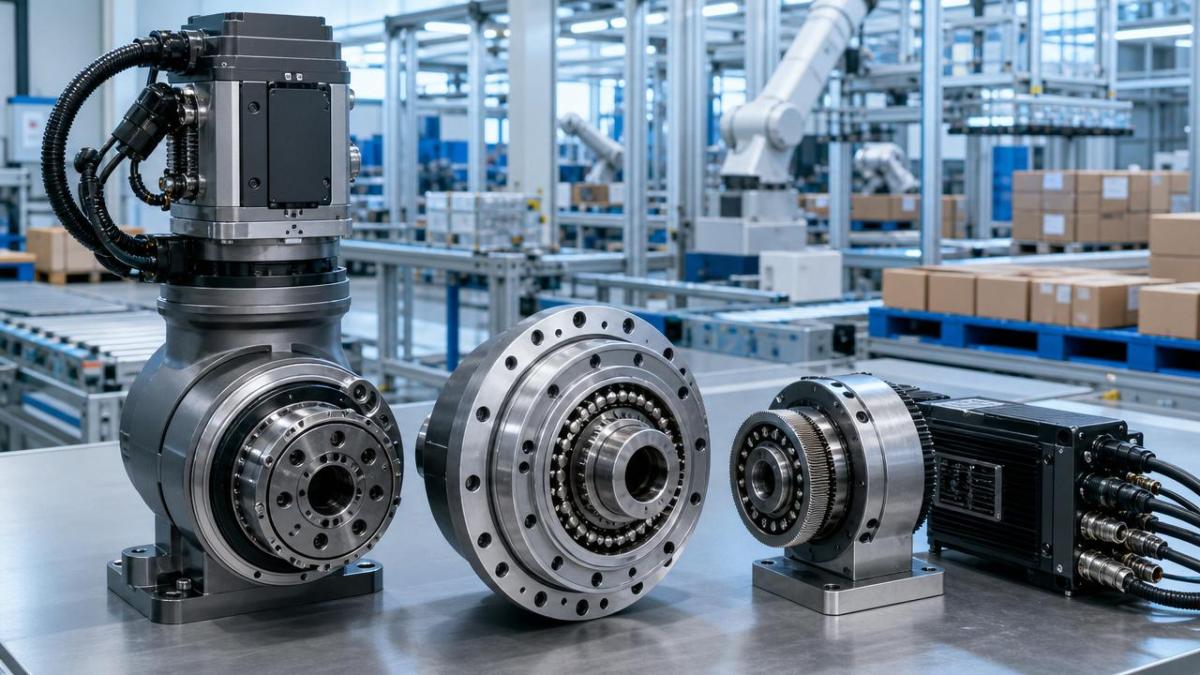
According to the provided information, BIS released an interim rule notice on June 9 that would place certain Harmonic Reducers under special licensing controls within Section 742.15 of the EAR. The proposed scope focuses on models that include AI coordinated control logic, with examples such as adaptive trajectory compensation and torque closed-loop learning.
The expected effective window is Q3 2026. The information provided also indicates that the measure is expected to affect exports of high-end robot joint modules to the U.S. as well as cross-border technology cooperation projects involving China.
Where the Pressure May Appear First in the Robotics Chain
Export-facing joint module suppliers
From an industry perspective, companies selling robot joint modules into the U.S. market may be among the first to reassess product classification and deal structure. The reason is that the proposed review focus is not limited to a mechanical reducer alone, but to models that integrate specific AI-assisted control functions. What deserves closer attention is whether existing export items include those control characteristics in a way that could trigger licensing review if the rule is finalized.
Manufacturers combining mechanics with control logic
For manufacturers that integrate reducers with coordinated control functions, the potential impact may show up in product definition, technical documentation, and engineering collaboration. Analysis shows that the issue is not only shipment approval, but also how integrated functions are described, validated, and presented in commercial and technical materials during cross-border business activity.
Cross-border project and technology cooperation teams
Teams involved in multinational robot development or technical cooperation may need to pay attention to project timelines and module scope. Observably, if a project includes joint modules with AI-based adaptive compensation or learning-based torque control, the compliance review path could become more sensitive once the rule is implemented.
Procurement and supply chain coordinators
Procurement and supply chain roles may not be the direct subject of the rule, but they could feel the effect through documentation requirements, delivery planning, and supplier communication. What deserves closer attention is whether product specifications, export paperwork, and delivery commitments remain aligned if licensing review becomes part of the transaction process.
Practical Issues Companies Should Track Now
Watch for changes in final regulatory wording
Analysis shows that the current signal is a proposed rule rather than a completed outcome. Companies should therefore focus on how BIS ultimately defines the controlled scope, especially the boundary between conventional product functions and AI coordinated control logic.
Review affected product lines by function, not only by part name
What deserves closer attention is whether internal product reviews are organized around actual embedded functions such as adaptive trajectory compensation or torque closed-loop learning, rather than relying only on broad part categories like Harmonic Reducers or joint modules.
Separate policy signaling from immediate operational impact
Observably, the proposal sends an early compliance signal, but the expected effective time is Q3 2026. That means companies should avoid treating the notice as an already completed trade outcome while still preparing for possible operational changes in export procedures and project execution.
Prepare customer and supplier communication records
From an industry perspective, firms involved in U.S.-linked exports or multinational cooperation may need clearer product descriptions, supplier qualification records, and customer communication materials. The practical focus is to reduce uncertainty around what functions are included in a given module and how that may affect future licensing or delivery arrangements.
Why This Looks More Like a Policy Signal Than a Final Market Result
Analysis shows that this development is better understood, at this stage, as a regulatory signal with potentially material consequences rather than as a completed shift in market access. The proposal identifies a more specific control concern: the combination of Harmonic Reducers with AI coordinated control logic. That makes the issue relevant not only to exporters, but also to companies shaping product architecture and international project models.
It is more appropriate to understand this as a development that still requires continued observation. The eventual industry effect will depend on the final wording, implementation scope, and how companies map technical functions to compliance requirements in actual business practice.
How the Industry May Need to Read This Development
At present, the significance of this news lies less in an immediate completed restriction and more in the direction of regulatory attention. The proposal suggests that integrated intelligent control features in robotics-related components may receive closer scrutiny in future export control review.
A neutral reading is that businesses should neither dismiss the notice as routine nor overstate its immediate effect. It is more appropriate to treat it as an important compliance and market-access signal, with direct relevance for product definition, export planning, and international cooperation risk assessment.
Basis of This Article and What Still Needs Verification
This article is generated from the user-provided news title, event timing note, and event summary. The specific official source link was not provided in the input, so continued verification remains necessary.
For this type of development, commonly relevant source categories include official government notices, company disclosures, industry association updates, authoritative media coverage, and standards-related documents. The follow-up focus should remain on any updated BIS wording, the final scope of covered functions, and whether implementation details alter the practical impact on exports and cross-border cooperation.
Recommended News
 Sep 19, 2026When can a supply chain LLM reduce time spent finding shipment updates?Supply chain LLMs can cut shipment-update search time by connecting carrier events, ERP data, and documents—giving teams traceable answers and faster exception response.
 Sep 18, 2026How industrial monitoring equipment helps prevent unplanned downtimeIndustrial monitoring equipment helps teams detect early asset issues, prioritize maintenance, and prevent costly unplanned downtime. Explore practical strategies for reliable operations.
 Sep 17, 2026What next-gen harmonic drive research means for robot joint accuracyNext-gen harmonic drive research reveals how backlash, stiffness, thermal drift, and sensing shape robot joint accuracy. Explore smarter validation strategies.
 Sep 16, 2026How Southeast Asian climates affect cylinder seal frictionCylinder seal friction Southeast Asia: learn how humidity, heat, monsoons, and contamination affect motion stability, wear, and seal selection.
 Sep 15, 2026How to size DC gear motors for the required starting torqueGear motors DC sizing made practical: calculate starting torque, account for friction, gravity, inertia and voltage drop, then select a reliable motor with confidence.
 Sep 14, 2026How to verify high purity chemicals compliance before supplier approvalHigh purity chemicals compliance: learn how to verify supplier quality systems, CoAs, traceability, testing, and change control before approval.
 Sep 13, 2026What permits are needed to operate mapping drones in Europe?Mapping drones Europe: discover the permits, EASA categories, airspace approvals, site access, and GDPR checks needed for compliant aerial surveys.
 Sep 12, 2026What lead time should I expect for automatic transmission components? Planetary Gearboxes delivery forecasting for OEM planningWhat lead time should I expect for automatic transmission components? Get dynamic, AI-powered planetary gearbox delivery forecasting—designed for OEMs building next-gen hybrid & commercial powertrains.
 Sep 12, 2026Can polyamide replace metal in load-bearing components? Polymer Pulse structural performance data for 2026 applicationsCan polyamide replace metal in load-bearing components? Discover Polymer Pulse’s 2026 structural data—real-world performance, weight savings, and reliability breakthroughs.
 Sep 12, 2026How to handle a power electronics warranty claim: Harmonic Reducers documentation and escalation pathHow do I handle a power electronics warranty claim? Get a fast, intelligent, evidence-driven resolution for harmonic reducers—no bureaucracy, just precision diagnostics and real-time escalation.
 Sep 12, 2026Which motion control specifications matter most before purchase? Torque Logic selection criteria for automation engineersWhich motion control specifications are most important before purchase? Discover Torque Logic—the 4 non-negotiable, AI-aligned criteria that cut TCO by 27–41% and boost motion system availability to 99.992%.
 Sep 13, 2026Is agentic AI reliable enough for supplier screening? Supply Chain LLM validation framework for procurement teamsIs agentic AI reliable enough for supplier screening? Discover a rigorous LLM validation framework built for procurement teams—grounded in material traceability, regulatory compliance, and real-world operational constraints.
 Sep 14, 2026How to maintain edge AI systems after deployment: Predictive Maint AI operational protocols for field techniciansHow do I maintain edge AI systems after deployment? Discover predictive, physics-aware operational protocols designed for real-world field technicians—sustaining intelligence where silicon meets steel.
 Sep 15, 2026What compliance documents must a bioplastics supplier provide? Bio-Plastics regulatory checklist for procurementWhat compliance documents should a bioplastics supplier provide? Get our actionable regulatory checklist for food, medical & EU-bound applications.
 Sep 16, 2026How to prevent PET film defects during production: Barrier Films process control best practicesHow can I prevent PET film defects during production? Discover physics-driven barrier film process control—thermal precision, dynamic tension management & surface energy optimization.
 Sep 17, 2026Are thermoplastics suitable for long-term outdoor use? Engineering Resins durability assessment in 2026 UV/weather exposureAre thermoplastics suitable for long-term outdoor use? Discover 2026’s engineering resin durability insights — UV/weather resistance ranked, tested & actionable.
 Sep 18, 2026What to do when a servo motor fails during production: A Servo Actuators troubleshooting guide for maintenance teamsWhat should I do if a servo motor fails during production? Get a field-tested, AI-aware troubleshooting guide for maintenance teams—minimize downtime, maximize OEE.
 Sep 12, 2026How to compare wholesale party supplies by minimum order valueCompare wholesale party supplies by minimum order value, freight, SKU flexibility, and stock risk to choose suppliers that protect margins and simplify replenishment.
 Sep 11, 2026How proportional solenoid linearity affects precision motion controlProportional solenoid linearity directly affects precision motion control, valve metering, stability, and calibration. Learn how to evaluate performance for reliable automation.
 Sep 10, 2026When does supplier information platform automation reduce onboarding delays?Supplier information platform automation reduces onboarding delays by streamlining data collection, routing, renewals, and compliance checks—without replacing expert technical review.
 Sep 09, 2026How to size robotic motion systems for AMR payload changesRobotic motion systems for AMR payload changes: learn how to size motors, wheels, gearing, traction, and controls for safer, reliable performance.
 Sep 08, 2026How to perform a cylinder rod buckling calculation for long strokesCylinder rod buckling calculation made practical: learn how to assess effective length, end conditions, rod stiffness, load forces, and safety margins for reliable long-stroke cylinder design.
 Sep 07, 2026How to estimate the cost of industrial mechanical components before orderingIndustrial mechanical components cost: learn how to estimate material, machining, tooling, inspection, logistics, and hidden expenses before ordering. Compare quotes confidently and reduce sourcing risk.
 Sep 07, 2026What Is a Product Standards Database Used For?Product standards database guide: learn how to compare requirements, verify revisions, control specifications, and reduce compliance risks across design, sourcing, and production.