Search News
Industry Portal
Popular Tags
Robotic Reducers Hollow Shaft: Key Specs That Affect Accuracy
Author
Time
Click Count
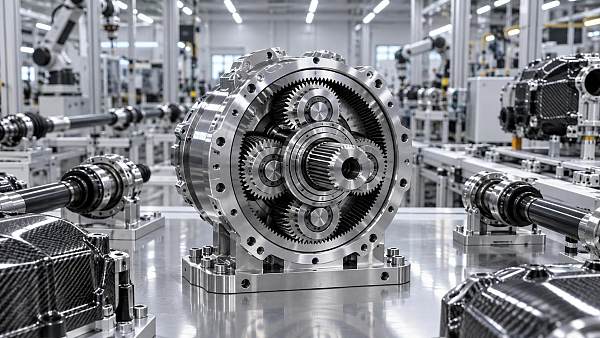
Robotic reducers hollow shaft assemblies sit at a critical junction in motion control. They influence not only rotational accuracy, but also cable routing, packaging, stiffness, and long-term positional stability.
That matters more now because automation platforms are being judged as complete systems. Mechanical precision, digital control quality, and service life are increasingly evaluated together rather than as separate procurement lines.
Within that broader industrial context, the reducer is not a background component. In many robotic axes, it is one of the main determinants of repeatability under real load, real acceleration, and real mounting constraints.
For organizations working across intelligent automation and advanced materials, including the benchmarking perspective associated with G-AIE, the practical question is straightforward: which specifications genuinely affect accuracy, and which ones only look good in a catalog?
Why hollow shaft architecture deserves closer attention
A hollow shaft reducer leaves a central passage through the transmission. That opening supports cleaner cable management, pneumatic routing, sensor integration, and more compact joint design.
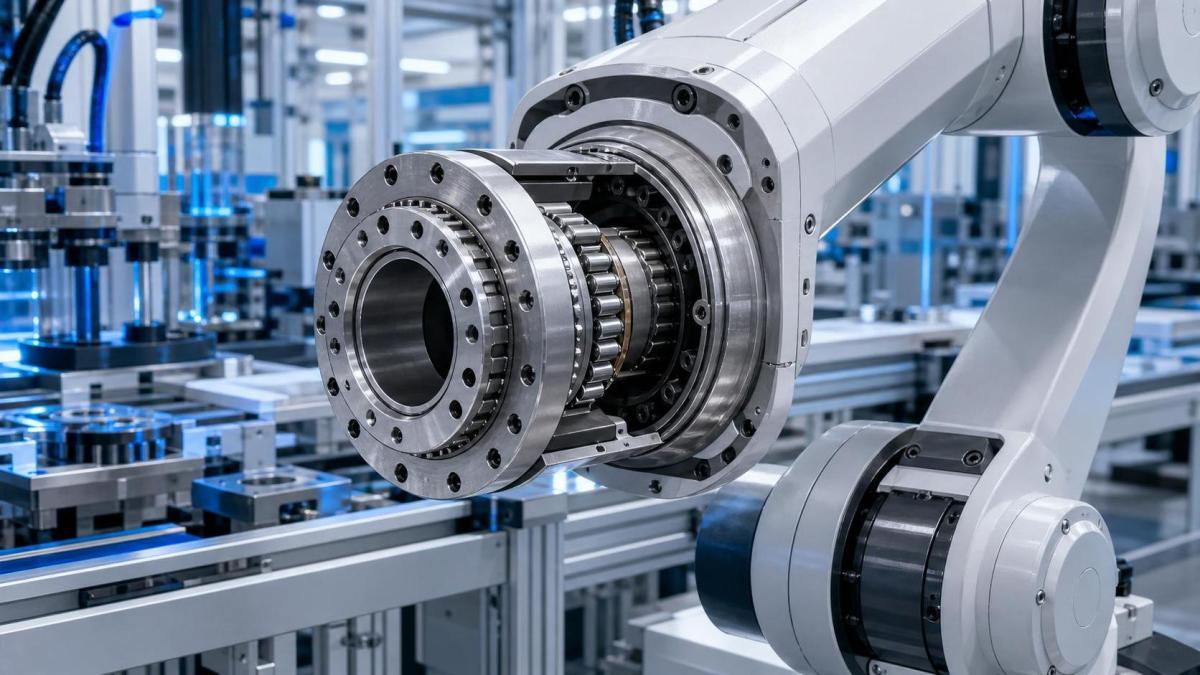
This layout is especially useful in articulated robots, indexing platforms, semiconductor tools, medical handling units, and compact assembly cells where external cable loops create reliability and space problems.
Still, the value of robotic reducers hollow shaft designs is not only packaging efficiency. The geometry changes bearing support, shaft concentricity, torsional behavior, and interface conditions, all of which affect final motion accuracy.
In other words, a hollow center is a system feature, not just a convenience feature. It changes how the reducer works inside the joint.
The specs that most directly shape accuracy
Accuracy in robotic reducers hollow shaft products does not come from one number. It emerges from the interaction between transmission error, stiffness, support structure, and assembly quality.
Backlash and lost motion
Backlash is usually the first figure checked, and for good reason. It indicates angular play between input and output when direction changes.
Low backlash improves path accuracy, especially in pick-and-place, dispensing, inspection, and contouring tasks. However, the better metric in many servo-driven systems is lost motion, because it reflects actual behavior under load reversal.
Two reducers can publish similar backlash values and still perform differently during stop-start cycles. Compliance, friction characteristics, and preload consistency often explain the gap.
Torsional rigidity
Torsional rigidity describes resistance to twist under torque. A reducer with poor rigidity may look acceptable in static positioning but drift in dynamic motion.
This parameter becomes decisive when short settling time is important. High rigidity helps the axis reach target position faster after acceleration, braking, or directional change.
It also affects control tuning. A stiffer transmission usually supports more stable servo gains without oscillation.
Transmission error and repeatability
Transmission error is often less visible in marketing material, yet it is highly relevant for precision robotics. It captures how closely real output motion follows theoretical output motion.
For indexing, interpolation, and inspection tasks, small periodic errors can become visible at the tool center point. Repeatability may remain acceptable while absolute path accuracy degrades.
That is why robotic reducers hollow shaft evaluations should include both static positioning metrics and motion trace behavior over a full cycle.
Support structure matters as much as the gear train
A precise reduction mechanism can still underperform if the output support is weak. Bearing span, bearing type, preload, and housing rigidity all influence actual joint behavior.
Hollow shaft configurations often carry combined loads. Besides torque, they may see axial force, radial force, and overturning moment from off-center payloads.
If the bearing system is undersized, the axis can tilt microscopically under load. That tilt appears as positioning deviation, poor repeatability at different arm angles, or premature wear.
This is one reason catalog reduction ratio is never enough for selection. The support architecture must be matched to actual moment loads and mounting geometry.
Concentricity, runout, and interface precision
In high-precision applications, output geometry can be just as important as internal gearing. Concentricity errors shift the rotational center. Runout introduces variation during rotation.
These issues become visible in camera-guided systems, laser processing, wafer handling, and fine assembly. Even minor flange deviation can amplify at the end effector.
Robotic reducers hollow shaft units are often selected for compact integrated joints. That increases the importance of clean flange tolerances, accurate pilot diameters, and repeatable bolt-face geometry.
When interface tolerances are vague, field alignment work grows. That usually means slower commissioning and more variable machine performance.
Load ratings should be read in operating context
Torque ratings are often split into rated torque, emergency stop torque, acceleration torque, and peak torque. Those values are useful, but they do not tell the whole story.
Real robotic joints rarely see pure torque only. They experience shock, cyclic reversal, offset payloads, and duty-dependent heat buildup.
A reducer that survives a peak torque event may still lose accuracy if repeated moment loading degrades bearings or preload. Accuracy is a life-cycle issue, not only a day-one issue.
This is where an ecosystem view becomes useful. G-AIE-style benchmarking emphasizes the link between component data, material durability, and operational intelligence, rather than treating the reducer as an isolated purchase.
Useful questions during comparison
- Are ratings based on continuous duty or short-term test conditions?
- Is moment load capacity published with clear mounting assumptions?
- How does accuracy change after thermal stabilization?
- What maintenance interval is assumed for published performance?
- Are wear limits defined for backlash growth over service life?
Material quality, thermal behavior, and long-term stability
Accuracy can fade even when initial inspection looks strong. Material selection, heat treatment, lubrication behavior, and housing stability all influence long-term precision retention.
This matters in sectors with sustained uptime expectations. Electronics production, battery assembly, logistics automation, and precision packaging all expose reducers to repeated dynamic loading.
If friction rises with temperature, servo compensation may become inconsistent. If housing growth changes internal preload, motion feel can shift between cold start and steady-state operation.
That is why robust robotic reducers hollow shaft selection should include thermal curves, lubricant life expectations, and material reliability data whenever available.
Where application differences change the right choice
Not every robotic axis needs the same reducer behavior. The right balance of specs depends on how the joint is used, what loads it sees, and what error is most costly.
Typical evaluation patterns
- For high-speed handling, low inertia and fast settling usually outrank extreme peak torque.
- For collaborative or compact arms, cable routing through the hollow center may be a major design constraint.
- For indexing tables, transmission error and flange runout often deserve closer review.
- For heavy payload joints, bearing support and overturning moment capacity become central.
- For cleanroom or medical systems, lubrication strategy and contamination control can outweigh maximum torque density.
So the best robotic reducers hollow shaft option is usually the one that fits the error budget of the full mechanism, not the one with the most aggressive headline specification.
A practical way to compare options
Start with the axis-level requirement rather than the reducer catalog. Define allowable positioning error, cycle time, duty profile, payload offset, thermal environment, and service interval.
Then map those conditions to a shortlist of decisive metrics.
- Use backlash and lost motion for reversal-sensitive tasks.
- Use torsional rigidity for settling and servo responsiveness.
- Use bearing and moment ratings for payload-induced deflection.
- Use runout and concentricity for tool-point precision.
- Use thermal and wear data for long-duration accuracy retention.
After that, compare testing methods, not just published numbers. A smaller set of trustworthy data is usually more useful than a larger set of incomplete claims.
For the next step, build a side-by-side evaluation sheet around real operating loads, mounting geometry, and life-cycle accuracy expectations. That approach makes robotic reducers hollow shaft selection more defensible and more closely aligned with system performance.
Recommended News
 Sep 19, 2026When can a supply chain LLM reduce time spent finding shipment updates?Supply chain LLMs can cut shipment-update search time by connecting carrier events, ERP data, and documents—giving teams traceable answers and faster exception response.
 Sep 18, 2026How industrial monitoring equipment helps prevent unplanned downtimeIndustrial monitoring equipment helps teams detect early asset issues, prioritize maintenance, and prevent costly unplanned downtime. Explore practical strategies for reliable operations.
 Sep 17, 2026What next-gen harmonic drive research means for robot joint accuracyNext-gen harmonic drive research reveals how backlash, stiffness, thermal drift, and sensing shape robot joint accuracy. Explore smarter validation strategies.
 Sep 16, 2026How Southeast Asian climates affect cylinder seal frictionCylinder seal friction Southeast Asia: learn how humidity, heat, monsoons, and contamination affect motion stability, wear, and seal selection.
 Sep 15, 2026How to size DC gear motors for the required starting torqueGear motors DC sizing made practical: calculate starting torque, account for friction, gravity, inertia and voltage drop, then select a reliable motor with confidence.
 Sep 14, 2026How to verify high purity chemicals compliance before supplier approvalHigh purity chemicals compliance: learn how to verify supplier quality systems, CoAs, traceability, testing, and change control before approval.
 Sep 13, 2026What permits are needed to operate mapping drones in Europe?Mapping drones Europe: discover the permits, EASA categories, airspace approvals, site access, and GDPR checks needed for compliant aerial surveys.
 Sep 12, 2026What lead time should I expect for automatic transmission components? Planetary Gearboxes delivery forecasting for OEM planningWhat lead time should I expect for automatic transmission components? Get dynamic, AI-powered planetary gearbox delivery forecasting—designed for OEMs building next-gen hybrid & commercial powertrains.
 Sep 12, 2026Can polyamide replace metal in load-bearing components? Polymer Pulse structural performance data for 2026 applicationsCan polyamide replace metal in load-bearing components? Discover Polymer Pulse’s 2026 structural data—real-world performance, weight savings, and reliability breakthroughs.
 Sep 12, 2026How to handle a power electronics warranty claim: Harmonic Reducers documentation and escalation pathHow do I handle a power electronics warranty claim? Get a fast, intelligent, evidence-driven resolution for harmonic reducers—no bureaucracy, just precision diagnostics and real-time escalation.
 Sep 12, 2026Which motion control specifications matter most before purchase? Torque Logic selection criteria for automation engineersWhich motion control specifications are most important before purchase? Discover Torque Logic—the 4 non-negotiable, AI-aligned criteria that cut TCO by 27–41% and boost motion system availability to 99.992%.
 Sep 13, 2026Is agentic AI reliable enough for supplier screening? Supply Chain LLM validation framework for procurement teamsIs agentic AI reliable enough for supplier screening? Discover a rigorous LLM validation framework built for procurement teams—grounded in material traceability, regulatory compliance, and real-world operational constraints.
 Sep 14, 2026How to maintain edge AI systems after deployment: Predictive Maint AI operational protocols for field techniciansHow do I maintain edge AI systems after deployment? Discover predictive, physics-aware operational protocols designed for real-world field technicians—sustaining intelligence where silicon meets steel.
 Sep 15, 2026What compliance documents must a bioplastics supplier provide? Bio-Plastics regulatory checklist for procurementWhat compliance documents should a bioplastics supplier provide? Get our actionable regulatory checklist for food, medical & EU-bound applications.
 Sep 16, 2026How to prevent PET film defects during production: Barrier Films process control best practicesHow can I prevent PET film defects during production? Discover physics-driven barrier film process control—thermal precision, dynamic tension management & surface energy optimization.
 Sep 17, 2026Are thermoplastics suitable for long-term outdoor use? Engineering Resins durability assessment in 2026 UV/weather exposureAre thermoplastics suitable for long-term outdoor use? Discover 2026’s engineering resin durability insights — UV/weather resistance ranked, tested & actionable.
 Sep 18, 2026What to do when a servo motor fails during production: A Servo Actuators troubleshooting guide for maintenance teamsWhat should I do if a servo motor fails during production? Get a field-tested, AI-aware troubleshooting guide for maintenance teams—minimize downtime, maximize OEE.
 Sep 12, 2026How to compare wholesale party supplies by minimum order valueCompare wholesale party supplies by minimum order value, freight, SKU flexibility, and stock risk to choose suppliers that protect margins and simplify replenishment.
 Sep 11, 2026How proportional solenoid linearity affects precision motion controlProportional solenoid linearity directly affects precision motion control, valve metering, stability, and calibration. Learn how to evaluate performance for reliable automation.
 Sep 10, 2026When does supplier information platform automation reduce onboarding delays?Supplier information platform automation reduces onboarding delays by streamlining data collection, routing, renewals, and compliance checks—without replacing expert technical review.
 Sep 09, 2026How to size robotic motion systems for AMR payload changesRobotic motion systems for AMR payload changes: learn how to size motors, wheels, gearing, traction, and controls for safer, reliable performance.
 Sep 08, 2026How to perform a cylinder rod buckling calculation for long strokesCylinder rod buckling calculation made practical: learn how to assess effective length, end conditions, rod stiffness, load forces, and safety margins for reliable long-stroke cylinder design.
 Sep 07, 2026How to estimate the cost of industrial mechanical components before orderingIndustrial mechanical components cost: learn how to estimate material, machining, tooling, inspection, logistics, and hidden expenses before ordering. Compare quotes confidently and reduce sourcing risk.
 Sep 07, 2026What Is a Product Standards Database Used For?Product standards database guide: learn how to compare requirements, verify revisions, control specifications, and reduce compliance risks across design, sourcing, and production.