Search News
Industry Portal
Popular Tags
Industrial Sustainability Trends in 2026: What Actually Changes Operations
Author
Time
Click Count
Industrial sustainability is becoming an operating discipline
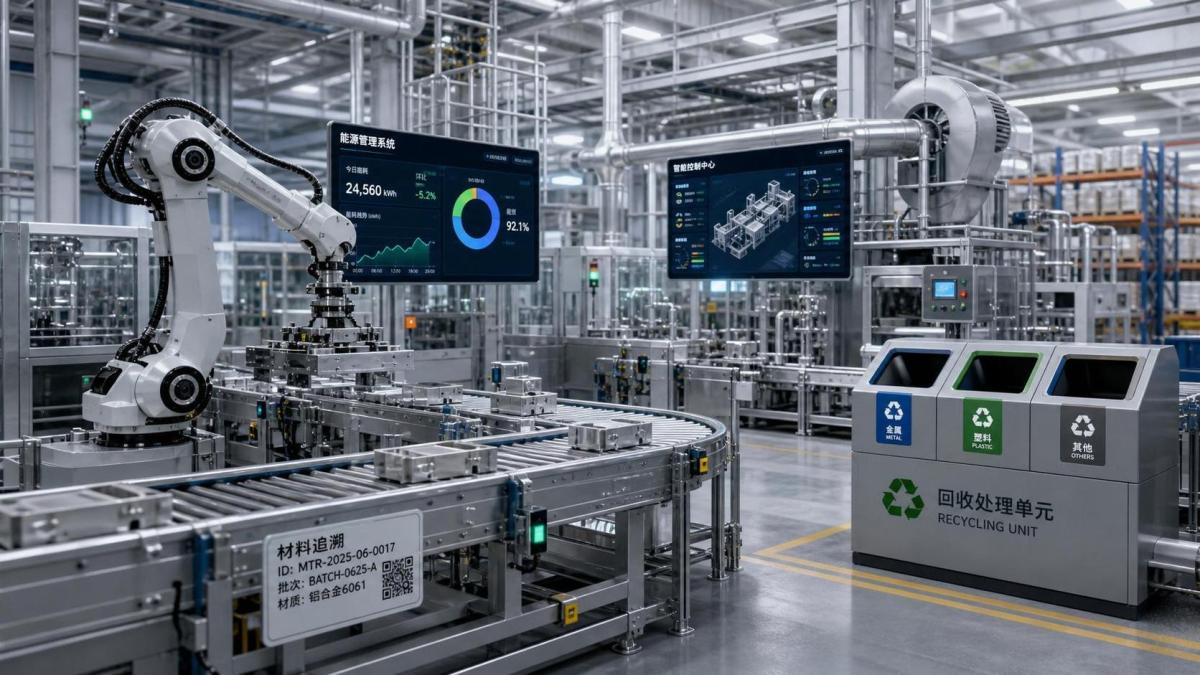
In 2026, industrial sustainability is no longer defined by broad pledges or isolated pilot projects.
The more meaningful shift appears inside production systems, sourcing models, and digital control layers.
Across sectors, companies are treating industrial sustainability as a measurable operating condition.
That means energy intensity, material yield, traceability, and equipment utilization are now linked more directly.
This is why industrial sustainability discussions now sit closer to asset performance and risk management.
The strongest signal is practical: decisions once justified by reputation are now justified by throughput, resilience, and margin protection.
From heavy industry to advanced manufacturing, the same pattern is visible.
Plants are being asked to consume less, recover more, predict failures earlier, and prove that change with usable data.
For industrial sustainability, that makes 2026 less about declarations and more about operational evidence.
Why the pressure now feels different
Several forces are converging, and each one affects industrial sustainability in a more immediate way than before.
Energy volatility remains a factor, but it is no longer the only driver.
Material constraints, disclosure requirements, regional industrial policy, and AI-based optimization are moving together.
The result is a higher standard for operational proof.
What matters here is not a single regulation or technology release.
It is the fact that industrial sustainability now affects daily operating choices across multiple functions at once.
The center of gravity is shifting from reporting to control
A few years ago, many sustainability initiatives stayed at the reporting layer.
Today, the competitive gap is opening at the control layer.
Industrial sustainability improves fastest where process data, material science, and automation are connected.
This is one reason benchmarking platforms such as G-AIE are gaining relevance.
The value is not in generic claims.
It comes from comparing real process parameters, asset behavior, and material performance under production conditions.
More organizations now want to know which settings lower scrap without destabilizing quality.
They also want to know whether lower-carbon materials create hidden maintenance, throughput, or reliability penalties.
That is where industrial sustainability becomes a technical discipline rather than a communications exercise.
What this looks like on the plant floor
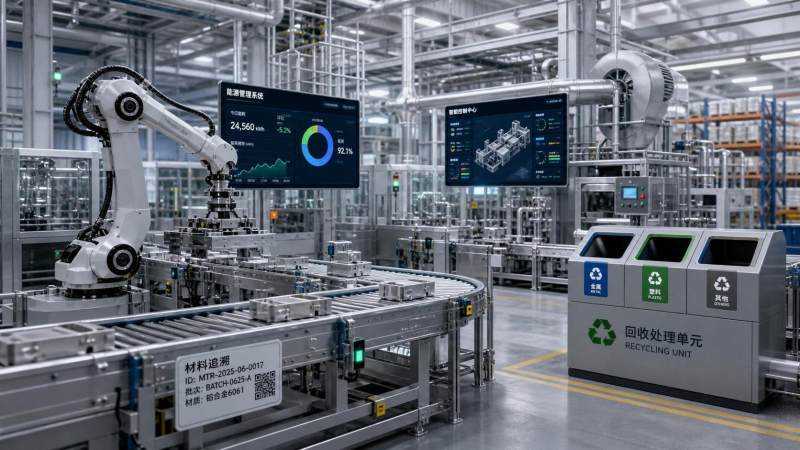
- AI models are tuning energy use against cycle time, not treating them separately.
- Material substitution decisions are tested against wear rates and process stability.
- Water, heat, and waste streams are monitored as recoverable resources.
- Maintenance teams are using efficiency drift as an early fault signal.
These are operational moves, but together they redefine industrial sustainability outcomes.
Material decisions are becoming more strategic than energy decisions alone
Energy still dominates public discussion, yet material choices are increasingly decisive.
In many sectors, embodied impact, recovery potential, and substitution flexibility now shape cost and resilience together.
This matters because industrial sustainability is constrained by physical systems, not just carbon accounting.
A lower-emission input that increases reject rates may weaken both economics and sustainability performance.
A recyclable material that reduces durability may shift the burden downstream.
From recent market behavior, the better performers are evaluating materials through a broader operational lens.
They are mapping feedstock availability, processing compatibility, quality variance, and end-of-life pathways at the same time.
That approach aligns with the Economy of Atoms view behind G-AIE.
Physical performance and digital intelligence have to be assessed together if industrial sustainability is expected to scale.
The impact does not stay in one function
One reason industrial sustainability is now harder to postpone is that its effects spread across the operating model.
A change in one area often creates a decision point elsewhere.
That interdependence is becoming more visible in 2026.
Where the pressure shows up first
In sourcing, supplier qualification now extends beyond price, lead time, and specification compliance.
Traceability depth and recovery logic increasingly influence long-term approval.
In operations, industrial sustainability is changing the definition of a high-performing asset.
Output alone is no longer enough if the asset consumes excessive energy, coolant, or replacement parts.
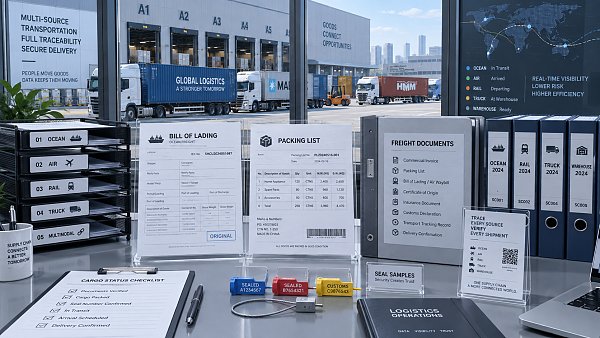
In logistics, transport decisions are being reconsidered through inventory strategy and regional resilience.
Long routes with lower unit cost may now carry unacceptable disruption or compliance exposure.
In product development, design teams are facing tighter demands for manufacturability and recoverability together.
That is pushing industrial sustainability earlier into engineering decisions.
What deserves closer attention over the next planning cycle
The next phase of industrial sustainability will reward disciplined selection, not broad activity.
The question is less about doing more projects and more about choosing the right operational levers.
- Check whether site data can connect energy, yield, scrap, downtime, and material lot history.
- Review where AI can support closed-loop adjustments rather than retrospective reporting.
- Compare substitute materials under full lifecycle and process performance conditions.
- Identify assets where efficiency loss predicts quality or maintenance problems.
- Reassess regional supply exposure where industrial sustainability claims depend on fragile logistics paths.
These steps are practical because they connect industrial sustainability with measurable operating decisions.
They also create a clearer basis for capital prioritization.
A realistic view of what comes next
The next chapter of industrial sustainability will likely be less visible in public messaging and more visible in system architecture.
Expect stronger links between technical benchmarking, regional compliance, automation strategy, and material innovation.
Expect more pressure to verify claims through plant-level evidence.
And expect the leaders to be those that treat industrial sustainability as a performance design problem.
That means building a phased view of operations, materials, and digital control rather than chasing isolated metrics.
A sensible next move is to benchmark current process assumptions, test where operating losses really originate, and monitor which standards are changing fastest.
From there, industrial sustainability becomes easier to evaluate with discipline, not optimism.
Recommended News
 Sep 19, 2026When can a supply chain LLM reduce time spent finding shipment updates?Supply chain LLMs can cut shipment-update search time by connecting carrier events, ERP data, and documents—giving teams traceable answers and faster exception response.
 Sep 18, 2026How industrial monitoring equipment helps prevent unplanned downtimeIndustrial monitoring equipment helps teams detect early asset issues, prioritize maintenance, and prevent costly unplanned downtime. Explore practical strategies for reliable operations.
 Sep 17, 2026What next-gen harmonic drive research means for robot joint accuracyNext-gen harmonic drive research reveals how backlash, stiffness, thermal drift, and sensing shape robot joint accuracy. Explore smarter validation strategies.
 Sep 16, 2026How Southeast Asian climates affect cylinder seal frictionCylinder seal friction Southeast Asia: learn how humidity, heat, monsoons, and contamination affect motion stability, wear, and seal selection.
 Sep 15, 2026How to size DC gear motors for the required starting torqueGear motors DC sizing made practical: calculate starting torque, account for friction, gravity, inertia and voltage drop, then select a reliable motor with confidence.
 Sep 14, 2026How to verify high purity chemicals compliance before supplier approvalHigh purity chemicals compliance: learn how to verify supplier quality systems, CoAs, traceability, testing, and change control before approval.
 Sep 13, 2026What permits are needed to operate mapping drones in Europe?Mapping drones Europe: discover the permits, EASA categories, airspace approvals, site access, and GDPR checks needed for compliant aerial surveys.
 Sep 12, 2026What lead time should I expect for automatic transmission components? Planetary Gearboxes delivery forecasting for OEM planningWhat lead time should I expect for automatic transmission components? Get dynamic, AI-powered planetary gearbox delivery forecasting—designed for OEMs building next-gen hybrid & commercial powertrains.
 Sep 12, 2026Can polyamide replace metal in load-bearing components? Polymer Pulse structural performance data for 2026 applicationsCan polyamide replace metal in load-bearing components? Discover Polymer Pulse’s 2026 structural data—real-world performance, weight savings, and reliability breakthroughs.
 Sep 12, 2026How to handle a power electronics warranty claim: Harmonic Reducers documentation and escalation pathHow do I handle a power electronics warranty claim? Get a fast, intelligent, evidence-driven resolution for harmonic reducers—no bureaucracy, just precision diagnostics and real-time escalation.
 Sep 12, 2026Which motion control specifications matter most before purchase? Torque Logic selection criteria for automation engineersWhich motion control specifications are most important before purchase? Discover Torque Logic—the 4 non-negotiable, AI-aligned criteria that cut TCO by 27–41% and boost motion system availability to 99.992%.
 Sep 13, 2026Is agentic AI reliable enough for supplier screening? Supply Chain LLM validation framework for procurement teamsIs agentic AI reliable enough for supplier screening? Discover a rigorous LLM validation framework built for procurement teams—grounded in material traceability, regulatory compliance, and real-world operational constraints.
 Sep 14, 2026How to maintain edge AI systems after deployment: Predictive Maint AI operational protocols for field techniciansHow do I maintain edge AI systems after deployment? Discover predictive, physics-aware operational protocols designed for real-world field technicians—sustaining intelligence where silicon meets steel.
 Sep 15, 2026What compliance documents must a bioplastics supplier provide? Bio-Plastics regulatory checklist for procurementWhat compliance documents should a bioplastics supplier provide? Get our actionable regulatory checklist for food, medical & EU-bound applications.
 Sep 16, 2026How to prevent PET film defects during production: Barrier Films process control best practicesHow can I prevent PET film defects during production? Discover physics-driven barrier film process control—thermal precision, dynamic tension management & surface energy optimization.
 Sep 17, 2026Are thermoplastics suitable for long-term outdoor use? Engineering Resins durability assessment in 2026 UV/weather exposureAre thermoplastics suitable for long-term outdoor use? Discover 2026’s engineering resin durability insights — UV/weather resistance ranked, tested & actionable.
 Sep 18, 2026What to do when a servo motor fails during production: A Servo Actuators troubleshooting guide for maintenance teamsWhat should I do if a servo motor fails during production? Get a field-tested, AI-aware troubleshooting guide for maintenance teams—minimize downtime, maximize OEE.
 Sep 12, 2026How to compare wholesale party supplies by minimum order valueCompare wholesale party supplies by minimum order value, freight, SKU flexibility, and stock risk to choose suppliers that protect margins and simplify replenishment.
 Sep 11, 2026How proportional solenoid linearity affects precision motion controlProportional solenoid linearity directly affects precision motion control, valve metering, stability, and calibration. Learn how to evaluate performance for reliable automation.
 Sep 10, 2026When does supplier information platform automation reduce onboarding delays?Supplier information platform automation reduces onboarding delays by streamlining data collection, routing, renewals, and compliance checks—without replacing expert technical review.
 Sep 09, 2026How to size robotic motion systems for AMR payload changesRobotic motion systems for AMR payload changes: learn how to size motors, wheels, gearing, traction, and controls for safer, reliable performance.
 Sep 08, 2026How to perform a cylinder rod buckling calculation for long strokesCylinder rod buckling calculation made practical: learn how to assess effective length, end conditions, rod stiffness, load forces, and safety margins for reliable long-stroke cylinder design.
 Sep 07, 2026How to estimate the cost of industrial mechanical components before orderingIndustrial mechanical components cost: learn how to estimate material, machining, tooling, inspection, logistics, and hidden expenses before ordering. Compare quotes confidently and reduce sourcing risk.
 Sep 07, 2026What Is a Product Standards Database Used For?Product standards database guide: learn how to compare requirements, verify revisions, control specifications, and reduce compliance risks across design, sourcing, and production.