Search News
Industry Portal
Popular Tags
Which Smart Manufacturing Systems Scale Easier?
Author
Time
Click Count
As manufacturers evaluate which smart manufacturing systems scale more easily, the answer increasingly depends on how well digital supply chain solutions connect with intelligent automation systems and a robust supply chain intelligence platform. For researchers and operators alike, understanding today’s manufacturing technology trends is essential to building agile, data-driven operations that can grow without adding unnecessary complexity.
The short answer is this: smart manufacturing systems scale more easily when they are modular, interoperable, and designed around data flow rather than isolated equipment control. In practice, systems built on open integration, standardized data models, flexible automation, and strong supply chain visibility usually expand faster and with less operational disruption than closed, highly customized environments. For information researchers, the key issue is comparing scalability across system types. For operators, the real concern is whether growth will create more downtime, more manual work, or more system management burden.
What does “easier to scale” actually mean in smart manufacturing?
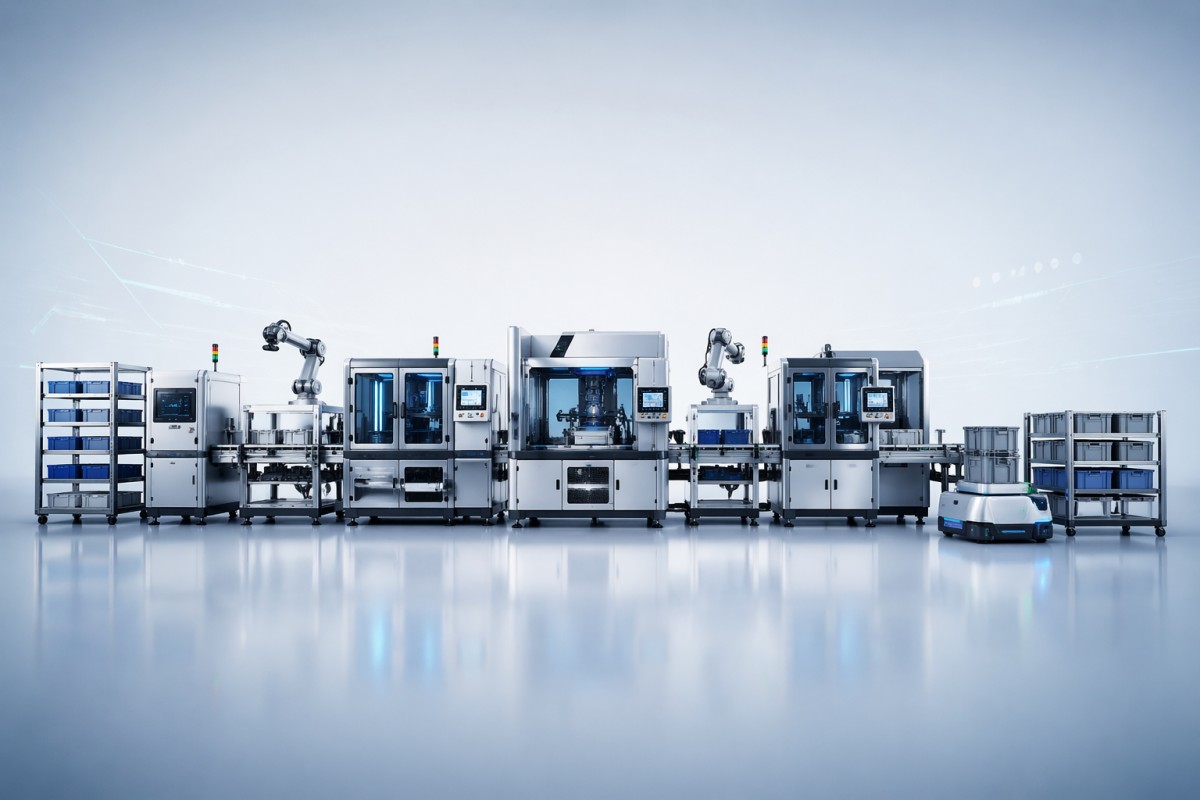
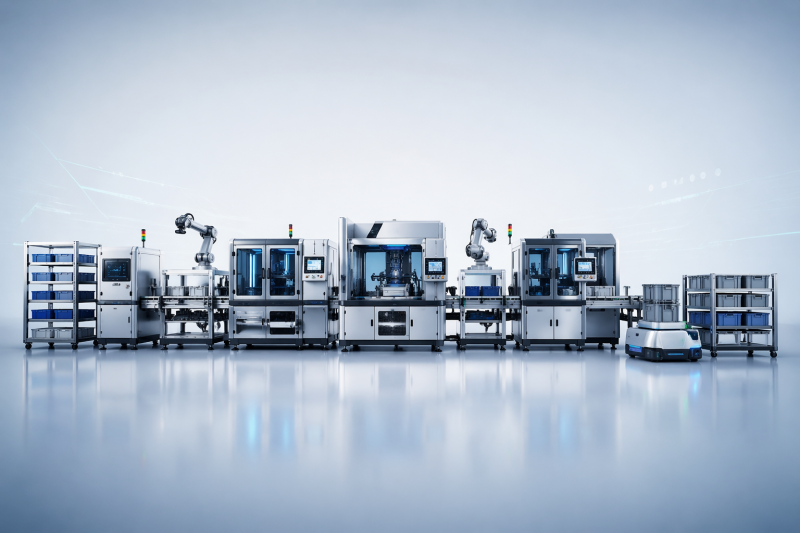
In real industrial environments, scalability is not just about adding more machines or connecting more plants. A manufacturing system scales well when it can support higher production volume, new product variants, additional sites, and more complex workflows without requiring a full redesign.
That means the most scalable smart manufacturing systems usually do four things well:
- Add new assets quickly without rebuilding the control architecture
- Integrate data across operations, quality, maintenance, and supply chain functions
- Maintain performance and visibility as the environment becomes more complex
- Support process standardization with local flexibility across lines or facilities
For most manufacturers, the real scaling challenge is not hardware capacity. It is the ability to connect systems, preserve data consistency, and avoid creating new operational silos every time the business grows.
Which smart manufacturing systems usually scale easier?
The systems that tend to scale most easily are not single products but system architectures. In general, the easiest environments to scale include:
- Modular MES and MOM platforms that can be deployed by site, line, or process area
- Cloud-enabled industrial data platforms that centralize visibility while supporting edge execution
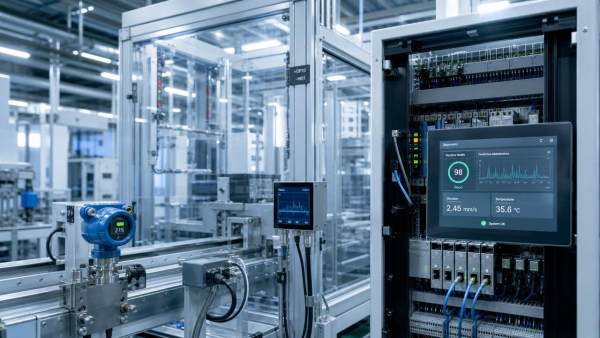
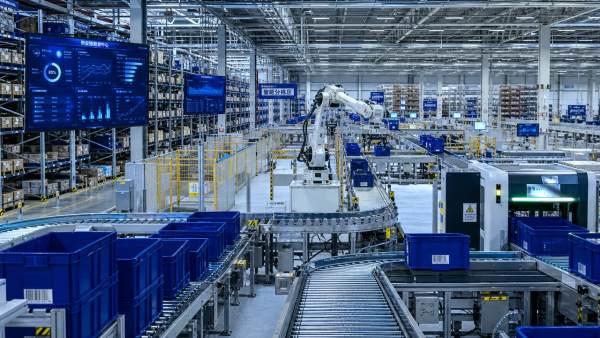
- Intelligent automation systems built with reusable logic, standardized interfaces, and remote management capabilities
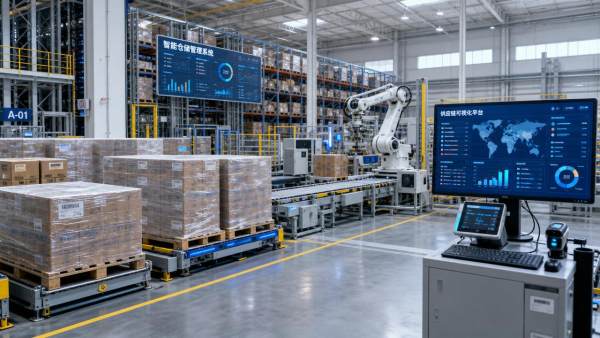
- Digital supply chain solutions that connect planning, sourcing, production, and logistics data
- Supply chain intelligence platforms that turn fragmented operational data into decision-ready insight
These systems scale better because they reduce dependence on one-off engineering. Instead of creating a new custom setup every time a production cell or factory is added, they allow teams to replicate proven templates, data structures, and workflows.
By contrast, systems that scale poorly are often heavily customized, vendor-locked, and dependent on manual data transfer between software layers. They may work well at one site, but expansion becomes slow, expensive, and difficult to govern.
Why do integrated digital supply chain solutions matter for scalability?
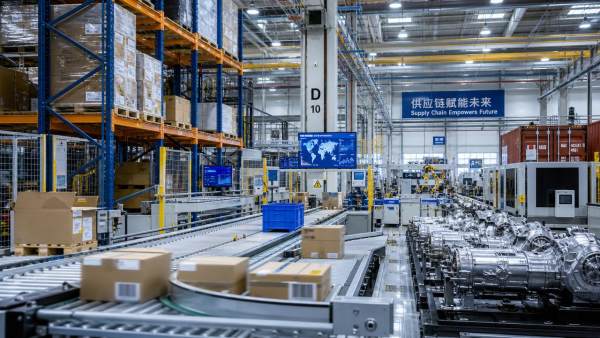
Many companies still evaluate smart manufacturing only at the factory level. But scaling production without scaling coordination creates bottlenecks upstream and downstream. This is why digital supply chain solutions are now central to smart manufacturing strategy.
When production systems are connected to supply, inventory, logistics, and demand signals, manufacturers can scale output more confidently. They gain better visibility into material constraints, lead-time risk, supplier variability, and network-wide capacity.
This matters especially in industries where growth increases operational complexity faster than it increases throughput. Without digital supply chain connectivity, manufacturers often face:
- Poor synchronization between planning and execution
- Inventory imbalances across sites
- Longer response times to disruptions
- Manual coordination across disconnected teams
- Difficulty scaling globally with consistent standards
In other words, a factory can be digitally advanced and still be hard to scale if its supply chain remains fragmented.
What operators and users should examine before calling a system “scalable”?
For users and operators, scalability is experienced in day-to-day execution. A platform may look impressive in a strategy presentation, but if it adds configuration burden, troubleshooting complexity, or data confusion, it will not scale smoothly in practice.
Before judging whether a smart manufacturing system can grow effectively, operational teams should examine:
- Integration effort: How difficult is it to connect machines, sensors, ERP, quality, and warehouse systems?
- Template reuse: Can recipes, dashboards, alarms, and workflows be replicated across lines or sites?
- User adoption: Is the interface understandable for operators, supervisors, and maintenance teams?
- Change management: How easily can process changes be introduced without disrupting production?
- Data quality: Does the system produce reliable, contextualized data for decisions?
- Supportability: Can internal teams maintain and expand it without constant external engineering support?
These practical questions often reveal more than vendor claims. A scalable system should reduce friction as operations expand, not increase dependency on specialists for every adjustment.
How does a supply chain intelligence platform improve long-term scale?
A supply chain intelligence platform helps manufacturers scale by turning operational and external signals into coordinated action. This is especially valuable when companies are growing across product families, regions, or supplier networks.
Rather than only showing what happened on a production line, a strong intelligence layer helps teams understand why constraints are emerging and where to act next. It combines manufacturing data with supplier performance, logistics conditions, inventory exposure, and demand changes.
This improves scalability in several ways:
- Faster decision-making: teams can identify risks before they become production disruptions
- Better cross-functional alignment: procurement, planning, operations, and logistics work from a more consistent view
- More resilient expansion: new facilities or partners can be brought into a governed data framework
- Stronger benchmarking: leaders can compare performance across lines, plants, and suppliers
For organizations operating in a high-mix, globally distributed environment, intelligence platforms are increasingly the difference between scaling efficiently and simply becoming more complicated.
What system characteristics are strongest indicators of future scalability?
If the goal is to identify smart manufacturing systems that will remain scalable over time, several characteristics matter more than feature count.
- Open interoperability
Systems should support standard protocols, API-based connectivity, and integration with both legacy and modern assets. - Modular deployment
Manufacturers should be able to roll out capabilities by use case, process, or site instead of undertaking a single massive implementation. - Edge-to-cloud architecture
This allows local responsiveness while supporting centralized analytics, benchmarking, and governance. - Contextualized industrial data
Raw data alone does not scale value. Data must be structured around assets, processes, events, and business outcomes. - Low-friction configuration
Systems that require deep custom coding for every change often slow down expansion. - Security and governance by design
As more plants, suppliers, and users are connected, governance becomes a scaling requirement, not a compliance afterthought.
These traits align closely with current manufacturing technology trends, where the market is moving toward connected ecosystems rather than isolated automation stacks.
Which systems are harder to scale, even if they work well today?
Some systems perform well in a narrow scope but become obstacles during growth. Common warning signs include:
- Closed architectures that make integration expensive
- Custom logic that only a few engineers understand
- Site-specific deployments with no reusable standards
- Heavy reliance on spreadsheets or manual data reconciliation
- Poor visibility across production and supply chain layers
- Separate tools for automation, quality, maintenance, and planning with no unifying data model
These environments may deliver short-term functionality, but they often create hidden costs later. Every additional site, product, or supplier increases system complexity faster than organizational capacity can absorb it.
How should researchers and industrial teams compare options more effectively?
If the goal is to determine which smart manufacturing systems scale easier, comparison should go beyond software categories or vendor positioning. The better approach is to assess each option against real scaling scenarios.
Useful comparison questions include:
- How quickly can this system be replicated across multiple plants?
- How well does it connect with digital supply chain solutions already in use?
- Can it support intelligent automation systems from different vendors?
- Does it improve visibility for both operators and enterprise decision-makers?
- How much engineering effort is required to onboard new assets or workflows?
- Will the data produced be usable in a broader supply chain intelligence platform?
This kind of evaluation leads to more realistic decisions because it focuses on operational scalability, not just technical capability on paper.
Conclusion: the easiest systems to scale are the ones built for connected growth
The smartest manufacturing systems do not scale easily simply because they are digital or automated. They scale because they are designed for integration, replication, visibility, and coordinated decision-making.
For most industrial organizations, the systems that scale best are modular platforms supported by intelligent automation systems, connected digital supply chain solutions, and a reliable supply chain intelligence platform. Together, these create an operating model that can grow in volume, complexity, and geographic reach without multiplying inefficiency.
If you are researching options, focus on architecture, interoperability, and cross-functional data value. If you are an operator or user, focus on whether the system reduces friction during change. In both cases, the best answer to “Which smart manufacturing systems scale easier?” is clear: the ones built to connect the factory, the supply chain, and decision intelligence as one scalable ecosystem.
Recommended News
 May 04, 2026High-Tech Industrial Equipment: What Matters Most After InstallationHigh-tech industrial equipment delivers real value after installation through smart maintenance, calibration, operator readiness, and data-driven support that protects uptime and performance.
 May 04, 2026Is a Digital Supply Chain for Manufacturing Worth the Transition Cost?Digital supply chain for manufacturing: is the transition cost worth it? Discover how it boosts supplier visibility, cuts disruption risk, improves inventory control, and delivers measurable ROI.
 May 04, 2026Industrial Sustainability Practices That Cut Waste Without Slowing OutputIndustrial sustainability practices help manufacturers cut scrap, energy loss, and downtime while protecting throughput. Discover practical ways to reduce waste, improve stability, and stay competitive.
 May 04, 2026Choosing a Digital Intelligence Platform Without Overpaying for FeaturesDigital intelligence platform buying guide: learn how to avoid feature bloat, cut procurement risk, and choose a scalable solution that delivers measurable industrial ROI.
 May 04, 2026Material Innovation Research That Leads to Better Product DifferentiationMaterial innovation research helps industrial distributors and channel partners drive product differentiation, improve portfolio value, and win more buyers with data-backed material strategies.
 May 04, 2026How Supply Chain Intelligence Solutions Help Reduce Planning RiskSupply chain intelligence solutions help reduce planning risk with better visibility, faster scenario analysis, and smarter sourcing decisions across complex industrial networks.
 May 04, 2026When Industrial Benchmarking Tools Reveal a Hidden Quality ProblemIndustrial benchmarking tools uncover hidden quality risks by comparing cross-plant data, supplier variance, and process drift—helping teams act faster, reduce safety exposure, and prevent costly failures.
 May 04, 2026Intelligent Automation Solutions: Common Integration Mistakes to AvoidIntelligent automation solutions often fail at the integration stage. Learn the most common mistakes to avoid and how to build scalable, secure, high-ROI industrial systems.
 May 04, 2026What Automation Technology for Smart Manufacturing Actually Improves FirstAutomation technology for smart manufacturing improves downtime, quality stability, and decision speed first. Learn where early ROI appears and how to prioritize smarter investments.
 May 04, 2026How to Evaluate a Vertical AI Supplier for Industrial RolloutsVertical AI supplier evaluation for industrial rollouts: learn how to assess domain fit, integration, governance, scalability, and ROI to reduce risk and choose a partner that can scale.
 May 04, 2026WISE 2026 Adds Dedicated Anti-Drone Gear Pavilion in TianjinAnti-Drone Gear pavilion debuts at WISE 2026 in Tianjin — a must-attend hub for global defense, security & critical infrastructure suppliers.
 May 04, 2026Global Engineering Resins Price Index Up 3.1% in Early May 2026Engineering Resins price index up 3.1% in early May 2026—driven by tight East China port stocks & Middle East feedstock pressures. Act now on Q3 capacity.
 May 04, 2026Japan METI Launches J-ChemTrace Import Traceability PilotJ-ChemTrace pilot launched by Japan METI for electronic-grade chemical traceability—key for photoresist precursors (HS 2931.90). Act now to ensure compliance, avoid delays, and secure seamless semiconductor supply chain operations.
 May 04, 2026TÜV Rheinland Launches Dual-Track CE Certification for Cargo DronesCE certification for cargo drones just got faster: TÜV Rheinland’s new dual-track pathway enables Chinese OEMs to complete Design Approval locally and validate flights in Germany—cutting time by 40%.
 May 04, 2026FDA Updates Bio-Plastics Food Contact Guidance, Adds Nano-Migration TestingFDA's new bio-plastics food contact guidance mandates nano-migration testing for PLA, PHA & PBAT — get compliant insights, avoid delays & secure market access.
 May 04, 2026SABIC & GSO Release GCC Functional Coatings Certification V2.1SABIC & GSO GCC Functional Coatings Certification V2.1 is live — new salt spray & UV adhesion tests required. Act now to avoid delays in GCC market access.
 May 04, 2026IMC Raises BAF 18% on East Asia–North Europe Routes from May 2026BAF increase: IMC raises East Asia–North Europe bunker surcharge 18% to $2,420/TEU from May 2026—key impact on chemical exporters & procurement teams.
 May 04, 2026Vietnam MOIT Advances SDS Labeling Deadline for Industrial Catalysts to July 2026Vietnam MOIT advances SDS labeling deadline for industrial catalysts to July 2026—urgent compliance action needed for HS 2841–2843 imports.
 May 04, 2026EU Launches Impact Assessment on PFAS Ban in Barrier FilmsPFAS ban in barrier films: EU launches 2026 impact assessment under PPWR — critical for exporters, suppliers & converters. Stay ahead of compliance.
 May 04, 2026BIS Extends Comment Period for Harmonic Reducer Export Controls to May 15, 2026BIS extends harmonic reducer export controls comment period to May 15, 2026—key update for robotics, automation & global supply chain teams. Act now.
 May 03, 2026Advanced Materials for Smart Manufacturing: Choosing Options That Last Longer Under LoadAdvanced materials for smart manufacturing: explore durable options that resist wear, heat, and repeated load to boost uptime, cut lifecycle costs, and support smarter factory decisions.
 May 03, 2026Digital Supply Chain Management: What to Fix First for Better Forecast AccuracyDigital supply chain management starts with fixing demand signals, master data, and supplier visibility. Learn what to address first to improve forecast accuracy and reduce planning risk.
 May 03, 2026Smart Materials for Industrial Applications: How to Judge Reliability in Harsh EnvironmentsSmart materials for industrial applications: learn how to assess reliability in heat, corrosion, vibration, and humidity with practical criteria that reduce risk and improve supplier decisions.
 May 03, 2026AI in Manufacturing Solutions: Practical Use Cases That Scale Beyond PilotsAI in manufacturing solutions that scale beyond pilots: explore practical use cases in quality, maintenance, planning, and supply chains to drive measurable ROI and smarter operations.