Search News
Industry Portal
Popular Tags
Industrial Sustainability Practices That Cut Waste Without Slowing Output
Author
Time
Click Count
For operators under pressure to reduce scrap, energy loss, and downtime, industrial sustainability practices are no longer optional—they are a practical way to improve daily performance without sacrificing throughput. By combining smarter material use, process visibility, and automation-ready workflows, manufacturers can cut waste at the source while keeping production stable, efficient, and competitive.
Why industrial sustainability practices are shifting from corporate messaging to shop-floor reality
A clear change is happening across the broader industrial sector: industrial sustainability practices are moving out of annual reports and into daily operating routines. For operators, this matters because waste reduction is no longer treated as a separate environmental program. It is becoming part of output protection, machine reliability, quality control, and cost discipline. In practical terms, the question is no longer whether a plant should pursue sustainability. The real question is how to reduce scrap, energy loss, water use, rework, and idle time without creating friction on the line.
Several signals explain this shift. Input costs remain volatile, customers expect tighter documentation, and digital monitoring tools are becoming easier to deploy at machine level. At the same time, operators are being asked to maintain throughput despite labor constraints, shorter production runs, and stricter material standards. Under these conditions, industrial sustainability practices are gaining traction because they align with what operations teams already care about: fewer disruptions, more stable cycle times, better yield, and less hidden loss between planning and actual execution.
This trend is especially relevant in a multidisciplinary industrial ecosystem, where material science, process engineering, and intelligent automation increasingly intersect. Waste is no longer seen only as leftover material. It is now understood as any mismatch between asset capability and actual performance, including overprocessing, unnecessary motion, poor changeover control, excess energy draw, and quality variation that triggers downstream corrections.
The strongest trend signals operators should watch now
The most important trend is that plants are no longer waiting for large capital projects before acting. Instead, they are adopting layered industrial sustainability practices that start with measurement, standardization, and targeted process correction. This lowers risk and allows operators to see quick gains without slowing output.
These shifts indicate that industrial sustainability practices are becoming operational tools rather than image-driven initiatives. The plants gaining momentum are not necessarily the ones making the biggest announcements. They are the ones building repeatable control over material use, machine settings, maintenance timing, and line balance.
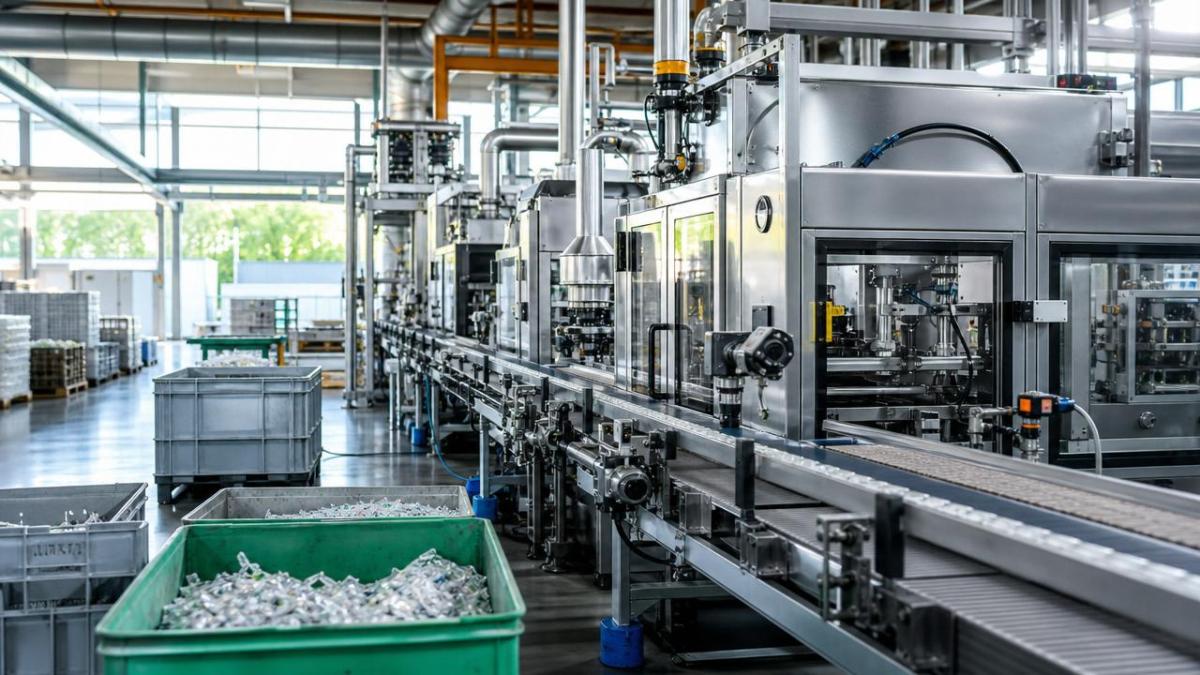
What is driving the rise of industrial sustainability practices across operations
The drivers behind this trend are both external and internal. Externally, procurement expectations are changing. Buyers increasingly evaluate not only price and delivery, but also consistency, resource efficiency, and data transparency. Even when formal sustainability reporting is not mandatory for every supplier, operating discipline is becoming easier to compare across sites and vendors. That makes waste-heavy production a competitive disadvantage.
Internally, plant teams are under pressure to do more with existing assets. In many facilities, the fastest route to margin improvement is not adding new lines but removing hidden losses from current ones. Industrial sustainability practices support this approach because they help teams control variable consumption, reduce unstable process windows, and avoid downstream quality escapes. In other words, sustainability is being pulled forward by productivity logic.
Another powerful driver is the convergence of digital tools with physical process knowledge. Low-friction data capture, machine connectivity, and benchmark-oriented analysis now allow operations teams to detect patterns that were previously hard to see. A compressed air leak, a temperature drift, or repeated overfill may seem small in isolation. But once measured continuously, these issues become visible as recurring cost and output risks. This is why industrial sustainability practices increasingly depend on data quality as much as on procedural discipline.
How the impact differs across operators, supervisors, maintenance, and procurement
The impact of this shift is not uniform. Different roles experience industrial sustainability practices in different ways, and effective implementation depends on recognizing those differences early.
For operators in particular, the biggest change is that sustainability-related tasks are being integrated into normal operating standards. Instead of treating waste reduction as a side initiative, the best facilities embed it in startup checks, parameter verification, inspection timing, and handoff discipline. This reduces the burden of separate reporting and makes industrial sustainability practices easier to sustain over time.
The next phase: less focus on slogans, more focus on process stability
A notable shift in the market is the move away from broad claims toward verifiable process improvement. Facilities are learning that high waste is often a symptom of unstable production, not only of poor environmental planning. That is why the next phase of industrial sustainability practices will likely center on process stability, repeatability, and closed-loop correction.
This matters because operators often face a false tradeoff: either run fast or run clean. In practice, unstable lines create both lower throughput and higher waste. Excessive speed changes, inconsistent feed rates, poor material handling, and unplanned stoppages can all increase scrap while also reducing effective output. By contrast, a line with tighter control tends to produce better yield at a more dependable pace. The future direction is therefore not slower production, but smarter production.
Industrial sustainability practices are also becoming more stage-specific. Upstream material handling, in-process parameter control, and downstream packaging or finishing each require different interventions. A blanket plant-wide message is less useful than identifying where waste enters the value stream and how quickly teams can isolate it. This staged view helps avoid overinvestment in broad programs that do not address the most damaging sources of loss.
Where operators are seeing practical gains first
- Setup reduction and first-pass yield improvement during product changeovers
- Machine setting control that reduces overuse of raw materials, water, or energy
- Maintenance-triggered efficiency checks for leaks, friction, vibration, and drift
- Digital alerts that flag abnormal consumption before output quality drops
- Operator feedback loops that connect observed waste to immediate corrective actions
How to judge whether industrial sustainability practices will improve or complicate your workflow
Not every initiative produces the same result. Some programs add reporting burden without fixing root causes. Others unlock real efficiency because they are built around operating conditions. The difference usually comes down to whether the effort starts with the line, the material, and the operator decision point.
A useful judgment test is to ask whether a proposed change improves visibility, consistency, or recovery. If the answer is yes, it is more likely to support output. For example, better parameter tracking can reduce variation; clearer material segregation can prevent contamination; and condition-based maintenance can prevent waste caused by equipment degradation. These are all industrial sustainability practices with direct operational value.
By contrast, if a project introduces new checkpoints without giving teams faster insight or better control, it may create resistance. Operators are more likely to support sustainability efforts when they can see immediate links to fewer alarms, fewer rejects, cleaner changeovers, or easier troubleshooting. That is why implementation design matters as much as strategic intent.
What businesses should prioritize now to stay ahead of the change
For industrial organizations navigating these shifts, the smartest response is not to chase every new tool at once. The better approach is to build a practical sequence. First, identify the largest recurring waste points by process step. Second, confirm whether those losses come from material variability, machine instability, operator inconsistency, or poor handoff between stages. Third, apply industrial sustainability practices that can be measured within normal production cycles.
This is also where a benchmarking mindset becomes valuable. Comparing expected machine capability with actual line behavior can reveal whether waste is structural or correctable. In advanced industrial environments, this kind of comparison helps connect physical asset performance with digital intelligence. It supports better decisions on when to adjust work instructions, when to automate, when to retrain, and when to redesign material flow.
Businesses should also pay closer attention to supplier-side signals. If incoming materials create recurring variability, internal sustainability gains will be harder to hold. Likewise, if customers are increasingly asking for traceability or efficiency documentation, those requests should be treated as early market direction rather than isolated demands. Industrial sustainability practices are becoming part of how resilience is judged across the value chain.
Key questions to guide the next decision
If your team wants to determine how these trends affect its own operation, start with a focused review. Ask which losses occur most often, which ones are least visible, and which ones interrupt throughput even when output appears acceptable. Then ask whether current data captures the cause in time for operators to act. These questions are more useful than broad sustainability targets because they connect industrial sustainability practices to real production behavior.
A second set of questions should examine readiness. Are standard work instructions aligned with waste prevention? Are machine settings locked or drifting across shifts? Is maintenance tracking efficiency-related wear, not only failure events? Are suppliers providing material consistency that supports yield improvement? These signals help separate symbolic action from meaningful operational progress.
The strongest direction for the coming period is clear: industrial sustainability practices will continue to matter most where they protect output, improve material efficiency, and strengthen process control at the point of use. For operators and industrial decision-makers alike, the opportunity is not simply to do less harm. It is to build cleaner, more stable production systems that waste less because they run better. If a business wants to judge the impact on its own workflow, it should begin by confirming where waste is generated, how quickly it is detected, and whether current operating routines make prevention easy or difficult.
Recommended News
 May 04, 2026High-Tech Industrial Equipment: What Matters Most After InstallationHigh-tech industrial equipment delivers real value after installation through smart maintenance, calibration, operator readiness, and data-driven support that protects uptime and performance.
 May 04, 2026Is a Digital Supply Chain for Manufacturing Worth the Transition Cost?Digital supply chain for manufacturing: is the transition cost worth it? Discover how it boosts supplier visibility, cuts disruption risk, improves inventory control, and delivers measurable ROI.
 May 04, 2026Industrial Sustainability Practices That Cut Waste Without Slowing OutputIndustrial sustainability practices help manufacturers cut scrap, energy loss, and downtime while protecting throughput. Discover practical ways to reduce waste, improve stability, and stay competitive.
 May 04, 2026Choosing a Digital Intelligence Platform Without Overpaying for FeaturesDigital intelligence platform buying guide: learn how to avoid feature bloat, cut procurement risk, and choose a scalable solution that delivers measurable industrial ROI.
 May 04, 2026Material Innovation Research That Leads to Better Product DifferentiationMaterial innovation research helps industrial distributors and channel partners drive product differentiation, improve portfolio value, and win more buyers with data-backed material strategies.
 May 04, 2026How Supply Chain Intelligence Solutions Help Reduce Planning RiskSupply chain intelligence solutions help reduce planning risk with better visibility, faster scenario analysis, and smarter sourcing decisions across complex industrial networks.
 May 04, 2026When Industrial Benchmarking Tools Reveal a Hidden Quality ProblemIndustrial benchmarking tools uncover hidden quality risks by comparing cross-plant data, supplier variance, and process drift—helping teams act faster, reduce safety exposure, and prevent costly failures.
 May 04, 2026Intelligent Automation Solutions: Common Integration Mistakes to AvoidIntelligent automation solutions often fail at the integration stage. Learn the most common mistakes to avoid and how to build scalable, secure, high-ROI industrial systems.
 May 04, 2026What Automation Technology for Smart Manufacturing Actually Improves FirstAutomation technology for smart manufacturing improves downtime, quality stability, and decision speed first. Learn where early ROI appears and how to prioritize smarter investments.
 May 04, 2026How to Evaluate a Vertical AI Supplier for Industrial RolloutsVertical AI supplier evaluation for industrial rollouts: learn how to assess domain fit, integration, governance, scalability, and ROI to reduce risk and choose a partner that can scale.
 May 04, 2026WISE 2026 Adds Dedicated Anti-Drone Gear Pavilion in TianjinAnti-Drone Gear pavilion debuts at WISE 2026 in Tianjin — a must-attend hub for global defense, security & critical infrastructure suppliers.
 May 04, 2026Global Engineering Resins Price Index Up 3.1% in Early May 2026Engineering Resins price index up 3.1% in early May 2026—driven by tight East China port stocks & Middle East feedstock pressures. Act now on Q3 capacity.
 May 04, 2026Japan METI Launches J-ChemTrace Import Traceability PilotJ-ChemTrace pilot launched by Japan METI for electronic-grade chemical traceability—key for photoresist precursors (HS 2931.90). Act now to ensure compliance, avoid delays, and secure seamless semiconductor supply chain operations.
 May 04, 2026TÜV Rheinland Launches Dual-Track CE Certification for Cargo DronesCE certification for cargo drones just got faster: TÜV Rheinland’s new dual-track pathway enables Chinese OEMs to complete Design Approval locally and validate flights in Germany—cutting time by 40%.
 May 04, 2026FDA Updates Bio-Plastics Food Contact Guidance, Adds Nano-Migration TestingFDA's new bio-plastics food contact guidance mandates nano-migration testing for PLA, PHA & PBAT — get compliant insights, avoid delays & secure market access.
 May 04, 2026SABIC & GSO Release GCC Functional Coatings Certification V2.1SABIC & GSO GCC Functional Coatings Certification V2.1 is live — new salt spray & UV adhesion tests required. Act now to avoid delays in GCC market access.
 May 04, 2026IMC Raises BAF 18% on East Asia–North Europe Routes from May 2026BAF increase: IMC raises East Asia–North Europe bunker surcharge 18% to $2,420/TEU from May 2026—key impact on chemical exporters & procurement teams.
 May 04, 2026Vietnam MOIT Advances SDS Labeling Deadline for Industrial Catalysts to July 2026Vietnam MOIT advances SDS labeling deadline for industrial catalysts to July 2026—urgent compliance action needed for HS 2841–2843 imports.
 May 04, 2026EU Launches Impact Assessment on PFAS Ban in Barrier FilmsPFAS ban in barrier films: EU launches 2026 impact assessment under PPWR — critical for exporters, suppliers & converters. Stay ahead of compliance.
 May 04, 2026BIS Extends Comment Period for Harmonic Reducer Export Controls to May 15, 2026BIS extends harmonic reducer export controls comment period to May 15, 2026—key update for robotics, automation & global supply chain teams. Act now.
 May 03, 2026Advanced Materials for Smart Manufacturing: Choosing Options That Last Longer Under LoadAdvanced materials for smart manufacturing: explore durable options that resist wear, heat, and repeated load to boost uptime, cut lifecycle costs, and support smarter factory decisions.
 May 03, 2026Digital Supply Chain Management: What to Fix First for Better Forecast AccuracyDigital supply chain management starts with fixing demand signals, master data, and supplier visibility. Learn what to address first to improve forecast accuracy and reduce planning risk.
 May 03, 2026Smart Materials for Industrial Applications: How to Judge Reliability in Harsh EnvironmentsSmart materials for industrial applications: learn how to assess reliability in heat, corrosion, vibration, and humidity with practical criteria that reduce risk and improve supplier decisions.
 May 03, 2026AI in Manufacturing Solutions: Practical Use Cases That Scale Beyond PilotsAI in manufacturing solutions that scale beyond pilots: explore practical use cases in quality, maintenance, planning, and supply chains to drive measurable ROI and smarter operations.