Search News
Industry Portal
Popular Tags
Intelligent Automation Solutions: Common Integration Mistakes to Avoid
Author
Time
Click Count
Intelligent automation solutions can transform project delivery, but poor integration planning often leads to delays, cost overruns, and fragmented systems. For project managers and engineering leaders, understanding the most common integration mistakes is essential to protecting performance, scalability, and long-term ROI. This article explores where automation strategies fail and how to build a more connected, resilient industrial operation from the start.
What Intelligent Automation Solutions Mean in Industrial Projects
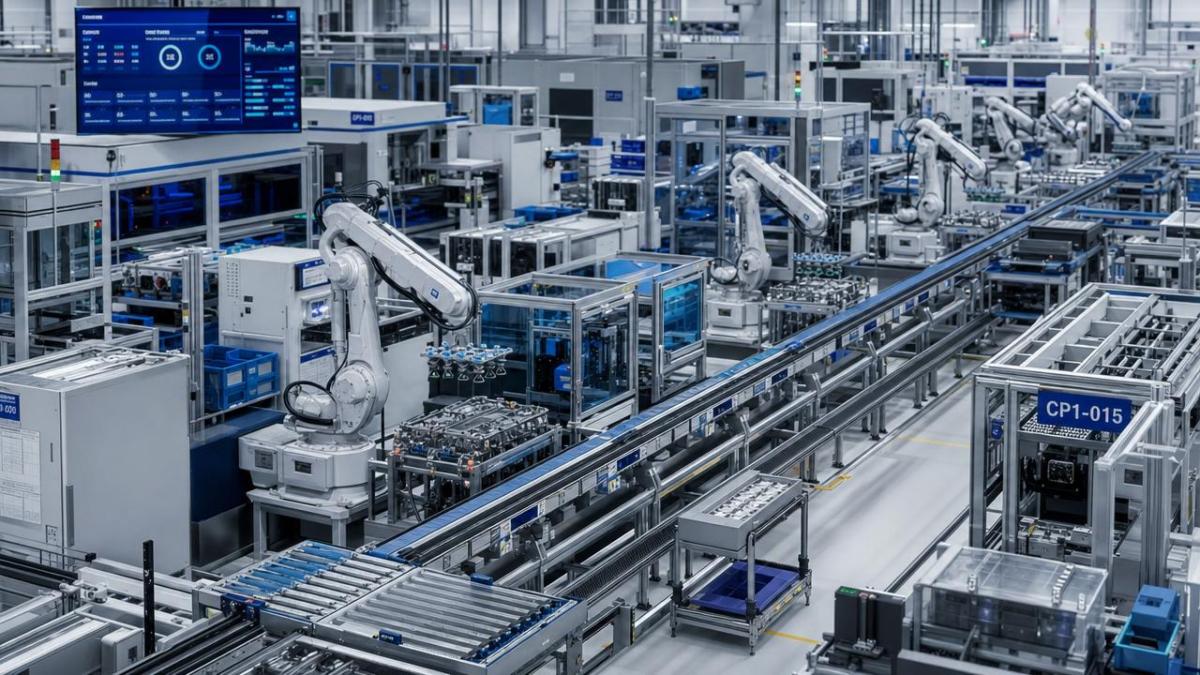
In industrial environments, intelligent automation solutions refer to the coordinated use of software, connected machines, sensors, analytics, AI-driven decision support, workflow automation, and control systems to improve operational performance. They are not limited to robotic process automation or plant-floor robotics. In practice, they often include MES, ERP links, SCADA, digital quality systems, predictive maintenance tools, warehouse automation, supplier data exchange, and engineering change workflows.
For project managers and engineering leads, the value of intelligent automation solutions lies in integration. A standalone tool may improve one task, but true business impact comes when data moves reliably across design, procurement, production, logistics, and service. That is why integration mistakes are so costly: they reduce visibility, weaken decision quality, and create technical debt that limits future scale.
Why Integration Has Become a Strategic Issue
Across manufacturing and broader industrial sectors, automation is no longer a simple equipment upgrade. Enterprises are operating in a landscape shaped by supply chain volatility, material efficiency targets, energy constraints, cybersecurity demands, and pressure for faster project delivery. At the same time, the rise of Vertical AI has made contextual industrial data more valuable than ever. Systems that cannot exchange clean, structured, timely information limit both automation performance and management confidence.
Organizations such as G-AIE emphasize that the future of industrial competitiveness depends on linking high-performance physical assets with digital intelligence. In that context, intelligent automation solutions are not just operational tools. They are foundational infrastructure for benchmarking, resilient execution, lifecycle asset management, and cross-site optimization.
A Practical Industry Overview for Project Leaders
Before examining mistakes, it helps to understand where integration risk usually appears. The table below summarizes common domains in which intelligent automation solutions are deployed and where project teams often underestimate complexity.
This overview shows a recurring pattern: the hardest part is rarely automating one process. The hardest part is aligning process logic, data ownership, timing, and governance across multiple systems and teams.
The Most Common Integration Mistakes to Avoid
1. Treating automation as a tool purchase instead of a system architecture decision
A common error is selecting intelligent automation solutions based on feature lists without defining how they must interact with existing platforms. Teams may buy a strong application for scheduling, quality, or machine monitoring, only to discover later that it cannot support required protocols, data structures, or approval rules. This creates expensive customization, unreliable middleware, and hidden operational workarounds.
2. Ignoring legacy system realities
Many projects assume older equipment and software can be connected quickly. In reality, legacy systems often lack standardized APIs, maintain inconsistent naming conventions, or depend on manual data entry. Project plans that underestimate this complexity are vulnerable to timeline slippage. Effective intelligent automation solutions start with a realistic legacy assessment, not an ideal future-state diagram.
3. Failing to define a shared data model
Integration fails when different systems use different meanings for the same asset, batch, order, event, or quality metric. Without a shared data model, dashboards become misleading and AI outputs become less trustworthy. For engineering leaders, this is one of the most important points: data integration is not just about moving information, but about preserving meaning across systems.
4. Automating broken workflows
Not every manual process should be automated immediately. If approvals, exception handling, handoffs, or escalation paths are unclear, automation only accelerates confusion. Intelligent automation solutions work best when workflows are first simplified, standardized, and measured. Otherwise, the project team ends up embedding inefficiency into the digital environment.
5. Underestimating cross-functional ownership
Integration is rarely owned by one department alone. Operations, IT, OT, maintenance, procurement, quality, and external vendors all influence outcomes. When governance is weak, interface decisions are delayed, testing becomes fragmented, and accountability is unclear. Project managers should establish a cross-functional integration structure early, with named owners for data, security, validation, and change management.
6. Neglecting cybersecurity and access control during design
Industrial teams sometimes focus on functionality first and security later. That approach creates risk, especially when intelligent automation solutions connect plant-floor assets to enterprise systems or cloud platforms. Role-based access, network segmentation, audit trails, and patch governance should be built into the design phase. Retrofitting them later is slower and more disruptive.
7. Using pilot success as proof of enterprise readiness
A pilot may work in one line, one site, or one product family, but enterprise deployment introduces variation in equipment age, operator behavior, supplier data quality, and compliance needs. Intelligent automation solutions must be evaluated for scalability from the start. A successful pilot that depends on exceptional local support or manual data fixes is not yet a scalable operating model.
Why These Mistakes Matter to Business Performance
Integration mistakes create more than technical inconvenience. They affect schedule confidence, resource utilization, material traceability, quality assurance, and executive reporting. In complex industrial programs, fragmented automation can produce duplicate work orders, conflicting production signals, delayed maintenance actions, and poor visibility into project progress. The result is lower ROI, slower decision-making, and reduced resilience when conditions change.
For project-based organizations, there is another impact: stakeholder trust. When leadership approves investment in intelligent automation solutions, they expect measurable gains in throughput, reliability, safety, or cost control. Weak integration undermines those expectations and makes future digital initiatives harder to justify.
Where Project Managers and Engineering Leaders Should Focus First
A disciplined integration strategy does not need to start large, but it does need to start clearly. The most effective teams usually focus on a few priority actions:
- Map critical workflows end to end, including manual steps, data handoffs, and exception paths.
- Identify which systems are sources of truth for assets, materials, orders, and quality records.
- Define interface requirements before vendor selection or detailed implementation.
- Set measurable outcomes such as downtime reduction, cycle-time improvement, or schedule predictability.
- Plan testing around real operational scenarios, not only ideal data conditions.
These actions create a practical bridge between strategic ambition and implementation discipline. They also help ensure intelligent automation solutions are evaluated as business systems, not isolated applications.
A Simple Readiness View Before Integration Begins
Project teams often benefit from a structured readiness review before committing to deployment. The table below can be used as a quick planning lens.
Building More Resilient Intelligent Automation Solutions
Resilient integration requires both technical discipline and industrial context. The strongest programs usually combine modular architecture, interoperable standards, operational validation, and lifecycle thinking. They recognize that intelligent automation solutions should support continuous adaptation, whether the trigger is a new product line, a supplier shift, a sustainability initiative, or a change in regulatory expectations.
This is where institutional intelligence becomes valuable. Benchmarking repositories, technical evaluation frameworks, and multidisciplinary industry insight help project leaders compare not just features, but integration maturity. That is especially important in environments where material science, production engineering, and digital control increasingly intersect.
Final Takeaway for Decision-Makers
The promise of intelligent automation solutions is real, but integration quality determines whether that promise becomes measurable value. For project managers and engineering leaders, the goal is not merely to connect systems, but to create reliable flow between physical operations, business processes, and decision intelligence. Avoiding common mistakes early can protect budgets, reduce execution risk, and improve long-term scalability.
If your organization is evaluating intelligent automation solutions across production, supply chain, quality, or asset management, begin with architecture clarity, data discipline, and cross-functional governance. A connected industrial future is built less by isolated tools than by well-integrated systems designed for resilience from day one.
Recommended News
 May 04, 2026High-Tech Industrial Equipment: What Matters Most After InstallationHigh-tech industrial equipment delivers real value after installation through smart maintenance, calibration, operator readiness, and data-driven support that protects uptime and performance.
 May 04, 2026Is a Digital Supply Chain for Manufacturing Worth the Transition Cost?Digital supply chain for manufacturing: is the transition cost worth it? Discover how it boosts supplier visibility, cuts disruption risk, improves inventory control, and delivers measurable ROI.
 May 04, 2026Industrial Sustainability Practices That Cut Waste Without Slowing OutputIndustrial sustainability practices help manufacturers cut scrap, energy loss, and downtime while protecting throughput. Discover practical ways to reduce waste, improve stability, and stay competitive.
 May 04, 2026Choosing a Digital Intelligence Platform Without Overpaying for FeaturesDigital intelligence platform buying guide: learn how to avoid feature bloat, cut procurement risk, and choose a scalable solution that delivers measurable industrial ROI.
 May 04, 2026Material Innovation Research That Leads to Better Product DifferentiationMaterial innovation research helps industrial distributors and channel partners drive product differentiation, improve portfolio value, and win more buyers with data-backed material strategies.
 May 04, 2026How Supply Chain Intelligence Solutions Help Reduce Planning RiskSupply chain intelligence solutions help reduce planning risk with better visibility, faster scenario analysis, and smarter sourcing decisions across complex industrial networks.
 May 04, 2026When Industrial Benchmarking Tools Reveal a Hidden Quality ProblemIndustrial benchmarking tools uncover hidden quality risks by comparing cross-plant data, supplier variance, and process drift—helping teams act faster, reduce safety exposure, and prevent costly failures.
 May 04, 2026Intelligent Automation Solutions: Common Integration Mistakes to AvoidIntelligent automation solutions often fail at the integration stage. Learn the most common mistakes to avoid and how to build scalable, secure, high-ROI industrial systems.
 May 04, 2026What Automation Technology for Smart Manufacturing Actually Improves FirstAutomation technology for smart manufacturing improves downtime, quality stability, and decision speed first. Learn where early ROI appears and how to prioritize smarter investments.
 May 04, 2026How to Evaluate a Vertical AI Supplier for Industrial RolloutsVertical AI supplier evaluation for industrial rollouts: learn how to assess domain fit, integration, governance, scalability, and ROI to reduce risk and choose a partner that can scale.
 May 04, 2026WISE 2026 Adds Dedicated Anti-Drone Gear Pavilion in TianjinAnti-Drone Gear pavilion debuts at WISE 2026 in Tianjin — a must-attend hub for global defense, security & critical infrastructure suppliers.
 May 04, 2026Global Engineering Resins Price Index Up 3.1% in Early May 2026Engineering Resins price index up 3.1% in early May 2026—driven by tight East China port stocks & Middle East feedstock pressures. Act now on Q3 capacity.
 May 04, 2026Japan METI Launches J-ChemTrace Import Traceability PilotJ-ChemTrace pilot launched by Japan METI for electronic-grade chemical traceability—key for photoresist precursors (HS 2931.90). Act now to ensure compliance, avoid delays, and secure seamless semiconductor supply chain operations.
 May 04, 2026TÜV Rheinland Launches Dual-Track CE Certification for Cargo DronesCE certification for cargo drones just got faster: TÜV Rheinland’s new dual-track pathway enables Chinese OEMs to complete Design Approval locally and validate flights in Germany—cutting time by 40%.
 May 04, 2026FDA Updates Bio-Plastics Food Contact Guidance, Adds Nano-Migration TestingFDA's new bio-plastics food contact guidance mandates nano-migration testing for PLA, PHA & PBAT — get compliant insights, avoid delays & secure market access.
 May 04, 2026SABIC & GSO Release GCC Functional Coatings Certification V2.1SABIC & GSO GCC Functional Coatings Certification V2.1 is live — new salt spray & UV adhesion tests required. Act now to avoid delays in GCC market access.
 May 04, 2026IMC Raises BAF 18% on East Asia–North Europe Routes from May 2026BAF increase: IMC raises East Asia–North Europe bunker surcharge 18% to $2,420/TEU from May 2026—key impact on chemical exporters & procurement teams.
 May 04, 2026Vietnam MOIT Advances SDS Labeling Deadline for Industrial Catalysts to July 2026Vietnam MOIT advances SDS labeling deadline for industrial catalysts to July 2026—urgent compliance action needed for HS 2841–2843 imports.
 May 04, 2026EU Launches Impact Assessment on PFAS Ban in Barrier FilmsPFAS ban in barrier films: EU launches 2026 impact assessment under PPWR — critical for exporters, suppliers & converters. Stay ahead of compliance.
 May 04, 2026BIS Extends Comment Period for Harmonic Reducer Export Controls to May 15, 2026BIS extends harmonic reducer export controls comment period to May 15, 2026—key update for robotics, automation & global supply chain teams. Act now.
 May 03, 2026Advanced Materials for Smart Manufacturing: Choosing Options That Last Longer Under LoadAdvanced materials for smart manufacturing: explore durable options that resist wear, heat, and repeated load to boost uptime, cut lifecycle costs, and support smarter factory decisions.
 May 03, 2026Digital Supply Chain Management: What to Fix First for Better Forecast AccuracyDigital supply chain management starts with fixing demand signals, master data, and supplier visibility. Learn what to address first to improve forecast accuracy and reduce planning risk.
 May 03, 2026Smart Materials for Industrial Applications: How to Judge Reliability in Harsh EnvironmentsSmart materials for industrial applications: learn how to assess reliability in heat, corrosion, vibration, and humidity with practical criteria that reduce risk and improve supplier decisions.
 May 03, 2026AI in Manufacturing Solutions: Practical Use Cases That Scale Beyond PilotsAI in manufacturing solutions that scale beyond pilots: explore practical use cases in quality, maintenance, planning, and supply chains to drive measurable ROI and smarter operations.