Search News
Industry Portal
Popular Tags
Fourth Chain Expo Opens June 22 with First-Ever AI Zone

Author
Time
Click Count
The Fourth China International Supply Chain Promotion Expo (Chain Expo) opens on June 22, 2026 — a pivotal policy-anchored event signaling intensified national emphasis on supply chain resilience, digital intelligence integration, and cross-border industrial collaboration. As the world’s first national-level exhibition dedicated exclusively to supply chain cooperation — formally codified in ISO international standards — its timing, thematic focus, and participant composition reflect evolving regulatory priorities in trade facilitation, AI governance, and regional development strategy. The event directly impacts industries engaged in global sourcing, intelligent manufacturing, logistics orchestration, and technology-enabled procurement.
Event Overview
The Fourth China International Supply Chain Promotion Expo will be held from June 22 to 26, 2026, at the Beijing Shunyi Exhibition Center. Its theme is “Linking the World, Co-Creating the Future.” For the first time, the expo features a dedicated Artificial Intelligence Zone, upgrading the ‘Digital & Intelligent Technology Chain’ segment. A standalone exhibition unit for Xiong’an New Area has also been added. A total of 676 domestic and international chain-leading enterprises, specialized SMEs (‘specialized, refined, distinctive, and innovative’), and industry institutions have confirmed participation. Foreign enterprises account for 36.5% of exhibitors; over 65% are Fortune Global 500 companies or industry leaders.
Industries Affected
Direct Trading Enterprises
These firms — including import/export agents, cross-border e-commerce platforms, and global distribution hubs — face recalibration of partner qualification criteria and compliance expectations. The AI Zone signals tightening alignment between trade infrastructure and algorithmic transparency requirements; participation eligibility may increasingly hinge on demonstrable AI-augmented traceability, customs automation, or multilingual smart contract deployment. Impact manifests in revised due diligence protocols, expanded data-sharing obligations with customs authorities, and accelerated adoption of interoperable digital trade platforms.
Raw Material Procurement Enterprises
Procurement organizations sourcing critical minerals, semiconductors, or advanced polymers must now assess upstream AI-driven forecasting tools and supplier risk-scoring models showcased in the AI Zone. The inclusion of Xiong’an New Area as an independent unit implies heightened scrutiny of ESG-compliant sourcing corridors and green material certification pathways. Impact includes pressure to integrate real-time AI-powered price volatility alerts, geopolitical exposure dashboards, and blockchain-verified origin documentation into procurement workflows.
Manufacturing Enterprises
Contract manufacturers, OEMs, and Tier-1 suppliers encounter stronger incentives — and implicit expectations — to demonstrate AI-integrated production planning, predictive maintenance scalability, and adaptive quality control systems. The upgraded ‘Digital & Intelligent Technology Chain’ segment elevates technical benchmarking: non-participating manufacturers risk being perceived as less interoperable within emerging national supply chain digital twins. Impact appears in RFP language shifts (e.g., mandatory AI-readiness scoring), increased vendor audits focused on model explainability in process control, and tighter linkage between export licensing and AI system audit logs.
Supply Chain Service Providers
Logistics integrators, third-party logistics (3PL) providers, customs brokers, and supply chain finance platforms confront functional expansion demands. The AI Zone highlights market readiness for AI-native services: dynamic multimodal routing optimization, autonomous customs classification engines, and credit-risk prediction models trained on cross-border shipment histories. Impact includes accelerated investment in API-first architecture, demand for certified AI ethics training among frontline staff, and competitive differentiation based on verifiable latency reduction in document processing cycles.
Key Focus Areas and Recommended Actions
Monitor AI Zone Technical Standards Roadmap
Attendees should track live demonstrations and white papers released during the AI Zone launch — particularly those co-published by MIIT and the State Administration for Market Regulation. These documents are likely to preview draft technical guidelines for AI applications in customs clearance, inventory forecasting, and supplier risk assessment. Early alignment supports internal tool validation ahead of potential regulatory referencing.
Evaluate Xiong’an Unit for Regional Sourcing Pilots
The standalone Xiong’an New Area exhibition unit signals pilot opportunities in low-carbon supply chain certification, digital twin-enabled infrastructure procurement, and cross-jurisdictional data trust frameworks. Firms active in construction materials, smart city hardware, or green hydrogen logistics should engage with Xiong’an’s designated liaison offices to identify co-development pathways aligned with its 2035 Digital Twin Master Plan.
Assess Chain-Leading Enterprise Collaboration Pathways
With over 65% of exhibitors being Fortune Global 500 or sector-leading firms, the expo functions as a de facto alignment forum for upstream/downstream interoperability standards. Participants should prioritize bilateral technical workshops — especially around API specifications for real-time inventory visibility and standardized AI model metadata tagging — rather than general networking. Outcomes may inform upcoming revisions to GB/T 38158–2023 (National Standard for Supply Chain Information Interoperability).
Editorial Perspective / Industry Observation
Observably, the Chain Expo’s institutionalization — now embedded in ISO definitions — reflects China’s strategic pivot from viewing supply chains as logistical conduits to treating them as sovereign digital infrastructure. The AI Zone is not merely a thematic add-on; it serves as a controlled environment to stress-test governance models for AI in industrial contexts where safety, sovereignty, and scalability intersect. Analysis shows that regulatory intent here leans toward ‘co-regulation’: incentivizing private-sector innovation while embedding public-sector guardrails via demonstration projects, not prescriptive mandates. Current evidence suggests this approach prioritizes operational readiness over theoretical compliance — making field-tested use cases more influential than policy white papers alone.
Conclusion
The Fourth Chain Expo marks a structural inflection point: supply chain policy is no longer defined solely by tariffs or transport capacity, but by data fidelity, algorithmic trustworthiness, and regional digital sovereignty. Its significance lies less in immediate regulatory enforcement and more in consolidating a shared technical and normative framework across global industrial actors. A rational interpretation is that the event functions as both a mirror — reflecting current regulatory thinking — and a catalyst — accelerating convergence around interoperable, auditable, and regionally anchored digital supply chain practices.
Sources and Notes
Official information sourced from the China Council for the Promotion of International Trade (CCPIT), the Ministry of Commerce (MOFCOM), and the International Organization for Standardization (ISO/TC 289). The Chain Expo’s inclusion in ISO 20400:2024 Annex B (Definitions for Sustainable Procurement Frameworks) is publicly documented. Further details on AI Zone technical specifications, Xiong’an participation criteria, and exhibitor compliance requirements remain pending official release and are subject to continuous monitoring.
Recommended News
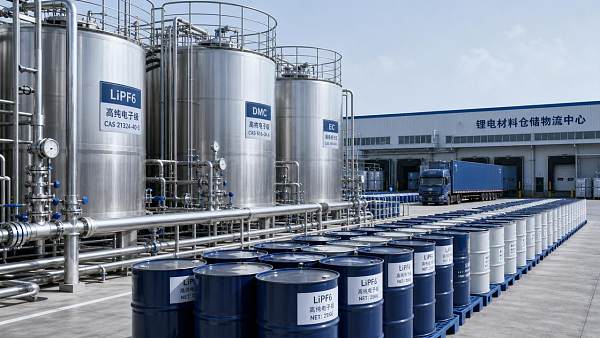
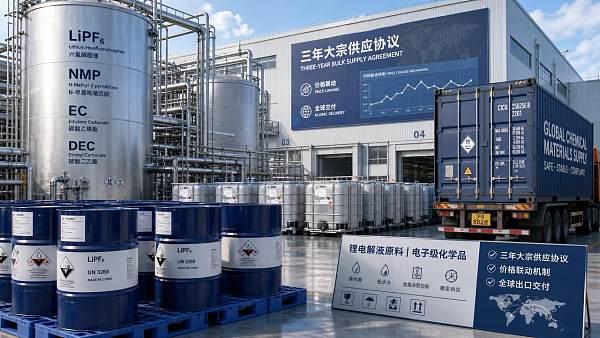
 Jun 12, 2026CATL Locks In 300,000 Tons, Lifting Electronic Grade Chem PricesCATL locks in 300,000 tons of electronic-grade chemicals, pushing prices higher and pressuring battery, coatings, and polymer supply chains. See what buyers and manufacturers should review now.
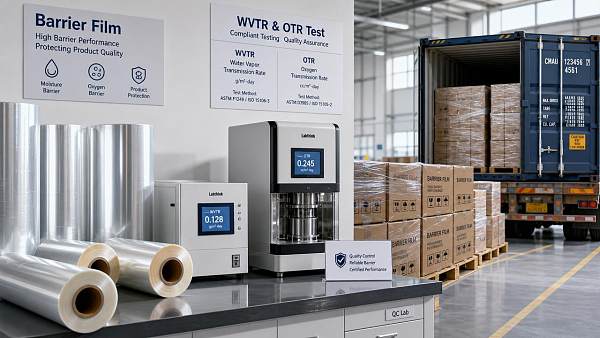
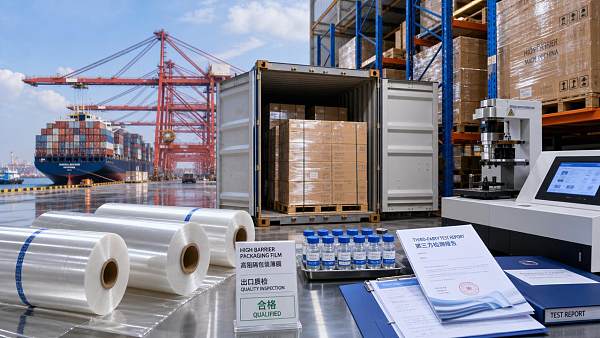
 Jun 12, 2026Indonesia Tightens Barrier Film Entry ChecksIndonesia Tightens Barrier Film Entry Checks: learn how new WVTR and OTR testing rules affect exports, customs clearance, costs, and compliance risk for Indonesia-bound barrier film shipments.
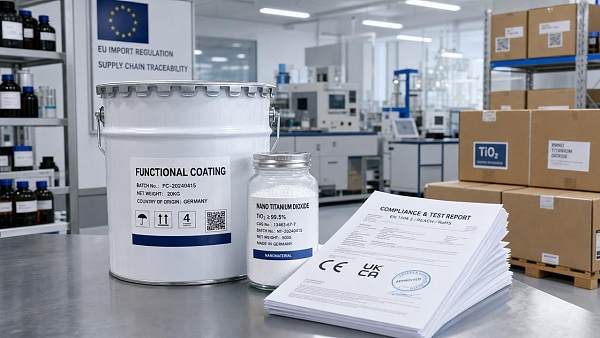
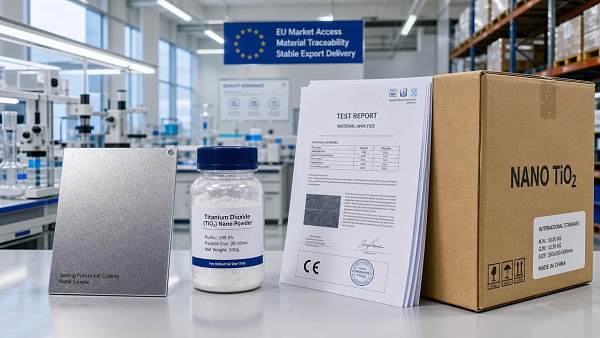
 Jun 12, 2026EU Tightens nano-TiO₂ Traceability for Functional CoatingsEU Tightens nano-TiO₂ Traceability for Functional Coatings: learn the new REACH Annex XVII reporting rules, ECHA filing risks, customs impact, and how importers can avoid 4% penalties.
 Jun 12, 2026APEC Suzhou Declaration Launches Cargo Drone TrialAPEC Suzhou Declaration launches a cargo drone trial with cross-border routes in China, Japan, and South Korea, signaling faster high-value freight delivery and new supply chain opportunities.
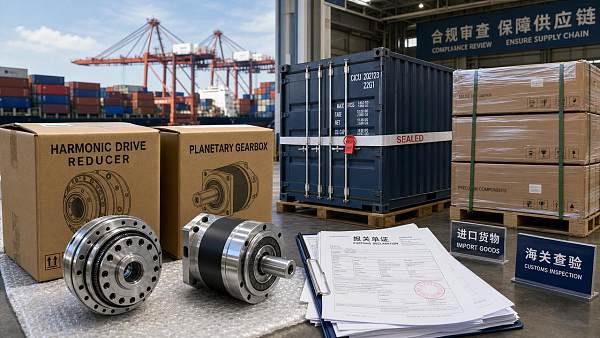
 Jun 12, 2026US Tightens IOR Rules for Harmonic Reducer ImportsUS tightens IOR rules for Harmonic Reducer imports, adding stricter eligibility checks and 5–7 extra review days. See how foreign IORs, Planetary Gearboxes, and supply chains may be affected.
 Jun 11, 2026Smart Cat Water Fountain Buying Guide: Filter Life, Noise, and Cleaning EaseSmart cat water fountain buying guide covering filter life, noise, and cleaning ease. Compare real costs, quiet performance, and low-maintenance designs to choose the best fit for your cat.
 Jun 11, 2026Industrial Benchmarking: Key Metrics That Reveal Real Operational GapsIndustrial benchmarking reveals hidden operational gaps in cost, quality, throughput, energy, and automation. Discover the key metrics that drive smarter decisions and stronger performance.
 Jun 11, 2026Custom Challenge Coins Wholesale: Cost Drivers, MOQ, and Design PitfallsCustom challenge coins wholesale pricing depends on size, material, MOQ, and artwork choices. Learn key cost drivers, common design pitfalls, and smarter sourcing tips before you buy.
 Jun 11, 2026Timing Belts Factory Checklist: Materials, Tolerance, and Production CapacityTiming belts factory checklist covering material selection, tolerance control, and real production capacity. Compare suppliers smarter, reduce sourcing risk, and improve long-term reliability.
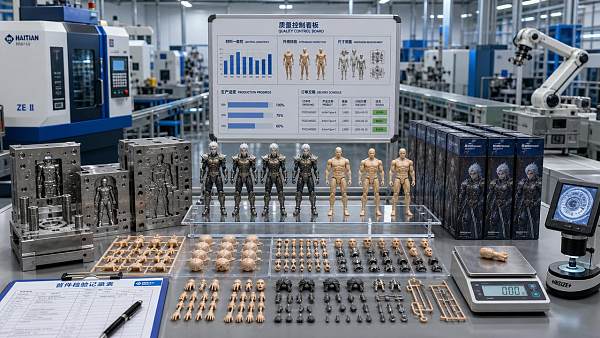
 Jun 11, 2026How to Evaluate an Action Figures Manufacturer for Quality and Lead TimeAction figures manufacturer selection affects product quality and delivery reliability. Learn how to evaluate tooling, materials, QC, and lead times for smarter sourcing.
 Jun 11, 2026Indonesia Adds Pre-Shipment Review for Barrier FilmsIndonesia barrier films rule update: learn how the new pre-shipment review for AlOx, PVDC, and EVOH films affects exporters, SGS/ITS test reports, and Jakarta port clearance.
 Jun 11, 2026CATL Secures 300,000 Tons in Electronic Grade Chem DealCATL Secures 300,000 Tons in Electronic Grade Chem Deal as EC and FEC prices jump 12%. Explore supply chain impact, Q3 export pricing, and what buyers should watch now.
 Jun 11, 2026EU Tightens Traceability Rules for Nano TiO₂ CoatingsEU Tightens Traceability Rules for Nano TiO₂ Coatings: learn how the new REACH amendment affects importers, customs clearance, and supply-chain compliance before Q3 2026.
 Jun 11, 2026APEC Backs Cargo Drone Mutual Recognition TrialAPEC backs cargo drone mutual recognition trial, opening faster cross-border logistics for high-value parts. Discover what exporters, buyers, and supply chain teams must prepare before July 1, 2026.
 Jun 11, 2026US Tightens Controls on AI-Enabled Harmonic ReducersUS Tightens Controls on AI-Enabled Harmonic Reducers: learn how the new BIS rule affects export licenses, robot components, compliance planning, and global delivery timelines.
 Jun 10, 2026Brand Manufacturing vs OEM: Which Model Lowers Risk as You Scale?Brand manufacturing vs OEM: discover which model lowers scaling risk through stronger quality control, IP protection, and supply chain visibility—and when OEM still makes strategic sense.
 Jun 10, 2026How to Compare a Hollow Shaft Reducers Factory for Torque and Lead TimeHollow shaft reducers factory comparison starts with torque and lead time. Learn how to verify performance, repeatability, and delivery reliability before you choose.
 Jun 10, 2026Sports Bra Private Label: Cost, MOQ, and Quality Risks to Check FirstSports bra private label buyers: learn how to assess real cost, MOQ flexibility, material performance, compliance, and quality risks before choosing a supplier.
 Jun 10, 2026Global Hydraulic Cylinder Tender Alerts: How to Spot Viable Bids EarlyGlobal hydraulic cylinder tender alerts help you spot viable bids early, assess fit, cost, lead time, and compliance fast, and focus on high-potential opportunities before rivals act.
 Jun 10, 20262026 Industry Insights: 5 Shifts Reshaping Global ManufacturingIndustry insights for 2026 reveal 5 major shifts transforming global manufacturing, from Vertical AI and material innovation to supply chain visibility and sustainability. Discover what leaders must act on now.
 Jun 10, 2026APEC Sets Mutual Recognition Path for Cargo Drone TrialsCargo Drone trials gain a major APEC boost as mutual recognition opens a path for cross-border logistics pilots. See what exporters, manufacturers, and supply chain teams should watch now.
 Jun 10, 2026US Weighs Tighter Export Controls on Harmonic ReducersUS weighs tighter export controls on Harmonic Reducers with AI control logic. Learn who may be affected, key compliance risks, and how robotics suppliers should prepare now.
 Jun 10, 2026CATL Secures 300,000-Ton Electrolyte Supply DealCATL Secures 300,000-Ton Electrolyte Supply Deal: learn how this five-year agreement could tighten electrolyte supply, raise BOM costs, and reshape procurement risk for battery and energy storage buyers.
 Jun 10, 2026EU REACH Curbs 12 Nano TiO₂ Coating DerivativesEU REACH curbs 12 nano TiO2 coating derivatives, tightening customs clearance with conformity declarations and nano-material SDS. See how exporters can stay compliant and protect EU market access.