Search News
Industry Portal
Popular Tags
Impact of Electrification on Mobile Hydraulics in 2026
Author
Time
Click Count
As OEMs and industrial fleets accelerate toward smarter, lower-emission systems, the impact of electrification on mobile hydraulics is becoming a strategic issue for enterprise decision-makers. In 2026, success will depend on balancing energy efficiency, power density, system reliability, and digital integration. This article explores how electrification is reshaping mobile hydraulic architectures, sourcing priorities, and long-term competitiveness across advanced industrial operations.
For procurement leaders, plant strategists, and fleet modernization teams, the issue is no longer whether electrification will influence hydraulic platforms, but how quickly architecture choices will affect total cost of ownership, uptime, and data visibility. In sectors spanning construction, material handling, mining support, municipal equipment, and specialized industrial vehicles, the transition is creating both operational upside and new sourcing risk.
Within the broader advanced industrial ecosystem, mobile hydraulics remains indispensable wherever high force density, shock resistance, and precise motion control are required. Yet in 2026, competitive advantage increasingly depends on how hydraulic subsystems interact with battery systems, power electronics, thermal management, and intelligent controls across 24/7 duty cycles.
Why Electrification Is Redefining Mobile Hydraulic System Design
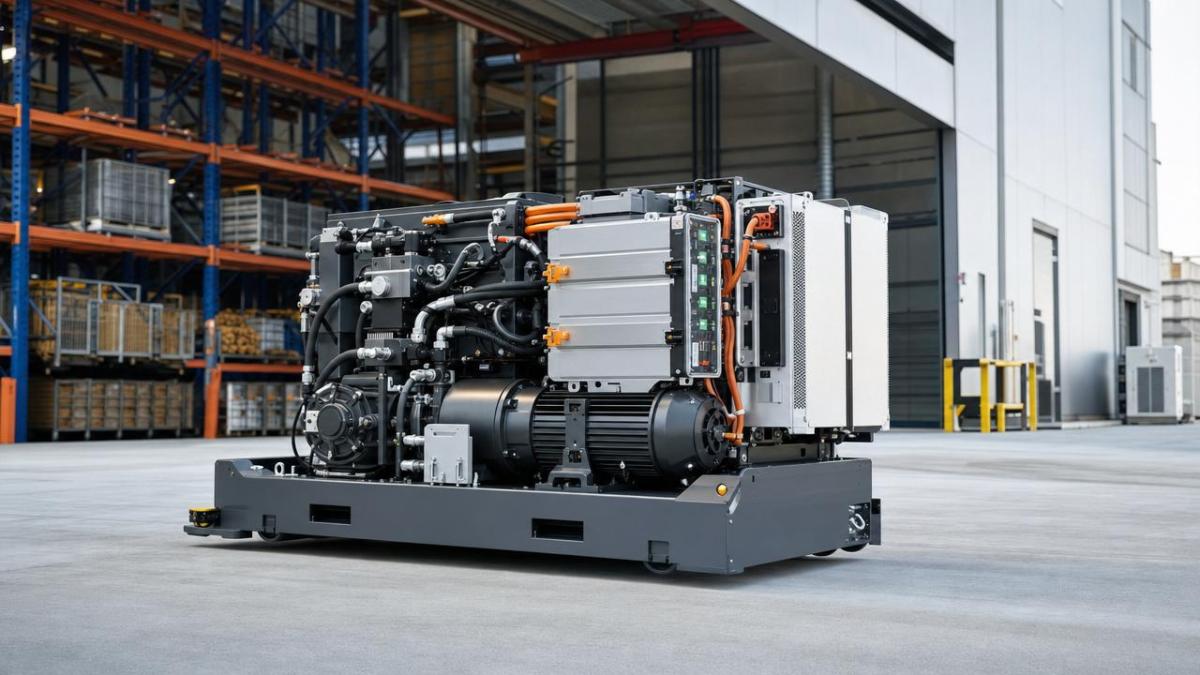
The impact of electrification on mobile hydraulics starts at the architecture level. Traditional engine-driven hydraulic systems often rely on continuous pump operation, even when actuators need only intermittent flow. Electrified systems shift this logic toward demand-based energy delivery, where electric motors, variable-speed pumps, and smart controllers can reduce parasitic losses by 15% to 35% in many common duty profiles.
This matters because mobile equipment is increasingly judged against three linked metrics: energy consumption per cycle, noise emissions, and service predictability. In urban fleets, indoor logistics, and low-emission project sites, operating thresholds are becoming stricter. A machine that can cut idle energy draw, lower noise by 5 dB to 12 dB, and support remote diagnostics may win procurement preference even if initial capex is moderately higher.
From Engine-Driven Flow to Demand-Controlled Power
Electrification changes hydraulic behavior in practical ways. Instead of sizing around peak engine availability, teams can size around load cases, cycle frequency, and battery discharge constraints. That pushes engineering teams to recalculate flow, pressure, and duty cycle assumptions, especially in applications operating at 150 bar to 350 bar and requiring repeated transient loads.
For enterprise buyers, this means system evaluation must move beyond static component comparison. A pump rated for the same nominal pressure may deliver very different efficiency when paired with a 48V, 96V, or high-voltage electric drivetrain. Response time, thermal behavior, and motor-controller compatibility become part of the hydraulic sourcing conversation.
Key technical shifts in 2026
- Variable-speed electric pump drives are replacing constant-output pump logic in many compact and medium-duty machines.
- Electrohydraulic control units now integrate pressure sensing, temperature monitoring, and fault logging in a single module.
- Battery-aware hydraulic operation is improving runtime by prioritizing power only when flow is required.
- Distributed actuator control is reducing hose complexity in some multi-function equipment layouts.
The table below highlights how conventional and electrified mobile hydraulic systems differ in decision-critical categories relevant to OEM and fleet strategy.
The key takeaway is not that every application should fully electrify its hydraulic system. It is that architecture flexibility now directly affects efficiency, service planning, and asset suitability across regulated, urban, or digitally managed operating environments.
Where the Business Case Is Strongest
The impact of electrification on mobile hydraulics is strongest where machines spend high percentages of time in partial load, stop-start, or idle-heavy operation. Examples include aerial work platforms, compact construction equipment, utility service trucks, warehouse-adjacent lifting systems, and municipal machines operating in shifts of 6 to 10 hours.
In these scenarios, eliminating unnecessary pump operation can materially improve battery utilization and reduce heat generation. Lower thermal stress can also extend fluid life and support longer maintenance windows, often shifting service review from every 500 hours toward 750-hour or application-adjusted intervals when supported by condition monitoring.
Operational and Procurement Implications for Enterprise Decision-Makers
For decision-makers, electrification is not only an engineering trend. It affects supplier qualification, integration timelines, spare parts planning, technician training, and long-term interoperability. Organizations evaluating the impact of electrification on mobile hydraulics in 2026 should treat the hydraulic subsystem as part of a larger electro-mechanical and digital platform, not as an isolated bill-of-material item.
This shift is especially relevant for global industrial operators managing mixed fleets. A procurement team may now compare suppliers not only on pump displacement or valve reliability, but also on inverter compatibility, software update pathways, field service response within 48 to 72 hours, and data access for fleet performance analytics.
Five procurement criteria that now matter more
- Voltage and control compatibility with existing or planned electric platforms.
- Thermal stability under repeated load peaks and ambient temperatures from -10°C to 45°C.
- Availability of diagnostic data for pressure, temperature, runtime, and fault events.
- Lead-time resilience for motors, power electronics, seals, and electronic control units.
- Service documentation quality, including commissioning steps and field replacement procedures.
The next table provides a practical sourcing framework for teams comparing electrified mobile hydraulic solutions across OEM programs or fleet retrofit projects.
For industrial organizations, the most resilient procurement approach combines performance testing with supply chain mapping. That means evaluating the hydraulic circuit and the digital support layer together, rather than approving one before the other.
Common risks in electrified hydraulic adoption
Several avoidable risks continue to slow deployment. One is underestimating heat loads in compact machine envelopes. Another is assuming a direct diesel-to-electric substitution without redesigning duty cycles. In practice, battery-powered hydraulics often require revised flow strategy, accumulator sizing, and control logic to maintain runtime targets.
A second risk is fragmented vendor ownership. If one supplier manages the pump, another the motor, and a third the controls interface, troubleshooting can become slow and expensive. For machines where downtime costs are high, even a 24-hour diagnostic delay can disrupt service commitments, rental utilization, or site productivity.
Risk control checklist
- Validate pressure and flow under real load cycles, not only lab duty points.
- Review peak current events and thermal accumulation over 2 to 4 hour operating windows.
- Confirm software ownership, update process, and cyber-secure remote access rules.
- Require service manuals that cover both hydraulic and electrical isolation procedures.
- Define acceptable downtime response targets before supplier selection.
Implementation Roadmap: How to Apply Electrified Mobile Hydraulics Successfully
The impact of electrification on mobile hydraulics becomes positive only when implementation discipline matches technical ambition. For most enterprise programs, the best approach is phased deployment across 3 stages: assessment, pilot validation, and scaled rollout. This helps reduce integration surprises while preserving procurement flexibility.
Stage 1: Assess application fit
Start with machine segmentation. Separate assets by pressure class, duty cycle, shift duration, ambient conditions, and idle percentage. A fleet with 30% idle time and repetitive actuation usually presents a stronger electrification opportunity than a machine running near continuous peak load for 12-hour shifts.
At this stage, technical teams should define at least 6 baseline metrics: average flow demand, peak pressure, cycle count per hour, thermal rise, service interval, and allowable noise level. Without these inputs, comparing electrified hydraulic options becomes subjective and slows board-level approval.
Stage 2: Pilot with measurable thresholds
Pilot projects should run long enough to capture real environmental variability. In many sectors, 8 to 12 weeks is a practical minimum. The goal is not just to confirm motion capability, but to understand battery interaction, temperature stability, serviceability, and operator acceptance across different use cases.
Pilot acceptance criteria should be explicit. Examples include holding pressure stability within defined tolerance, meeting cycle time targets, maintaining acceptable hydraulic fluid temperature, and achieving uptime levels that justify broader deployment. If the pilot lacks quantified thresholds, scaling decisions can become political instead of evidence-based.
Recommended pilot KPIs
- Energy consumed per operating cycle or per shift.
- Average and peak hydraulic fluid temperature.
- Response time under peak actuation demand.
- Unplanned stoppages per 100 operating hours.
- Maintenance labor time versus legacy systems.
Stage 3: Scale with service and data governance
Once performance is validated, scaling depends on support structure. This includes spare part positioning, technician training, firmware control, and digital reporting standards. Large operators should define a 2-level service model: field-replaceable components for rapid recovery, and specialist-level intervention for software, controls, or root-cause diagnostics.
Data governance also matters. Electrified hydraulic systems can generate useful operational data, but only if ownership and accessibility are clear. Enterprise teams should establish who receives runtime logs, fault histories, and efficiency reports, and how often those datasets are reviewed—monthly, quarterly, or after threshold-based alerts.
What Enterprise Leaders Should Watch in 2026 and Beyond
Looking ahead, the impact of electrification on mobile hydraulics will continue to expand as software-defined equipment becomes more common. The strongest market movement will likely come from hybrid architectures that preserve hydraulic force density while introducing smarter electric power management, connected diagnostics, and lower-emission operation.
Three trends deserve close attention. First, more suppliers are aligning hydraulic controls with vehicle-level energy management. Second, pressure, vibration, and temperature sensing are becoming standard in premium systems rather than optional add-ons. Third, buyers are placing greater value on lifecycle transparency, including parts availability over 5 to 10 years and support for future software updates.
Strategic questions for executive teams
- Which asset groups offer the fastest return from hydraulic electrification?
- Do current suppliers support both component delivery and system-level integration?
- Is the organization prepared to manage combined hydraulic, electrical, and software service workflows?
- Can fleet data from electrified hydraulics support broader operational benchmarking?
For organizations operating across advanced industrial markets, electrification should not be treated as a narrow product trend. It is a system-level shift that touches engineering, procurement, field service, and digital operations at the same time. The companies that act early—but validate carefully—will be better positioned to reduce operating inefficiency, improve equipment intelligence, and strengthen sourcing resilience.
G-AIE supports enterprise decision-makers with technical benchmarking, cross-domain industrial insight, and practical evaluation frameworks for emerging equipment architectures. If you are assessing the impact of electrification on mobile hydraulics for new OEM platforms, retrofit programs, or multi-site fleet strategy, now is the right time to compare options against real operating requirements. Contact us to discuss your application, request a tailored evaluation framework, or explore broader intelligent industrial solutions.
Recommended News
 Sep 19, 2026When can a supply chain LLM reduce time spent finding shipment updates?Supply chain LLMs can cut shipment-update search time by connecting carrier events, ERP data, and documents—giving teams traceable answers and faster exception response.
 Sep 18, 2026How industrial monitoring equipment helps prevent unplanned downtimeIndustrial monitoring equipment helps teams detect early asset issues, prioritize maintenance, and prevent costly unplanned downtime. Explore practical strategies for reliable operations.
 Sep 17, 2026What next-gen harmonic drive research means for robot joint accuracyNext-gen harmonic drive research reveals how backlash, stiffness, thermal drift, and sensing shape robot joint accuracy. Explore smarter validation strategies.
 Sep 16, 2026How Southeast Asian climates affect cylinder seal frictionCylinder seal friction Southeast Asia: learn how humidity, heat, monsoons, and contamination affect motion stability, wear, and seal selection.
 Sep 15, 2026How to size DC gear motors for the required starting torqueGear motors DC sizing made practical: calculate starting torque, account for friction, gravity, inertia and voltage drop, then select a reliable motor with confidence.
 Sep 14, 2026How to verify high purity chemicals compliance before supplier approvalHigh purity chemicals compliance: learn how to verify supplier quality systems, CoAs, traceability, testing, and change control before approval.
 Sep 13, 2026What permits are needed to operate mapping drones in Europe?Mapping drones Europe: discover the permits, EASA categories, airspace approvals, site access, and GDPR checks needed for compliant aerial surveys.
 Sep 12, 2026What lead time should I expect for automatic transmission components? Planetary Gearboxes delivery forecasting for OEM planningWhat lead time should I expect for automatic transmission components? Get dynamic, AI-powered planetary gearbox delivery forecasting—designed for OEMs building next-gen hybrid & commercial powertrains.
 Sep 12, 2026Can polyamide replace metal in load-bearing components? Polymer Pulse structural performance data for 2026 applicationsCan polyamide replace metal in load-bearing components? Discover Polymer Pulse’s 2026 structural data—real-world performance, weight savings, and reliability breakthroughs.
 Sep 12, 2026How to handle a power electronics warranty claim: Harmonic Reducers documentation and escalation pathHow do I handle a power electronics warranty claim? Get a fast, intelligent, evidence-driven resolution for harmonic reducers—no bureaucracy, just precision diagnostics and real-time escalation.
 Sep 12, 2026Which motion control specifications matter most before purchase? Torque Logic selection criteria for automation engineersWhich motion control specifications are most important before purchase? Discover Torque Logic—the 4 non-negotiable, AI-aligned criteria that cut TCO by 27–41% and boost motion system availability to 99.992%.
 Sep 13, 2026Is agentic AI reliable enough for supplier screening? Supply Chain LLM validation framework for procurement teamsIs agentic AI reliable enough for supplier screening? Discover a rigorous LLM validation framework built for procurement teams—grounded in material traceability, regulatory compliance, and real-world operational constraints.
 Sep 14, 2026How to maintain edge AI systems after deployment: Predictive Maint AI operational protocols for field techniciansHow do I maintain edge AI systems after deployment? Discover predictive, physics-aware operational protocols designed for real-world field technicians—sustaining intelligence where silicon meets steel.
 Sep 15, 2026What compliance documents must a bioplastics supplier provide? Bio-Plastics regulatory checklist for procurementWhat compliance documents should a bioplastics supplier provide? Get our actionable regulatory checklist for food, medical & EU-bound applications.
 Sep 16, 2026How to prevent PET film defects during production: Barrier Films process control best practicesHow can I prevent PET film defects during production? Discover physics-driven barrier film process control—thermal precision, dynamic tension management & surface energy optimization.
 Sep 17, 2026Are thermoplastics suitable for long-term outdoor use? Engineering Resins durability assessment in 2026 UV/weather exposureAre thermoplastics suitable for long-term outdoor use? Discover 2026’s engineering resin durability insights — UV/weather resistance ranked, tested & actionable.
 Sep 18, 2026What to do when a servo motor fails during production: A Servo Actuators troubleshooting guide for maintenance teamsWhat should I do if a servo motor fails during production? Get a field-tested, AI-aware troubleshooting guide for maintenance teams—minimize downtime, maximize OEE.
 Sep 12, 2026How to compare wholesale party supplies by minimum order valueCompare wholesale party supplies by minimum order value, freight, SKU flexibility, and stock risk to choose suppliers that protect margins and simplify replenishment.
 Sep 11, 2026How proportional solenoid linearity affects precision motion controlProportional solenoid linearity directly affects precision motion control, valve metering, stability, and calibration. Learn how to evaluate performance for reliable automation.
 Sep 10, 2026When does supplier information platform automation reduce onboarding delays?Supplier information platform automation reduces onboarding delays by streamlining data collection, routing, renewals, and compliance checks—without replacing expert technical review.
 Sep 09, 2026How to size robotic motion systems for AMR payload changesRobotic motion systems for AMR payload changes: learn how to size motors, wheels, gearing, traction, and controls for safer, reliable performance.
 Sep 08, 2026How to perform a cylinder rod buckling calculation for long strokesCylinder rod buckling calculation made practical: learn how to assess effective length, end conditions, rod stiffness, load forces, and safety margins for reliable long-stroke cylinder design.
 Sep 07, 2026How to estimate the cost of industrial mechanical components before orderingIndustrial mechanical components cost: learn how to estimate material, machining, tooling, inspection, logistics, and hidden expenses before ordering. Compare quotes confidently and reduce sourcing risk.
 Sep 07, 2026What Is a Product Standards Database Used For?Product standards database guide: learn how to compare requirements, verify revisions, control specifications, and reduce compliance risks across design, sourcing, and production.