Search News
Industry Portal
Popular Tags
Energy Consumption of Hydraulic Units: Where Efficiency Pays Back
Author
Time
Click Count
For financial approvers, the energy consumption of hydraulic units is more than a technical metric. It shapes operating cost, payback speed, uptime risk, and the long-term value of capital equipment.
Across industrial sectors, electricity prices, carbon reporting, and output volatility now expose hidden losses inside hydraulic power systems. A clear view of the energy consumption of hydraulic units helps organizations cut waste where returns are measurable.
This topic matters in metalworking, plastics, heavy handling, forming, mining support, and automated production lines. In each case, efficiency gains improve total cost of ownership without reducing process capability.
Understanding the energy consumption of hydraulic units
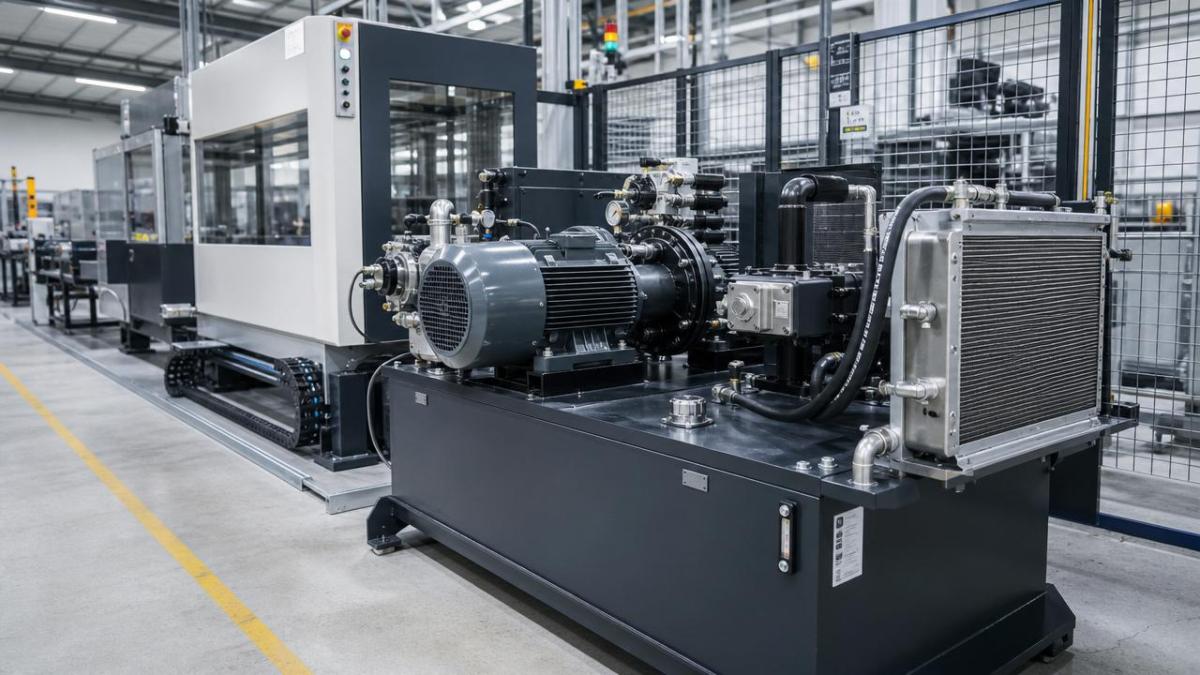
The energy consumption of hydraulic units describes how much electrical power a hydraulic power pack uses to create pressure, flow, and controlled motion for connected actuators.
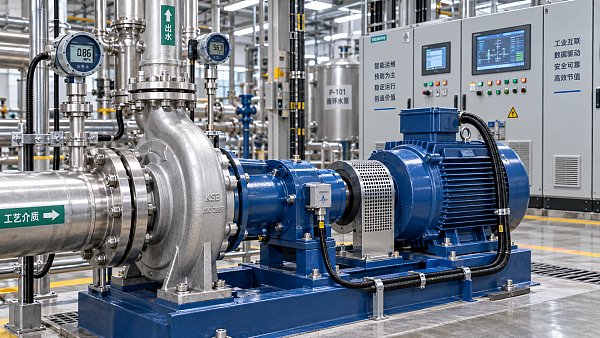
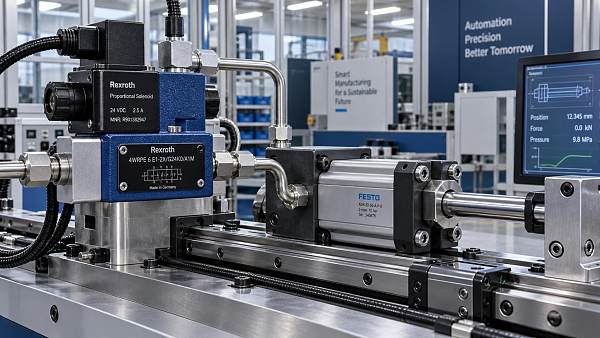
A hydraulic unit usually includes an electric motor, pump, reservoir, valves, filters, cooling elements, piping, and control hardware. Every component influences overall efficiency.
Input energy enters through the motor. Useful output becomes hydraulic power at required pressure and flow. The difference between input and output becomes heat, noise, throttling loss, leakage, and idle consumption.
In practical terms, many systems consume far more power during standby, partial load, and pressure holding than decision documents initially assume. That is where efficiency often pays back fastest.
Key loss points inside a hydraulic system
- Motor losses from low efficiency or poor sizing
- Pump inefficiency under variable load conditions
- Pressure drops across valves, manifolds, and hoses
- Relief valve overflow and throttling during control
- Internal leakage in pumps, valves, and cylinders
- Cooling demand caused by excess heat generation
- Standby operation when no useful work is performed
Why industry is focusing on hydraulic energy efficiency now
The attention on the energy consumption of hydraulic units has intensified because cost pressure now intersects with sustainability targets and digital performance management.
Hydraulic systems remain essential for high force density, rugged operation, and proven reliability. Yet they are also scrutinized when power demand appears high versus electric alternatives.
The right response is not automatic replacement. It is accurate benchmarking of where hydraulic systems create value and where inefficient design wastes money.
This shift explains why energy audits increasingly include hydraulic power units, not only production machines. The support system often carries savings potential equal to process optimization itself.
Where efficiency pays back in financial terms
Evaluating the energy consumption of hydraulic units should start with annual cost, not only nameplate power. Operating hours, duty cycle, load variation, and standby behavior determine real expense.
A unit running continuously at partial load may waste more energy than a larger unit operating efficiently during short peaks. This is why measured profiles are more useful than static assumptions.
Main payback channels
- Lower electricity consumption from demand-matched flow control
- Reduced cooling cost because less wasted energy becomes heat
- Longer oil life due to lower thermal stress
- Fewer seal and component failures linked to overheating
- Better cycle stability from pressure and flow consistency
- Improved capacity planning through energy data visibility
In many facilities, the fastest return comes from reducing unloaded motor runtime. Variable speed drives, accumulator support, and smarter standby logic often cut unnecessary power draw substantially.
Another common source of savings is replacing fixed displacement systems that rely on throttling with variable displacement or servo-driven configurations matched to real process demand.
Typical hydraulic unit types and their energy profiles
Not all hydraulic architectures behave the same. Comparing the energy consumption of hydraulic units requires understanding how each design handles pressure, flow, and idle periods.
Selection should balance force requirements, control precision, maintenance capability, and operating profile. The most efficient option on paper may not be the most valuable in a harsh duty environment.
How to assess the energy consumption of hydraulic units in practice
A useful assessment combines electrical measurements with hydraulic process data. Looking only at power bills rarely shows which machine, function, or duty segment creates waste.
Core evaluation metrics
- kWh per production hour
- kWh per finished part, ton, or cycle
- Average versus peak motor load
- Standby share of total consumption
- Oil temperature stability
- Pressure drop across key paths
- Cooling energy required per operating shift
Data should cover normal operation, changeovers, warm-up periods, and unplanned waiting time. Many losses appear outside nominal production cycles.
Benchmarking similar machines is also valuable. If one hydraulic unit consumes far more energy under similar throughput, design or maintenance issues are likely present.
Practical improvement measures with broad industrial relevance
Improving the energy consumption of hydraulic units does not always require full replacement. Many facilities capture meaningful savings through staged upgrades and operating discipline.
- Right-size motors and pumps to real duty cycles.
- Use variable speed drives where loads fluctuate significantly.
- Reduce pressure settings that exceed actual process need.
- Shorten piping paths and minimize avoidable restrictions.
- Eliminate internal and external leakage quickly.
- Improve standby control with automatic sleep logic.
- Maintain filters, oil condition, and cooling performance.
- Install metering for continuous performance verification.
Heat should be treated as a cost signal. If a hydraulic unit needs excessive cooling, the energy consumption of hydraulic units is already too high somewhere upstream in the circuit.
Common decision risks and implementation notes
Efficiency projects fail when they focus only on component catalog values. Real savings depend on system interaction, controls, operator behavior, and maintenance quality.
Another risk is evaluating investment only by simple power reduction. Better hydraulic efficiency also improves uptime, oil life, thermal stability, and process repeatability.
It is equally important to verify that changes do not weaken safety margins, force response, or contamination control. A lower-energy design must still meet production and reliability requirements.
Next-step framework for energy-focused hydraulic review
Start with one representative asset group and document actual duty cycles, power draw, pressure demand, and standby hours. Then rank opportunities by annual waste and implementation complexity.
From there, compare no-cost operational changes, moderate retrofit options, and full redesign scenarios. The best path is usually the one with measurable savings and low disruption risk.
For organizations building a resilient industrial roadmap, the energy consumption of hydraulic units should be treated as a strategic benchmark. It links physical asset performance with cost control, digital visibility, and sustainable growth.
A structured review today can reveal where efficiency pays back first, where modernization makes sense next, and how hydraulic systems remain competitive within advanced industrial ecosystems.
Recommended News
 Sep 19, 2026When can a supply chain LLM reduce time spent finding shipment updates?Supply chain LLMs can cut shipment-update search time by connecting carrier events, ERP data, and documents—giving teams traceable answers and faster exception response.
 Sep 18, 2026How industrial monitoring equipment helps prevent unplanned downtimeIndustrial monitoring equipment helps teams detect early asset issues, prioritize maintenance, and prevent costly unplanned downtime. Explore practical strategies for reliable operations.
 Sep 17, 2026What next-gen harmonic drive research means for robot joint accuracyNext-gen harmonic drive research reveals how backlash, stiffness, thermal drift, and sensing shape robot joint accuracy. Explore smarter validation strategies.
 Sep 16, 2026How Southeast Asian climates affect cylinder seal frictionCylinder seal friction Southeast Asia: learn how humidity, heat, monsoons, and contamination affect motion stability, wear, and seal selection.
 Sep 15, 2026How to size DC gear motors for the required starting torqueGear motors DC sizing made practical: calculate starting torque, account for friction, gravity, inertia and voltage drop, then select a reliable motor with confidence.
 Sep 14, 2026How to verify high purity chemicals compliance before supplier approvalHigh purity chemicals compliance: learn how to verify supplier quality systems, CoAs, traceability, testing, and change control before approval.
 Sep 13, 2026What permits are needed to operate mapping drones in Europe?Mapping drones Europe: discover the permits, EASA categories, airspace approvals, site access, and GDPR checks needed for compliant aerial surveys.
 Sep 12, 2026What lead time should I expect for automatic transmission components? Planetary Gearboxes delivery forecasting for OEM planningWhat lead time should I expect for automatic transmission components? Get dynamic, AI-powered planetary gearbox delivery forecasting—designed for OEMs building next-gen hybrid & commercial powertrains.
 Sep 12, 2026Can polyamide replace metal in load-bearing components? Polymer Pulse structural performance data for 2026 applicationsCan polyamide replace metal in load-bearing components? Discover Polymer Pulse’s 2026 structural data—real-world performance, weight savings, and reliability breakthroughs.
 Sep 12, 2026How to handle a power electronics warranty claim: Harmonic Reducers documentation and escalation pathHow do I handle a power electronics warranty claim? Get a fast, intelligent, evidence-driven resolution for harmonic reducers—no bureaucracy, just precision diagnostics and real-time escalation.
 Sep 12, 2026Which motion control specifications matter most before purchase? Torque Logic selection criteria for automation engineersWhich motion control specifications are most important before purchase? Discover Torque Logic—the 4 non-negotiable, AI-aligned criteria that cut TCO by 27–41% and boost motion system availability to 99.992%.
 Sep 13, 2026Is agentic AI reliable enough for supplier screening? Supply Chain LLM validation framework for procurement teamsIs agentic AI reliable enough for supplier screening? Discover a rigorous LLM validation framework built for procurement teams—grounded in material traceability, regulatory compliance, and real-world operational constraints.
 Sep 14, 2026How to maintain edge AI systems after deployment: Predictive Maint AI operational protocols for field techniciansHow do I maintain edge AI systems after deployment? Discover predictive, physics-aware operational protocols designed for real-world field technicians—sustaining intelligence where silicon meets steel.
 Sep 15, 2026What compliance documents must a bioplastics supplier provide? Bio-Plastics regulatory checklist for procurementWhat compliance documents should a bioplastics supplier provide? Get our actionable regulatory checklist for food, medical & EU-bound applications.
 Sep 16, 2026How to prevent PET film defects during production: Barrier Films process control best practicesHow can I prevent PET film defects during production? Discover physics-driven barrier film process control—thermal precision, dynamic tension management & surface energy optimization.
 Sep 17, 2026Are thermoplastics suitable for long-term outdoor use? Engineering Resins durability assessment in 2026 UV/weather exposureAre thermoplastics suitable for long-term outdoor use? Discover 2026’s engineering resin durability insights — UV/weather resistance ranked, tested & actionable.
 Sep 18, 2026What to do when a servo motor fails during production: A Servo Actuators troubleshooting guide for maintenance teamsWhat should I do if a servo motor fails during production? Get a field-tested, AI-aware troubleshooting guide for maintenance teams—minimize downtime, maximize OEE.
 Sep 12, 2026How to compare wholesale party supplies by minimum order valueCompare wholesale party supplies by minimum order value, freight, SKU flexibility, and stock risk to choose suppliers that protect margins and simplify replenishment.
 Sep 11, 2026How proportional solenoid linearity affects precision motion controlProportional solenoid linearity directly affects precision motion control, valve metering, stability, and calibration. Learn how to evaluate performance for reliable automation.
 Sep 10, 2026When does supplier information platform automation reduce onboarding delays?Supplier information platform automation reduces onboarding delays by streamlining data collection, routing, renewals, and compliance checks—without replacing expert technical review.
 Sep 09, 2026How to size robotic motion systems for AMR payload changesRobotic motion systems for AMR payload changes: learn how to size motors, wheels, gearing, traction, and controls for safer, reliable performance.
 Sep 08, 2026How to perform a cylinder rod buckling calculation for long strokesCylinder rod buckling calculation made practical: learn how to assess effective length, end conditions, rod stiffness, load forces, and safety margins for reliable long-stroke cylinder design.
 Sep 07, 2026How to estimate the cost of industrial mechanical components before orderingIndustrial mechanical components cost: learn how to estimate material, machining, tooling, inspection, logistics, and hidden expenses before ordering. Compare quotes confidently and reduce sourcing risk.
 Sep 07, 2026What Is a Product Standards Database Used For?Product standards database guide: learn how to compare requirements, verify revisions, control specifications, and reduce compliance risks across design, sourcing, and production.