Search News
Industry Portal
Popular Tags
Vertical AI Applications with Clear ROI in Industrial Operations
Author
Time
Click Count
Where Vertical AI applications create value first
Industrial modernization rarely fails because of ambition. It usually stalls when data, equipment behavior, and operational priorities do not line up.
That is why Vertical AI applications matter now. They are built around process context, asset logic, and measurable industrial constraints.
In practical terms, the fastest ROI appears where unplanned downtime, scrap, slow planning cycles, or fragmented supplier signals already create visible losses.
Within ecosystems shaped by advanced materials and intelligent automation, the question is not whether AI can help. The real question is where it fits first.
A platform such as G-AIE is relevant because industrial decisions increasingly connect physical asset performance with digital benchmarking, operating evidence, and cross-site comparability.
The strongest Vertical AI applications do not start as broad transformation slogans. They start where failure patterns are recurring and intervention decisions are repeatable.
Actual demand shifts when the operating scene changes
Different industrial environments produce different AI priorities, even when they use similar machines or digital tools.
A high-throughput assembly line values speed of anomaly detection. A specialty materials process cares more about traceability, recipe stability, and deviation explanation.
This is where many AI programs drift. They treat similar production settings as identical, then discover that workflows, tolerances, and maintenance windows are not comparable.
More useful evaluation starts with four questions: what event is costly, how often it appears, how early it can be detected, and who can act on the recommendation.
Vertical AI applications with clear ROI usually answer all four. General analytics often answer only one or two.
The same plant may contain very different ROI profiles
Utilities, maintenance, quality engineering, logistics, and procurement each experience operational friction differently. AI value follows that friction.
Where maintenance data is mature, predictive models can cut expensive stoppages. Where upstream supply volatility dominates, planning intelligence often returns value faster.
Downtime-heavy operations usually justify Vertical AI applications earlier
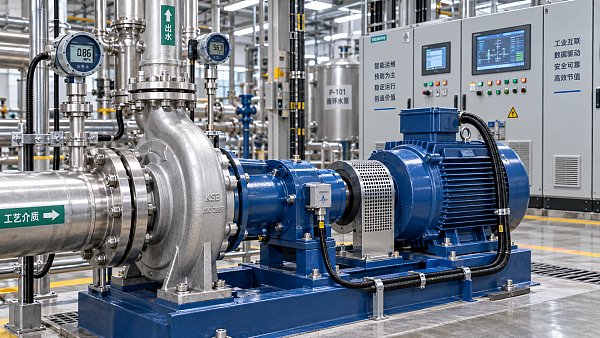
Predictive maintenance is still one of the clearest industrial AI use cases because the cost of failure is visible and usually measurable.
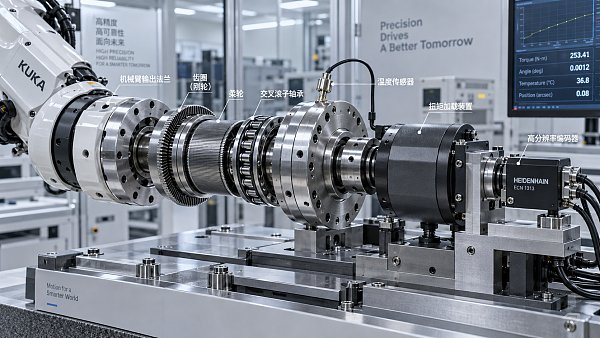
Yet not every asset deserves the same model depth. Continuous-process equipment, thermal systems, robotics, and bottleneck machines often deserve priority over low-impact utilities.
The key judgment is not sensor count. It is whether failure signatures can be linked to maintenance action, spare planning, or operating adjustments.
In actual deployment, strong Vertical AI applications combine vibration, temperature, load history, work orders, and technician notes rather than relying on isolated telemetry.
A common mistake is chasing prediction accuracy while ignoring intervention timing. If the model alerts too late, ROI disappears even with impressive dashboards.
What to confirm before scaling maintenance AI
- Failure modes are documented consistently across sites and teams.
- Asset criticality is ranked by throughput loss, safety risk, and replacement lead time.
- Recommended actions fit existing maintenance windows and labor capacity.
- Model outputs can enter CMMS, MES, or maintenance planning workflows.
Quality control becomes a different AI problem in complex materials environments
Quality use cases often look attractive because scrap, rework, and warranty exposure are easy to explain. The harder part is defining what quality actually means in context.
In discrete production, computer vision may focus on surface defects, dimension drift, or assembly verification. In advanced materials, subtle process interactions matter more.
That changes the design of Vertical AI applications. Models may need to connect lab results, inline inspection, humidity shifts, operator interventions, and batch genealogy.
The ROI comes not only from catching bad output sooner. It also comes from explaining why variation appeared and which parameter changes are worth testing.
This is especially relevant in environments where material science and automation intersect, because quality is often influenced by both process physics and control discipline.
Where quality AI often gets misjudged
One frequent error is assuming that a successful vision model in one line transfers directly to another. Lighting, product mix, tolerance rules, and rework policies may differ sharply.
Another is measuring success only by defect detection rate. In many plants, root-cause resolution speed matters more than additional alerts.
Supply chain orchestration shows ROI when volatility is already expensive
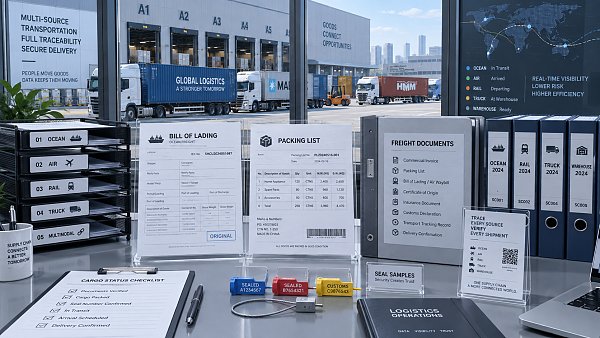
Some of the most useful Vertical AI applications sit outside the machine itself. They improve planning where supply uncertainty and production dependency are tightly linked.
In these scenarios, AI does not replace planning judgment. It improves signal interpretation across lead times, material substitutions, supplier risks, and inventory exposure.
This matters in globally distributed industrial systems, where one delayed input can distort schedules, energy use, transport decisions, and customer commitments.
The clearest returns appear when planning teams already track recurring exceptions but lack a reliable way to rank which disruptions require action first.
This comparison helps explain why one AI roadmap rarely fits every industrial node. ROI depends on local operating economics, not just software capability.
Energy, throughput, and sustainability now overlap more than before
In many industrial settings, efficiency no longer means only producing more with fewer interruptions. It also means managing energy intensity and material yield together.
That is why newer Vertical AI applications increasingly support furnace scheduling, compressed air optimization, thermal balancing, and recipe tuning.
These use cases tend to perform well where energy cost swings are large or where material waste carries both margin and sustainability penalties.
The judgment point is whether the model can influence controllable settings. If not, analysis remains informative but financially weak.
Within the broader economy of atoms, this link between digital intelligence and material efficiency becomes especially important for resilient industrial strategy.
Before rollout, focus on fit conditions rather than broad AI ambition
Teams often overestimate the value of generic models and underestimate integration discipline. In industrial operations, fit conditions usually decide success earlier than algorithm choice.
Useful evaluation usually includes data continuity, operator trust, maintenance response capacity, process variability, and the cost of false positives.
It also helps to compare implementation effort against the decision cycle being improved. A complex model may be unnecessary if a simpler rule engine already resolves the issue.
Common blind spots that reduce ROI
- Treating every site as operationally identical.
- Evaluating software cost without counting workflow change and upkeep.
- Ignoring data ownership across engineering, quality, and planning systems.
- Expecting users to trust outputs that cannot explain intervention logic.
- Starting with low-cost assets that offer little measurable upside.
A practical path for choosing the next Vertical AI applications
The most reliable next step is to map three or four operating scenes where losses are already visible and decisions are repeatedly delayed, inconsistent, or reactive.
Then compare those scenes by downtime cost, quality leakage, planning disruption, implementation complexity, and data readiness rather than by AI novelty.
In many cases, the best starting point is not the most advanced model. It is the application where domain logic, workflow adoption, and measurable outcome already align.
That approach makes Vertical AI applications easier to justify, easier to benchmark, and easier to expand across a broader industrial ecosystem.
For organizations using repositories such as G-AIE, the advantage is clearer comparison: which use cases travel well, which depend on local process physics, and which require deeper operational redesign.
A grounded roadmap begins by defining the scene, validating the constraint, and testing whether the recommendation can change action in time. That is where clear ROI usually begins.
Recommended News
 Sep 19, 2026When can a supply chain LLM reduce time spent finding shipment updates?Supply chain LLMs can cut shipment-update search time by connecting carrier events, ERP data, and documents—giving teams traceable answers and faster exception response.
 Sep 18, 2026How industrial monitoring equipment helps prevent unplanned downtimeIndustrial monitoring equipment helps teams detect early asset issues, prioritize maintenance, and prevent costly unplanned downtime. Explore practical strategies for reliable operations.
 Sep 17, 2026What next-gen harmonic drive research means for robot joint accuracyNext-gen harmonic drive research reveals how backlash, stiffness, thermal drift, and sensing shape robot joint accuracy. Explore smarter validation strategies.
 Sep 16, 2026How Southeast Asian climates affect cylinder seal frictionCylinder seal friction Southeast Asia: learn how humidity, heat, monsoons, and contamination affect motion stability, wear, and seal selection.
 Sep 15, 2026How to size DC gear motors for the required starting torqueGear motors DC sizing made practical: calculate starting torque, account for friction, gravity, inertia and voltage drop, then select a reliable motor with confidence.
 Sep 14, 2026How to verify high purity chemicals compliance before supplier approvalHigh purity chemicals compliance: learn how to verify supplier quality systems, CoAs, traceability, testing, and change control before approval.
 Sep 13, 2026What permits are needed to operate mapping drones in Europe?Mapping drones Europe: discover the permits, EASA categories, airspace approvals, site access, and GDPR checks needed for compliant aerial surveys.
 Sep 12, 2026What lead time should I expect for automatic transmission components? Planetary Gearboxes delivery forecasting for OEM planningWhat lead time should I expect for automatic transmission components? Get dynamic, AI-powered planetary gearbox delivery forecasting—designed for OEMs building next-gen hybrid & commercial powertrains.
 Sep 12, 2026Can polyamide replace metal in load-bearing components? Polymer Pulse structural performance data for 2026 applicationsCan polyamide replace metal in load-bearing components? Discover Polymer Pulse’s 2026 structural data—real-world performance, weight savings, and reliability breakthroughs.
 Sep 12, 2026How to handle a power electronics warranty claim: Harmonic Reducers documentation and escalation pathHow do I handle a power electronics warranty claim? Get a fast, intelligent, evidence-driven resolution for harmonic reducers—no bureaucracy, just precision diagnostics and real-time escalation.
 Sep 12, 2026Which motion control specifications matter most before purchase? Torque Logic selection criteria for automation engineersWhich motion control specifications are most important before purchase? Discover Torque Logic—the 4 non-negotiable, AI-aligned criteria that cut TCO by 27–41% and boost motion system availability to 99.992%.
 Sep 13, 2026Is agentic AI reliable enough for supplier screening? Supply Chain LLM validation framework for procurement teamsIs agentic AI reliable enough for supplier screening? Discover a rigorous LLM validation framework built for procurement teams—grounded in material traceability, regulatory compliance, and real-world operational constraints.
 Sep 14, 2026How to maintain edge AI systems after deployment: Predictive Maint AI operational protocols for field techniciansHow do I maintain edge AI systems after deployment? Discover predictive, physics-aware operational protocols designed for real-world field technicians—sustaining intelligence where silicon meets steel.
 Sep 15, 2026What compliance documents must a bioplastics supplier provide? Bio-Plastics regulatory checklist for procurementWhat compliance documents should a bioplastics supplier provide? Get our actionable regulatory checklist for food, medical & EU-bound applications.
 Sep 16, 2026How to prevent PET film defects during production: Barrier Films process control best practicesHow can I prevent PET film defects during production? Discover physics-driven barrier film process control—thermal precision, dynamic tension management & surface energy optimization.
 Sep 17, 2026Are thermoplastics suitable for long-term outdoor use? Engineering Resins durability assessment in 2026 UV/weather exposureAre thermoplastics suitable for long-term outdoor use? Discover 2026’s engineering resin durability insights — UV/weather resistance ranked, tested & actionable.
 Sep 18, 2026What to do when a servo motor fails during production: A Servo Actuators troubleshooting guide for maintenance teamsWhat should I do if a servo motor fails during production? Get a field-tested, AI-aware troubleshooting guide for maintenance teams—minimize downtime, maximize OEE.
 Sep 12, 2026How to compare wholesale party supplies by minimum order valueCompare wholesale party supplies by minimum order value, freight, SKU flexibility, and stock risk to choose suppliers that protect margins and simplify replenishment.
 Sep 11, 2026How proportional solenoid linearity affects precision motion controlProportional solenoid linearity directly affects precision motion control, valve metering, stability, and calibration. Learn how to evaluate performance for reliable automation.
 Sep 10, 2026When does supplier information platform automation reduce onboarding delays?Supplier information platform automation reduces onboarding delays by streamlining data collection, routing, renewals, and compliance checks—without replacing expert technical review.
 Sep 09, 2026How to size robotic motion systems for AMR payload changesRobotic motion systems for AMR payload changes: learn how to size motors, wheels, gearing, traction, and controls for safer, reliable performance.
 Sep 08, 2026How to perform a cylinder rod buckling calculation for long strokesCylinder rod buckling calculation made practical: learn how to assess effective length, end conditions, rod stiffness, load forces, and safety margins for reliable long-stroke cylinder design.
 Sep 07, 2026How to estimate the cost of industrial mechanical components before orderingIndustrial mechanical components cost: learn how to estimate material, machining, tooling, inspection, logistics, and hidden expenses before ordering. Compare quotes confidently and reduce sourcing risk.
 Sep 07, 2026What Is a Product Standards Database Used For?Product standards database guide: learn how to compare requirements, verify revisions, control specifications, and reduce compliance risks across design, sourcing, and production.