Search News
Industry Portal
Popular Tags
Bottle Sterilizer OEM: Key Compliance and Quality Control Points
Author
Time
Click Count
Why does bottle sterilizer OEM compliance deserve deeper review?
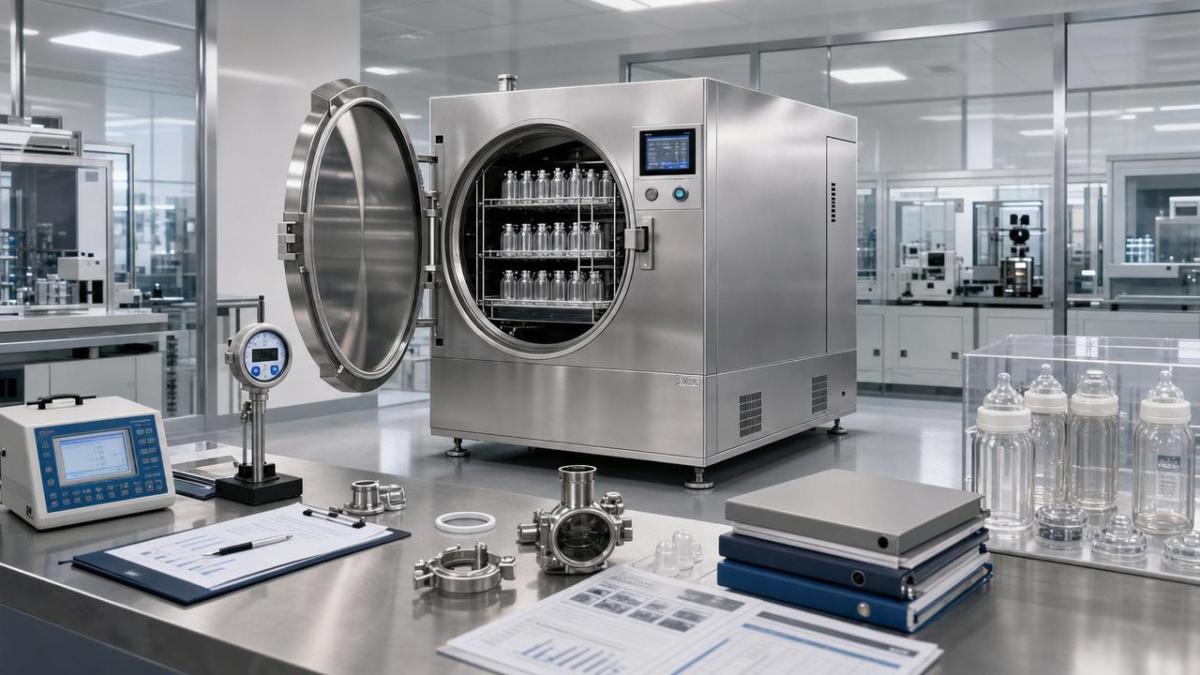
A bottle sterilizer OEM is rarely judged by output alone. The bigger issue is whether the equipment can pass audits, hold process stability, and support repeatable hygiene performance.
That matters even more when sterilization equipment enters regulated supply chains. A weak document trail, unclear material declaration, or inconsistent validation can delay approvals and create downstream quality exposure.
In practical terms, compliance sits at the intersection of design control, microbial risk management, electrical safety, and production discipline. Those areas must work together, not separately.
Within the G-AIE perspective, this is where material science and intelligent automation meet. Reliable hardware needs equally reliable data, traceability logic, and evidence-based process control.
So when teams search for bottle sterilizer OEM options, the real question is not just who can build it. The better question is who can prove it, sustain it, and document it.
What standards and documents should be checked before approving a bottle sterilizer OEM?
This is usually the first screening point. If the OEM cannot present a clean compliance package early, later technical discussions often become inefficient.
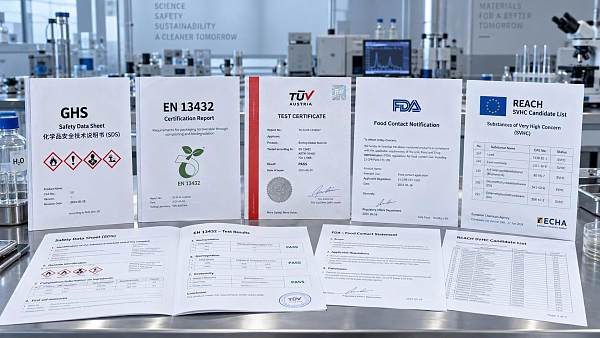
The exact standards vary by market and application, but several document groups are consistently relevant for bottle sterilizer OEM evaluation.
- Electrical safety records, such as CE-related technical files, UL alignment, or equivalent regional conformity evidence.
- Material declarations for product-contact parts, including stainless steel grade, polymer composition, and migration or food-contact suitability where applicable.
- Sterilization validation documents, covering cycle definition, temperature distribution, exposure time, and microbial reduction logic.
- Quality system evidence, commonly ISO 9001, and where needed, stronger hygiene or medical-adjacent control frameworks.
- Traceability and change-control procedures, including batch records, component revision history, and nonconformance handling.
A more mature bottle sterilizer OEM will also provide risk assessment files. These may include FMEA, hazard analysis, and software control descriptions if automation functions influence critical parameters.
The table below helps organize the review. It is especially useful when comparing more than one supplier under similar sourcing conditions.
If documentation looks polished but shallow, pause there. A capable bottle sterilizer OEM should explain not only what files exist, but how those files are maintained after design changes.
How can sterilization performance be verified beyond a simple pass or fail claim?
This is where many evaluations become too narrow. Sterilization is not just a headline result. It is a controlled process with variables that must stay within defined limits.
A strong bottle sterilizer OEM should present validation logic that links design capability to real operating conditions. That usually means more than one test report.
What should be reviewed in the validation package?
- Temperature mapping across the chamber or fluid path, not only at a single sensor point.
- Cycle repeatability under maximum and minimum load conditions.
- Defined acceptance criteria for dwell time, temperature tolerance, and alarm response.
- Microbial challenge rationale, including biological indicator selection where relevant.
- Cleaning and sanitation verification for areas that can trap residue or moisture.
In actual use, failures often come from edge conditions. Uneven loading, poor airflow, mineral scale, sensor drift, and operator shortcuts can all change sterilization performance.
That is why the better bottle sterilizer OEM partners define control windows clearly. They also describe what happens when a cycle is interrupted or a parameter moves outside tolerance.
If automation is part of the system, software version control also matters. A revised PLC logic or HMI screen can alter process behavior, even when mechanical parts stay the same.
Where do quality control weaknesses usually appear in bottle sterilizer OEM projects?
The obvious defects are not always the most dangerous ones. More common trouble appears in the spaces between design, procurement, assembly, and final release.
A bottle sterilizer OEM may have acceptable engineering drawings but weak incoming inspection. Another may assemble well but lack disciplined calibration management. Both situations create hidden instability.
Typical weak points worth checking
- Supplier qualification for heaters, sensors, valves, seals, and control boards.
- Weld quality and surface finish on stainless parts exposed to water, steam, or product-contact zones.
- Calibration status of temperature probes, timers, pressure gauges, and data loggers.
- Control of rework, substitution parts, and temporary production deviations.
- Final inspection criteria for leak testing, insulation resistance, alarm checks, and functional cycle release.
One useful sign is whether the factory can trace a failed field unit back to its assembly data, component lots, and inspection records within hours. That is a practical test of quality maturity.
G-AIE benchmarking often highlights this point. Advanced industrial ecosystems do not rely only on stronger machinery. They rely on connected evidence, disciplined revisions, and transparent fault learning.
How do you compare bottle sterilizer OEM options when factories all claim similar quality?
When claims sound similar, comparison should move from marketing language to evidence quality. The best differences often appear in response depth, not brochure features.
A practical approach is to compare how each bottle sterilizer OEM handles the same decision points under the same questionnaire.
Useful comparison questions
- Can the OEM explain the validation boundary, or only share a summary certificate?
- How are critical components approved, substituted, and requalified?
- Is there a formal process for firmware and software revision release?
- What is the expected lead time for document updates after engineering changes?
- How quickly can root-cause analysis and corrective action reports be issued?
It also helps to review factory audit behavior. A dependable bottle sterilizer OEM answers directly, shows records without confusion, and explains limits honestly.
By contrast, vague answers around traceability, outsourced parts, or validation ownership usually signal future friction. Those gaps become expensive when qualification timelines are tight.
What mistakes delay approval, raise risk, or weaken long-term control?
Several mistakes appear repeatedly in bottle sterilizer OEM selection. Most of them are avoidable, but only if they are recognized early.
- Treating certification marks as full proof of process capability.
- Accepting validation reports without checking load pattern, cycle limits, or calibration status.
- Ignoring serviceability, spare-part control, and post-change documentation discipline.
- Overlooking hygiene design details such as dead legs, drainability, and residue-prone geometry.
- Skipping on-site or remote audit review when the project involves custom automation.
Another common mistake is focusing only on unit price. A lower-cost bottle sterilizer OEM may create higher total cost through slower approval, extra validation work, or recurring field corrections.
The better decision model weighs documentation quality, process control, maintainability, and change transparency together. That is usually where long-term risk becomes visible.
What is the smartest next step before finalizing a bottle sterilizer OEM decision?
Start by turning broad expectations into a review matrix. Define which standards apply, which validation evidence is mandatory, and which design features are critical for the intended process.
Then compare each bottle sterilizer OEM against the same requirements. Keep the scoring practical: compliance completeness, validation depth, traceability maturity, audit readiness, and change-control discipline.
If the project includes intelligent controls, ask for software governance details as early as mechanical specifications. In many industrial settings, data integrity is now part of equipment reliability.
A careful review does not slow the project. More often, it prevents requalification, shipment delay, and corrective work later. That is the real value behind a disciplined bottle sterilizer OEM selection process.
The most useful next move is simple: build a short approval checklist, request evidence before negotiation closes, and confirm how the OEM manages changes after delivery. That is where confidence becomes measurable.
Recommended News
 Sep 19, 2026When can a supply chain LLM reduce time spent finding shipment updates?Supply chain LLMs can cut shipment-update search time by connecting carrier events, ERP data, and documents—giving teams traceable answers and faster exception response.
 Sep 18, 2026How industrial monitoring equipment helps prevent unplanned downtimeIndustrial monitoring equipment helps teams detect early asset issues, prioritize maintenance, and prevent costly unplanned downtime. Explore practical strategies for reliable operations.
 Sep 17, 2026What next-gen harmonic drive research means for robot joint accuracyNext-gen harmonic drive research reveals how backlash, stiffness, thermal drift, and sensing shape robot joint accuracy. Explore smarter validation strategies.
 Sep 16, 2026How Southeast Asian climates affect cylinder seal frictionCylinder seal friction Southeast Asia: learn how humidity, heat, monsoons, and contamination affect motion stability, wear, and seal selection.
 Sep 15, 2026How to size DC gear motors for the required starting torqueGear motors DC sizing made practical: calculate starting torque, account for friction, gravity, inertia and voltage drop, then select a reliable motor with confidence.
 Sep 14, 2026How to verify high purity chemicals compliance before supplier approvalHigh purity chemicals compliance: learn how to verify supplier quality systems, CoAs, traceability, testing, and change control before approval.
 Sep 13, 2026What permits are needed to operate mapping drones in Europe?Mapping drones Europe: discover the permits, EASA categories, airspace approvals, site access, and GDPR checks needed for compliant aerial surveys.
 Sep 12, 2026What lead time should I expect for automatic transmission components? Planetary Gearboxes delivery forecasting for OEM planningWhat lead time should I expect for automatic transmission components? Get dynamic, AI-powered planetary gearbox delivery forecasting—designed for OEMs building next-gen hybrid & commercial powertrains.
 Sep 12, 2026Can polyamide replace metal in load-bearing components? Polymer Pulse structural performance data for 2026 applicationsCan polyamide replace metal in load-bearing components? Discover Polymer Pulse’s 2026 structural data—real-world performance, weight savings, and reliability breakthroughs.
 Sep 12, 2026How to handle a power electronics warranty claim: Harmonic Reducers documentation and escalation pathHow do I handle a power electronics warranty claim? Get a fast, intelligent, evidence-driven resolution for harmonic reducers—no bureaucracy, just precision diagnostics and real-time escalation.
 Sep 12, 2026Which motion control specifications matter most before purchase? Torque Logic selection criteria for automation engineersWhich motion control specifications are most important before purchase? Discover Torque Logic—the 4 non-negotiable, AI-aligned criteria that cut TCO by 27–41% and boost motion system availability to 99.992%.
 Sep 13, 2026Is agentic AI reliable enough for supplier screening? Supply Chain LLM validation framework for procurement teamsIs agentic AI reliable enough for supplier screening? Discover a rigorous LLM validation framework built for procurement teams—grounded in material traceability, regulatory compliance, and real-world operational constraints.
 Sep 14, 2026How to maintain edge AI systems after deployment: Predictive Maint AI operational protocols for field techniciansHow do I maintain edge AI systems after deployment? Discover predictive, physics-aware operational protocols designed for real-world field technicians—sustaining intelligence where silicon meets steel.
 Sep 15, 2026What compliance documents must a bioplastics supplier provide? Bio-Plastics regulatory checklist for procurementWhat compliance documents should a bioplastics supplier provide? Get our actionable regulatory checklist for food, medical & EU-bound applications.
 Sep 16, 2026How to prevent PET film defects during production: Barrier Films process control best practicesHow can I prevent PET film defects during production? Discover physics-driven barrier film process control—thermal precision, dynamic tension management & surface energy optimization.
 Sep 17, 2026Are thermoplastics suitable for long-term outdoor use? Engineering Resins durability assessment in 2026 UV/weather exposureAre thermoplastics suitable for long-term outdoor use? Discover 2026’s engineering resin durability insights — UV/weather resistance ranked, tested & actionable.
 Sep 18, 2026What to do when a servo motor fails during production: A Servo Actuators troubleshooting guide for maintenance teamsWhat should I do if a servo motor fails during production? Get a field-tested, AI-aware troubleshooting guide for maintenance teams—minimize downtime, maximize OEE.
 Sep 12, 2026How to compare wholesale party supplies by minimum order valueCompare wholesale party supplies by minimum order value, freight, SKU flexibility, and stock risk to choose suppliers that protect margins and simplify replenishment.
 Sep 11, 2026How proportional solenoid linearity affects precision motion controlProportional solenoid linearity directly affects precision motion control, valve metering, stability, and calibration. Learn how to evaluate performance for reliable automation.
 Sep 10, 2026When does supplier information platform automation reduce onboarding delays?Supplier information platform automation reduces onboarding delays by streamlining data collection, routing, renewals, and compliance checks—without replacing expert technical review.
 Sep 09, 2026How to size robotic motion systems for AMR payload changesRobotic motion systems for AMR payload changes: learn how to size motors, wheels, gearing, traction, and controls for safer, reliable performance.
 Sep 08, 2026How to perform a cylinder rod buckling calculation for long strokesCylinder rod buckling calculation made practical: learn how to assess effective length, end conditions, rod stiffness, load forces, and safety margins for reliable long-stroke cylinder design.
 Sep 07, 2026How to estimate the cost of industrial mechanical components before orderingIndustrial mechanical components cost: learn how to estimate material, machining, tooling, inspection, logistics, and hidden expenses before ordering. Compare quotes confidently and reduce sourcing risk.
 Sep 07, 2026What Is a Product Standards Database Used For?Product standards database guide: learn how to compare requirements, verify revisions, control specifications, and reduce compliance risks across design, sourcing, and production.