Search News
Industry Portal
Popular Tags
Where Vertical AI Technology Delivers Real Value in Operations
Author
Time
Click Count
For technical evaluators under pressure to justify automation investments, Vertical AI technology delivers the most value when it is embedded in specific operational workflows rather than treated as a generic platform. From procurement intelligence and production optimization to quality control and supply chain resilience, the real advantage lies in measurable performance, faster decisions, and tighter alignment between industrial assets and digital execution.
Why the conversation around Vertical AI technology is changing now
Across industrial and cross-sector operations, the market is moving away from broad enthusiasm for artificial intelligence and toward a harder question: where does it create operational value that can be verified? This shift matters because technical evaluators are no longer being asked whether AI is interesting. They are being asked whether it can reduce scrap, improve supplier decisions, compress planning cycles, and strengthen resilience under real constraints.
That is where Vertical AI technology has gained momentum. Unlike general-purpose AI tools, it is built around domain-specific data, process logic, terminology, compliance needs, and decision pathways. In manufacturing ecosystems, procurement networks, industrial R&D environments, and supply orchestration functions, the demand is increasingly for AI that understands context, not just language. The trend is not theoretical. It reflects operational pressure from volatile input costs, multi-tier supplier complexity, labor gaps, energy constraints, and rising expectations for traceability.
For organizations like those served by G-AIE, this is especially relevant. The convergence of material science and intelligent automation means decision quality depends on linking physical asset behavior with digital intelligence. Vertical AI technology becomes valuable when it helps evaluators compare alternatives faster, identify hidden risks earlier, and improve repeatability across technical and commercial workflows.
The strongest trend signal: buyers want workflow outcomes, not AI promises
One of the clearest signals in the current market is that investment discussions are moving from platform capability to workflow impact. Operations leaders want evidence that a system improves a defined task. Technical evaluators want to know whether a model can interpret equipment data, detect supplier anomalies, classify defects, or recommend process adjustments with acceptable precision and governance.
This trend is reshaping how Vertical AI technology is assessed. Evaluation criteria now include integration depth, data readiness, explainability, cycle-time reduction, and operational fit. A generic tool that performs adequately in demos may fail when exposed to plant variability, engineering change management, or procurement exceptions. By contrast, a vertical solution with narrower scope often creates faster value because it aligns with existing decision structures.
What is driving this shift in industrial operations
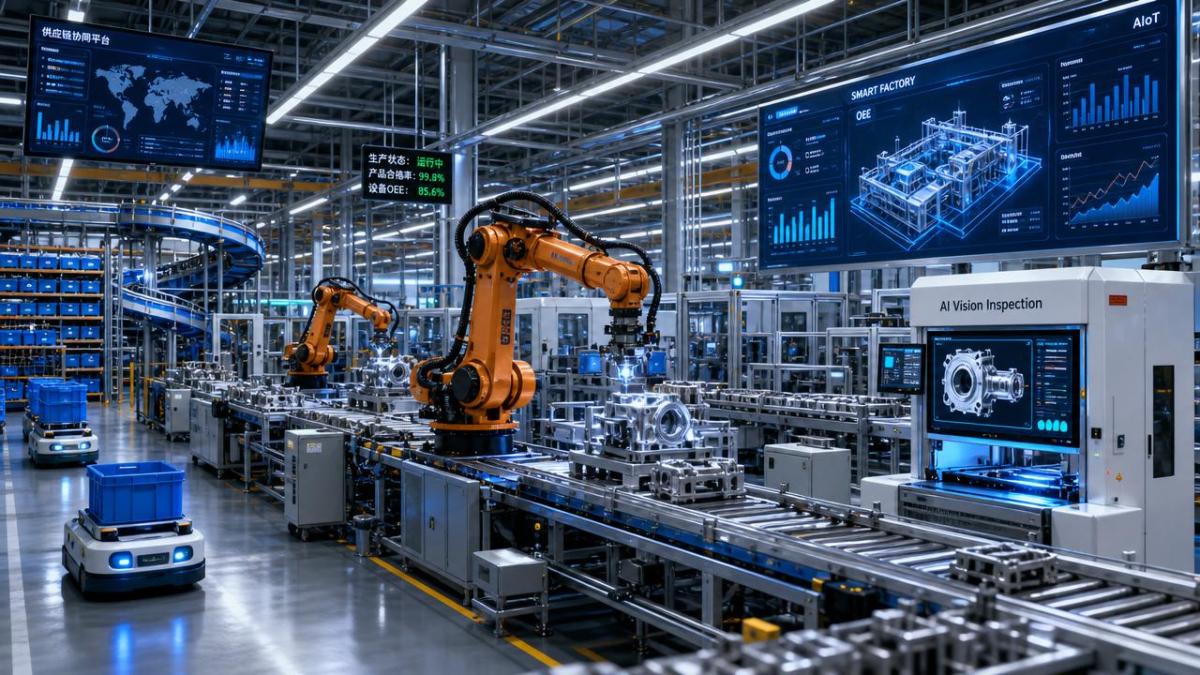
Several forces are pushing Vertical AI technology into a more practical and valuable role. First, industrial data environments have matured. More companies now have machine telemetry, supplier records, maintenance logs, quality histories, and engineering documentation in digital form. The challenge is no longer simply collecting data; it is turning fragmented information into better decisions at speed.
Second, operating volatility has changed the economics of delay. When lead times shift quickly, raw material prices fluctuate, or quality incidents cascade across multiple sites, slow interpretation becomes expensive. Vertical AI technology helps compress the time between signal detection and action. This is particularly important in procurement intelligence and supply chain orchestration, where weak signals often appear before larger disruptions.
Third, the rise of advanced materials and automated production has increased technical complexity. Evaluators must compare not only suppliers and systems, but also process compatibility, performance trade-offs, and lifecycle implications. Domain-specific AI can support this by structuring technical evidence, surfacing comparable benchmarks, and reducing the burden of manual review.
Finally, governance expectations are rising. In industrial environments, a recommendation that affects quality, compliance, safety, or sourcing cannot remain a black box. Vertical AI technology is gaining preference because narrower use cases are often easier to validate, document, and govern than open-ended general systems.
Where Vertical AI technology delivers the clearest operational value
The highest-value opportunities usually appear where decisions are frequent, data-rich, and costly when handled slowly or inconsistently. For technical evaluators, the most credible use cases are not the broadest ones. They are the ones where workflow friction is visible and outcome metrics are already known.
Procurement intelligence and supplier evaluation
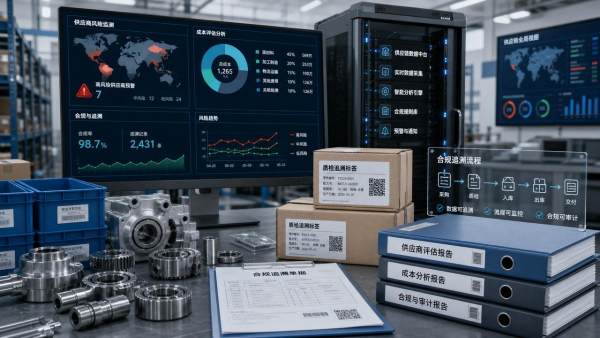
In complex sourcing environments, Vertical AI technology can consolidate supplier performance data, interpret technical specifications, flag inconsistencies in documentation, and support should-cost or risk-based comparisons. The value is not only speed. It is improved decision consistency across teams that may otherwise evaluate suppliers using different assumptions. For organizations managing advanced industrial ecosystems, this can sharpen supplier selection while reducing exposure to hidden quality or continuity risks.
Production optimization and process control
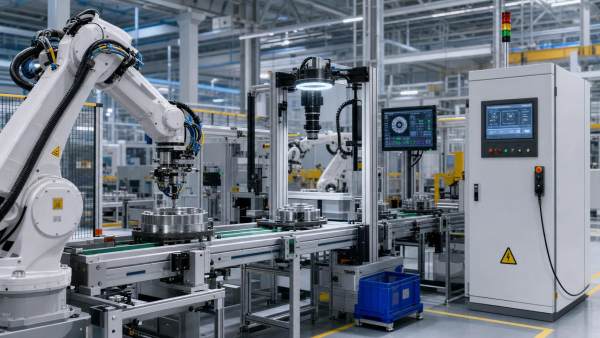
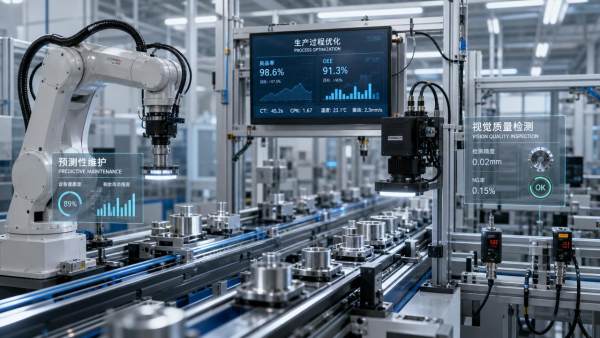
Production environments generate large amounts of process data, but not all of it becomes actionable. Vertical AI technology can identify drift, correlate process conditions with yield outcomes, and recommend parameter adjustments within defined tolerances. The practical value appears when the model reflects the physics, constraints, and standard work of the process rather than treating operations as generic data streams.
Quality control and defect analysis
Quality teams benefit when AI can classify defect patterns, connect visual signals to root causes, and prioritize likely corrective actions. This is especially valuable in high-mix, high-specification settings where manual review can be inconsistent. Vertical AI technology improves quality not because it replaces expertise, but because it helps experts focus on the highest-probability issues faster.
Supply chain resilience and exception handling
Many organizations now recognize that resilience depends on response quality during exceptions, not just efficiency during stable periods. Vertical AI technology can help detect disruption signals, assess impact scenarios, and recommend alternatives based on material constraints, lead times, and supplier capability. The real value emerges when the system supports cross-functional decisions instead of producing isolated alerts.
Who feels the impact most strongly
The effects of Vertical AI technology are not uniform. Some roles see immediate benefit because they operate at the junction of complexity, time pressure, and measurable outcomes.
The next evaluation standard is not model accuracy alone
A major change in the market is that success criteria are becoming more operational. Accuracy still matters, but technical evaluators increasingly look beyond model performance in isolation. They ask whether the system can function reliably with incomplete records, changing specifications, shifting supplier conditions, and human review loops. They also ask whether the AI output can be trusted enough to influence action without creating new governance burdens.
This is why Vertical AI technology should be judged as an operational component, not just a data science asset. The strongest deployments typically share several traits: clearly bounded scope, usable integrations, transparent escalation logic, and KPIs tied to cost, cycle time, quality, or risk. In other words, the best indicator of value is whether the AI becomes part of how work is actually executed.
What signals deserve close attention over the next phase
Technical evaluators should watch for a few meaningful signals as the market matures. One is the increasing preference for solutions that combine domain models with industrial knowledge graphs, benchmark repositories, and structured engineering data. Another is the shift toward hybrid decision systems, where Vertical AI technology supports experts rather than attempting fully autonomous control from the start.
A third signal is commercial. Vendors that can map their offer to operational metrics will likely outpace those relying on broad AI positioning alone. Buyers want implementation paths, validation methods, and evidence of workflow fit. They are less persuaded by generic productivity claims. A fourth signal is organizational: cross-functional governance is becoming essential. Procurement, operations, IT, engineering, and quality teams increasingly need a shared evaluation framework.
How enterprises should respond before the market moves further
The most effective response is not to launch the largest possible AI program. It is to identify where Vertical AI technology can improve a high-friction, high-value decision path. Start with a workflow where the baseline is measurable, the stakeholders are clear, and the data is sufficiently structured to test under realistic conditions.
For many industrial organizations, that means prioritizing one of four areas: supplier intelligence, quality investigation, process optimization, or supply exception management. From there, evaluators should define success in operational terms. Examples include reduced evaluation time, fewer false escalations, better supplier qualification consistency, lower defect escape rates, or faster recovery from disruptions.
It is also wise to separate near-term value from long-term ambition. Near-term value comes from bounded, domain-rich applications. Long-term value may come from linking multiple vertical workflows into a more intelligent operational architecture. G-AIE’s perspective is especially useful here: the future belongs to organizations that can connect material performance, technical benchmarking, and digital execution in one decision environment.
Practical decision questions for technical evaluators
Before committing to a solution, evaluators should confirm a few core points. Does the proposed Vertical AI technology understand the actual process vocabulary and constraints of the intended workflow? Can it integrate with the systems that already govern operations? Are outputs explainable enough for quality, sourcing, and engineering review? Is there a realistic path from pilot to daily use? And can the organization measure whether decisions become faster, better, or more resilient after deployment?
These questions matter because the market is entering a more disciplined phase. The strongest opportunities are still significant, but value will concentrate in implementations that are tightly aligned with operational reality. If enterprises want to judge the impact of Vertical AI technology on their own business, they should begin by confirming where decision latency, inconsistency, or hidden risk is most costly today, and which workflow can produce proof fast enough to guide broader investment.
Recommended News
 May 06, 2026Digital Intelligence Tools That Make Daily Workflow EasierDigital intelligence tools help industrial teams simplify daily workflow with real-time visibility, guided actions, and fewer manual errors. Discover practical solutions that boost efficiency.
 May 06, 2026What to Check Before Choosing Intelligent Automation ManufacturersIntelligent automation manufacturers should be evaluated for technical depth, integration, material compatibility, and service support—discover what to check before choosing the right partner.
 May 06, 2026Industrial Intelligence Solutions: Common Cost Traps and ROI SignalsIndustrial intelligence solutions often hide integration and data costs. Learn the key ROI signals, cost traps, and approval questions finance leaders should ask before investing.
 May 06, 2026How to Evaluate Supply Chain Intelligence Providers Beyond the Sales PitchSupply chain intelligence providers should be judged on verified data, risk visibility, and sourcing value—not demos alone. Learn how to compare vendors and choose a partner that improves resilience, compliance, and cost control.
 May 06, 2026Vertical AI Applications Worth Piloting Before Full-Scale RolloutVertical AI applications worth piloting first: discover high-impact use cases for predictive maintenance, quality inspection, and smarter operations before full-scale rollout.
 May 06, 2026Where Vertical AI Technology Delivers Real Value in OperationsVertical AI technology creates real operational value in procurement, production, quality, and supply chains—helping enterprises cut risk, speed decisions, and prove ROI.
 May 06, 2026A Practical Guide to Industrial Benchmarking Standards in Complex PlantsIndustrial benchmarking standards for complex plants: learn how to improve safety, quality, reliability, and compliance with practical methods that reduce risk and boost performance.
 May 06, 2026High-Tech Industrial Solutions That Cut Downtime Without OverbuildingHigh-tech industrial solutions help cut downtime with smarter automation, material benchmarking, and scalable design—boost uptime, control CAPEX, and build resilient operations.
 May 06, 2026Industrial Benchmarking Methods: What to Compare Before You CommitIndustrial benchmarking methods help you compare performance, lifecycle cost, compliance, and digital readiness before you commit—reduce risk and make smarter industrial decisions.
 May 06, 2026How Digital Intelligence Applications Improve Factory DecisionsDigital intelligence applications help factories improve scheduling, quality, maintenance, energy use, and supply decisions. Discover how to boost resilience, cut risk, and accelerate performance.
 May 06, 2026SABIC & GSO Update Functional Coatings GCC Certification RulesSABIC & GSO updated GCC certification rules for functional coatings—new ISO 9227 salt spray and ΔE ≤1.5 UV aging tests required from Aug 1, 2026. Act now!
 May 06, 2026IMC Raises BAF to 18% on East Asia–North Europe RoutesBAF raised to 18% on East Asia–North Europe routes by IMC—green fuel costs drive freight pricing shifts. Key insight for exporters, forwarders & procurement teams.
 May 06, 2026WISE 2026 Adds Dedicated Anti-Drone Gear Zone in ShanghaiAnti-Drone Gear zone debuts at WISE 2026 in Shanghai — discover cutting-edge Chinese counter-UAS solutions for defense, security & critical infrastructure buyers.
 May 06, 2026FDA Updates Bio-Plastics Food Contact Guidance, Nano-Migration Testing Now MandatoryFDA mandates nano-migration testing for bio-plastics food contact materials—PLA, PHA, PBS—effective May 2026. Ensure U.S. compliance now.
 May 06, 2026Vietnam Advances SDS Labeling Deadline for Industrial Catalysts to July 2026Vietnam advances SDS labeling deadline for industrial catalysts to July 2026—urgent compliance action needed for exporters, importers & supply chain partners.
 May 06, 2026Global Engineering Resins Index Up 3.1% Weekly, East China Port Stocks at 120k Ton LowEngineering resins prices surge 3.1% weekly amid record-low East China port stocks (120k tons). Critical insight for OEMs, compounders & global buyers.
 May 06, 2026TÜV Rheinland Launches Dual-Track Cargo Drones Certification in DongguanTÜV Rheinland’s new Dongguan cargo drones certification offers dual-track EU CE-EDM approval—cutting time by 40% and costs by 25%. Ideal for UAS manufacturers & logistics integrators.
 May 06, 2026Japan METI Enforces Real-Time Traceability for Imported Electronic ChemicalsJapan METI's new real-time traceability mandate for imported electronic chemicals—especially photoresist precursors—takes effect May 1, 2026. Ensure compliance, avoid 72+ hour delays, and secure JIS Q 0010 certification smoothly.
 May 06, 2026EU PFAS Restriction on Barrier Films Enters Implementation PhaseEU PFAS restriction on barrier films is now live—key for exporters, converters & brands. Act before Q1 2027 enforcement to avoid shipment rejections and secure compliant alternatives.
 May 06, 2026BIS Extends Public Comment Period for Harmonic Reducer Export Controls to May 15, 2026BIS extends harmonic reducer export controls comment period to May 15, 2026—key for robotics, automation & semiconductor firms. Act now to assess compliance, map inventory, and secure supply chains.
 May 05, 2026IMC Raises BAF to 18% on East Asia–North Europe RoutesBAF raised to 18% on East Asia–North Europe routes by IMC—driven by green fuel costs & EU ETS. Exporters, UAV shippers & logistics planners must act before May 15.
 May 05, 2026WISE 2026 Adds Dedicated Anti-Drone Gear Pavilion in TianjinAnti-Drone Gear Pavilion at WISE 2026 in Tianjin — first dedicated counter-UAS exhibition for RF detection, AI interception & jamming solutions. Apply now!
 May 05, 2026FDA Updates Bio-Plastics Food Contact Guidance, Adds Nano-Migration TestingFDA's new bio-plastics food contact guidance mandates nano-migration testing for PLA, PBAT & biopolymer packaging—key for U.S. exporters. Act now to ensure compliance.
 May 05, 2026Vietnam MOIT Advances SDS Vietnamese Labeling for Industrial Catalysts to July 1, 2026Vietnam MOIT advances SDS Vietnamese labeling for industrial catalysts to July 1, 2026 — urgent compliance action required for exporters, importers & supply chain partners.