Search News
Industry Portal
Popular Tags
CIBI 2026 Shanghai: Engineering Resins in Lightweight Bike Design

Author
Time
Click Count
China International Bicycle Exhibition (CIBI) 2026 opens on May 5 in Shanghai, spotlighting engineering resins for lightweight, sustainable bicycle components — a development with tangible implications for materials suppliers, Tier-1 manufacturers, and export-focused OEMs serving EU and APAC markets.
Event Overview
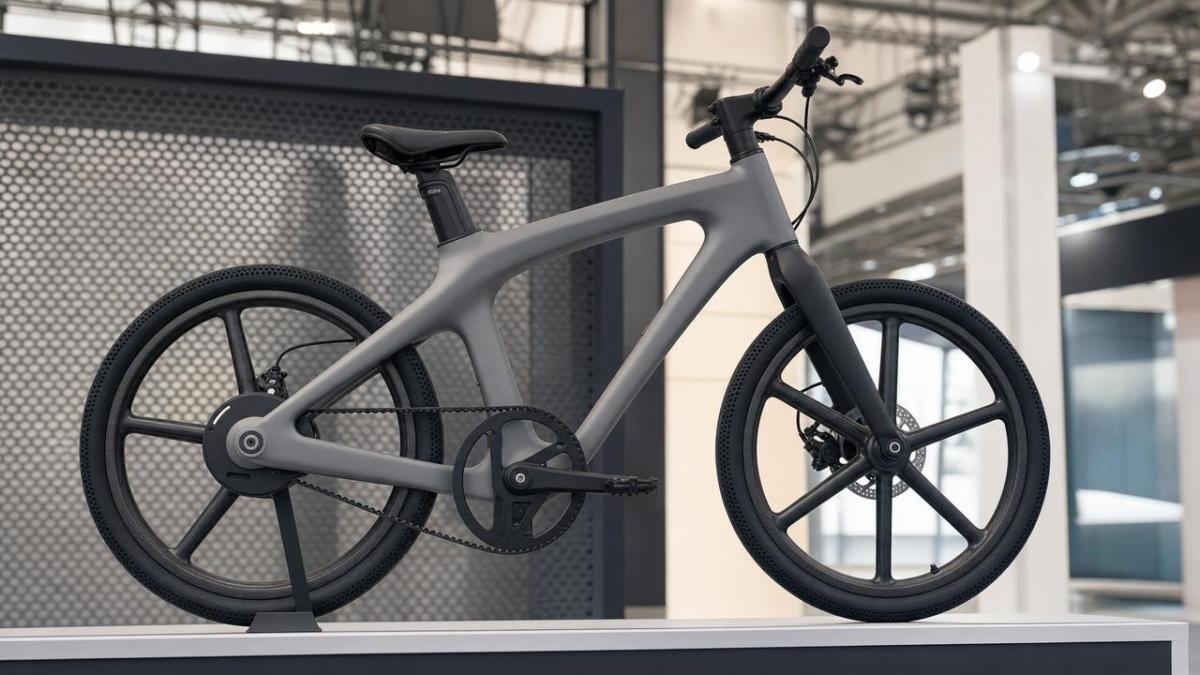
The 2026 China International Bicycle Exhibition (CIBI) will be held from May 5–8 at the Shanghai New International Expo Centre. A dedicated zone titled ‘Advanced Materials Driving Green Mobility’ will showcase integrated die-cast frames using engineering resins, carbon-fiber-reinforced polyamide wheelsets, and recyclable TPU tires. Organizers state that over 60% of participating Chinese suppliers have obtained UL94 V-0 flammability certification and ISO 14040 life cycle assessment validation. Some exhibitors are offering accelerated conformity services aligned with EU standard EN 14764.
Industries Affected
Raw material procurement firms: Increased demand for certified engineering resins (e.g., PPA, PEEK, high-flow PA66-GF) is emerging — especially grades meeting UL94 V-0 and ISO 14040 requirements. Sourcing decisions may now need to factor in third-party verification timelines and regional compliance documentation.
Component manufacturers (Tier-1/Tier-2): Adoption of resin-based structural parts — such as one-piece pressed frames or reinforced rims — introduces new process validation needs (e.g., thermal stability under fatigue, long-term creep resistance). Production lines may require updated tooling and quality control protocols aligned with cycling-specific mechanical standards.
Export-oriented OEMs and brand owners: EU market access is tightening around sustainability claims and mechanical safety. EN 14764-compliant certification pathways offered at CIBI 2026 signal rising pressure to align product declarations, labeling, and technical files with EU regulatory expectations — not just test reports.
Supply chain service providers (certification, logistics, testing labs): Demand for integrated support — combining material-level LCA reporting, flame retardancy testing, and bicycle-specific mechanical validation — is becoming more consolidated. Providers with cross-functional expertise in both polymer science and cycling standards may see increased engagement.
What Relevant Companies or Practitioners Should Focus On
Monitor official updates on EN 14764 implementation timelines
While CIBI highlights EN 14764-aligned services, the standard itself remains voluntary in the EU unless referenced in national legislation or public procurement tenders. Observably, its adoption is accelerating in premium e-bike and urban mobility segments — but full regulatory enforcement is not yet in effect.
Verify certification scope and traceability of material data sheets
UL94 V-0 and ISO 14040 certifications vary by grade, lot, and processing condition. Analysis shows that some supplier-provided certificates cover only generic formulations — not final molded parts. Buyers should request part-specific test reports and LCA boundary definitions (e.g., cradle-to-gate vs. cradle-to-grave).
Assess readiness for multi-standard compliance workflows
Engineering resin applications in bicycles must satisfy overlapping requirements: mechanical performance (ISO 4210), fire safety (UL94), environmental disclosure (ISO 14040), and regional market access (EN 14764). Current more suitable approach is to map internal QA/QC systems against these intersecting criteria — rather than treating them as isolated checkboxes.
Engage early with suppliers offering bundled validation services
Some CIBI 2026 exhibitors promote end-to-end support covering material selection, prototype validation, and documentation for EU conformity. From industry perspective, this reflects a shift toward value-added technical partnership — particularly relevant for SMEs lacking in-house polymer engineering or regulatory affairs capacity.
Editorial Perspective / Industry Observation
This CIBI 2026 initiative is better understood as an institutional signal — not yet a market-wide inflection point. It reflects growing coordination among Chinese material suppliers, component makers, and certification bodies to pre-empt tightening sustainability and safety expectations in key export markets. Analysis shows that engineering resins remain a niche alternative to aluminum and carbon fiber in mid-tier bicycles; however, their use in non-structural and semi-structural parts (e.g., fenders, cable guides, integrated battery housings) is expanding steadily. The emphasis on UL94 V-0 and ISO 14040 — rather than solely mechanical specs — suggests a broader redefinition of ‘performance’ in cycling components: one increasingly incorporating fire behavior and environmental accountability.
Conclusion
CIBI 2026’s focus on engineering resins does not indicate imminent displacement of traditional bicycle materials. Rather, it marks a maturing phase in supply chain responsiveness — where compliance, sustainability, and functional integration are treated as interdependent priorities. For stakeholders, the event is best interpreted as a benchmark for near-term capability alignment, not a mandate for immediate technology overhaul.
Source Attribution
Main source: Official CIBI 2026 exhibition announcement and zone briefing (Shanghai New International Expo Centre, April 2026). Note: EN 14764 certification pathways and supplier certification rates are self-reported by organizers; independent verification of individual supplier credentials remains pending.
Recommended News
 May 03, 2026Advanced Materials for Smart Manufacturing: Choosing Options That Last Longer Under LoadAdvanced materials for smart manufacturing: explore durable options that resist wear, heat, and repeated load to boost uptime, cut lifecycle costs, and support smarter factory decisions.
 May 03, 2026Digital Supply Chain Management: What to Fix First for Better Forecast AccuracyDigital supply chain management starts with fixing demand signals, master data, and supplier visibility. Learn what to address first to improve forecast accuracy and reduce planning risk.
 May 03, 2026Smart Materials for Industrial Applications: How to Judge Reliability in Harsh EnvironmentsSmart materials for industrial applications: learn how to assess reliability in heat, corrosion, vibration, and humidity with practical criteria that reduce risk and improve supplier decisions.
 May 03, 2026AI in Manufacturing Solutions: Practical Use Cases That Scale Beyond PilotsAI in manufacturing solutions that scale beyond pilots: explore practical use cases in quality, maintenance, planning, and supply chains to drive measurable ROI and smarter operations.
 May 03, 2026When Manufacturing Technology for Automation Delivers Faster PaybackManufacturing technology for automation delivers faster payback when it cuts downtime, labor risk, and scrap. See how finance teams evaluate ROI and approve smarter investments.
 May 03, 2026Sustainable Materials for Manufacturing: 7 Trade-Offs to Check Before SwitchingSustainable materials for manufacturing: explore 7 critical trade-offs before switching, from quality consistency and safety to supplier risk and compliance.
 May 03, 2026Material Science for Sustainable Materials: Where Performance Still Matters MostMaterial science for sustainable materials explained for technical evaluators: compare performance, lifecycle value, compliance, and supply risk to choose smarter industrial materials.
 May 03, 2026How to Compare an Automation Technology Supplier Without Missing Hidden CostsAutomation technology supplier comparison starts with hidden costs. Learn how to assess integration, service, software, and scalability before signing a high-risk contract.
 May 03, 2026Smart Manufacturing for Factories: What Actually Improves ThroughputSmart manufacturing for factories improves throughput by targeting bottlenecks, downtime, changeovers, and scheduling gaps. See which use cases deliver the fastest operational gains.
 May 03, 2026How Industrial Automation Technology Cuts Downtime on Modern Production LinesIndustrial automation technology cuts production line downtime with real-time monitoring, smarter alarms, and predictive maintenance. Discover practical checks to boost uptime fast.
 May 03, 20262026 Global Trade & Investment Summit: AI+Manufacturing Cross-Border SynergyAI+Manufacturing cross-border synergy takes center stage at the 2026 Global Trade & Investment Summit in Beijing — discover how Supply Chain LLM, Digital Twin AI, and Agentic Flow reshape global manufacturing.
 May 03, 2026Global Engineering Resins Price Index Up 8.2% MoM in AprilEngineering resins prices surged 8.2% MoM in April 2026 — discover why Chinese suppliers’ 98.7% on-time delivery is reshaping global procurement strategies.
 May 03, 2026FDA Updates Bio-Plastics Food Contact Guidance, e-FCN Deadline in 6 MonthsFDA bio-plastics food contact guidance updated: Full migration testing & e-FCN submission required by Jan 1, 2027. Act now to avoid U.S. import delays.
 May 03, 2026CIBI 2026 Shanghai: Engineering Resins in Lightweight Bike DesignEngineering resins take center stage at CIBI 2026 Shanghai—discover lightweight, sustainable bike components, EU-compliant materials & supply chain insights.
 May 03, 2026WIC 2026 in Tianjin: Cargo Drones & Inspection UAVs Take Center StageWIC 2026 in Tianjin spotlights cargo drones & inspection UAVs — explore Low-Altitude Economy innovations, Sky Grid protocols, and global localization kits.
 May 03, 2026EU REACH SVHC List Adds 247 Substances, Impacting Electronic Grade ChemicalsEU REACH SVHC List adds 247 substances—including 12 electronic-grade chemicals. Discover urgent compliance steps for EGC manufacturers, importers & suppliers.
 May 03, 2026Vietnam Mandates Vietnamese SDS & QR Codes for Industrial Catalysts from Q3 2026Vietnam SDS & QR codes mandatory for industrial catalysts from Oct 2026—avoid port detention! Key compliance guide for exporters, distributors & forwarders.
 May 03, 2026SABIC: GCC Certification Required for Functional Coatings from Q3 2026GCC Certification required for functional coatings from Oct 2026 — SABIC & GSO mandate GSO 2539:2026 compliance. Act now to avoid port rejections!
") May 03, 2026TÜV Rheinland Updates PV Barrier Films Standard (2026)PV 1280:2026 update by TÜV Rheinland sets stricter WVTR & UV-yellowing limits—key for EU PV module CE certification. Act now to avoid export delays.
May 03, 2026TÜV Rheinland Updates PV Barrier Films Standard (2026)PV 1280:2026 update by TÜV Rheinland sets stricter WVTR & UV-yellowing limits—key for EU PV module CE certification. Act now to avoid export delays. May 03, 2026BIS Proposes New Export Controls on Harmonic ReducersBIS proposes new export controls on harmonic reducers—key for cobots & AI systems. Discover who’s impacted, compliance steps, and how to respond before May 15, 2026.
 May 02, 2026Choosing a Sustainable Materials Supplier for Stable Quality and Lead TimesSustainable materials supplier selection starts with quality and lead-time control. Learn a practical checklist to reduce risk, protect margins, and build a reliable supply network.
 May 02, 2026AI in Manufacturing Applications That Reduce Downtime in Daily OperationsAI in manufacturing applications help maintenance teams detect faults earlier, cut unplanned downtime, improve service response, and keep daily operations running with greater reliability.
 May 02, 2026Material Science Research Trends Shaping Better Industrial MaterialsMaterial science research is transforming industrial materials with smarter, lighter, and more sustainable solutions. Discover key trends driving performance, resilience, and competitive advantage.
 May 02, 2026Automation Technology for Factories: Key Features to Evaluate Before You InvestAutomation technology for factories: compare integration, scalability, flexibility, and lifecycle value before you invest. Learn how to reduce risk and choose the right-fit solution.