Search News
Industry Portal
Popular Tags
Manufacturing Technology Innovations Worth Piloting Before Full-Scale Rollout

Author
Time
Click Count
For project managers and engineering leads, evaluating manufacturing technology innovations before enterprise-wide deployment is critical to reducing risk, validating ROI, and aligning technical change with operational goals. From intelligent automation to advanced materials integration, pilot programs create a practical path to test performance, scalability, and supply chain impact before full-scale rollout.
What manufacturing technology innovations mean in a practical industrial context
In broad terms, manufacturing technology innovations are new or significantly improved tools, systems, materials, and digital methods that change how industrial organizations design, produce, inspect, maintain, and optimize physical output. For project leaders, however, the phrase matters less as a trend label and more as a decision category. It includes technologies that can improve throughput, quality, energy efficiency, traceability, workforce productivity, and resilience across complex operations.
Within a global industrial environment shaped by intelligent automation, advanced material science, and stricter sustainability demands, manufacturing technology innovations are increasingly evaluated not as isolated experiments but as portfolio decisions. A pilot is the bridge between technical promise and operational proof. It helps teams test whether a solution performs under real production constraints, integrates with existing assets, and supports business outcomes beyond headline claims.
Why the industry is paying closer attention now
The current wave of attention is driven by several converging pressures. First, manufacturers are under constant pressure to improve output quality while controlling labor, material, and energy costs. Second, supply chain volatility has made visibility and adaptability far more valuable than static efficiency alone. Third, the rise of vertical AI and connected equipment has made operational data more actionable, allowing companies to move from reactive management to predictive control.
At the same time, the economy of atoms is reshaping priorities around material performance, circularity, and waste reduction. This makes many manufacturing technology innovations relevant not only to process engineering, but also to procurement, compliance, product development, and corporate sustainability teams. For large industrial groups and their project managers, the challenge is no longer finding innovation ideas. It is choosing which ones are worth piloting before committing to full-scale rollout.
A focused view of innovations worth piloting first
Not every innovation should move directly into enterprise deployment. The most suitable candidates for pilots are technologies with strong upside but meaningful integration, change-management, or scaling risk. Below is a practical overview for multidisciplinary industrial environments.
These categories represent some of the most relevant manufacturing technology innovations because they promise measurable gains while also introducing operational complexity. That combination makes them ideal for disciplined pilot execution.
Where pilots create the most business value
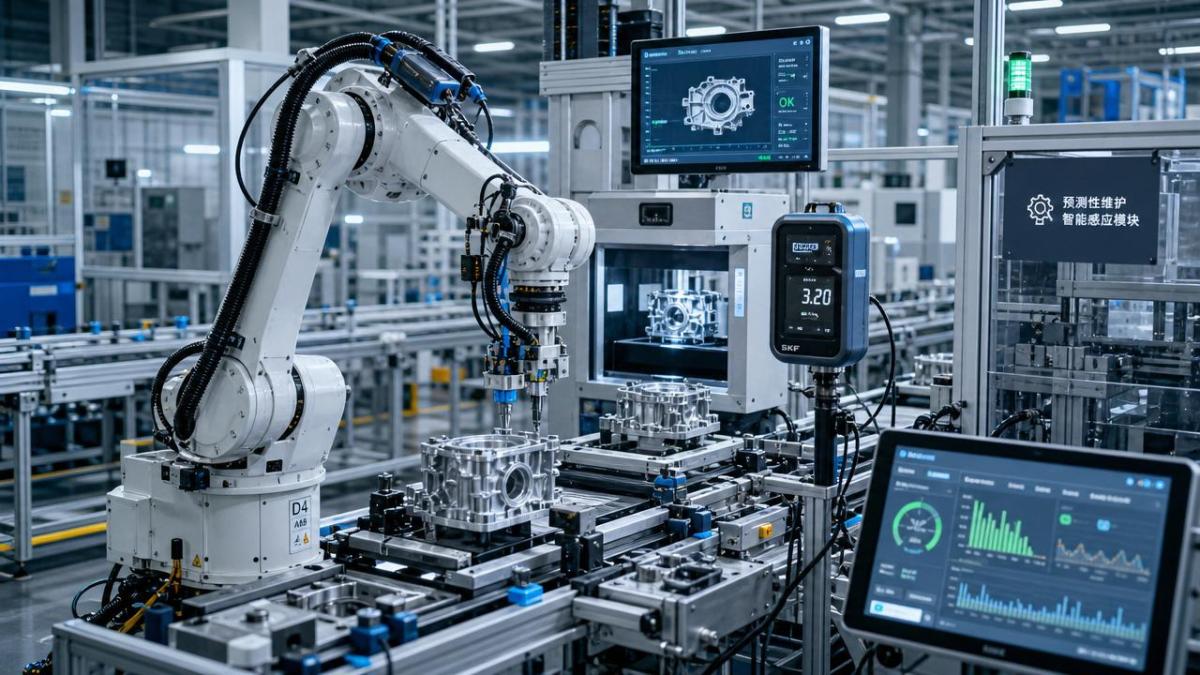
The value of manufacturing technology innovations is not limited to faster machines or smarter software. For project managers, the bigger benefit often comes from proving business relevance in a controlled environment. A well-structured pilot can uncover hidden integration costs, operator adoption barriers, cybersecurity requirements, and supplier dependencies before they become enterprise-wide problems.
In quality-critical sectors, pilot programs help determine whether a new inspection or traceability technology actually improves consistency rather than just generating more data. In asset-intensive operations, pilots reveal whether predictive systems reduce unplanned downtime enough to justify sensor retrofits and analytics subscriptions. In material-heavy industries, pilots test whether an advanced substrate or formulation enhances performance without creating downstream processing instability.
This matters especially in large industrial ecosystems, where one technology decision can affect procurement standards, maintenance planning, digital architecture, operator training, and supplier collaboration. By validating these cross-functional impacts early, teams can make better go or no-go decisions with fewer assumptions.
Common categories of pilot candidates for project and engineering leaders
For engineering leads, the best pilot candidates usually fall into a few recognizable groups. The first group includes process optimization tools such as machine vision, adaptive control, and AI-assisted scheduling. These manufacturing technology innovations are attractive because they can deliver visible performance improvements on a single line or cell before broader adoption.
The second group includes infrastructure innovations, such as edge connectivity, industrial data platforms, digital work instructions, and interoperable sensor networks. These may not show immediate output gains, but they can establish the data foundation required for broader intelligent automation. Their pilot value lies in testing compatibility, data quality, and user adoption.
The third group involves material and product innovations. New coatings, lightweight materials, recycled inputs, or engineered composites may support sustainability and performance goals, but they often require pilot validation across forming, joining, inspection, and end-use reliability. For project managers, these cases demand close coordination between production engineering, suppliers, and quality teams.
How to decide which manufacturing technology innovations deserve a pilot
A practical selection framework should balance strategic value with execution realism. The first question is whether the innovation addresses a clearly defined operational problem. Piloting a technology because it is popular rarely produces credible results. Teams should instead anchor the pilot to a known constraint such as excessive scrap, maintenance delays, unstable cycle times, traceability gaps, or material inefficiency.
The second question is whether the innovation can be measured within a reasonable time frame. Some manufacturing technology innovations generate value only after long implementation cycles, making them difficult to assess in a short pilot. The best candidates offer a pathway to observable changes in performance, risk, or cost within a defined scope.
The third question concerns scalability. A pilot should not only show that a solution works in one place; it should reveal what it would take to replicate success across sites, product families, or regions. This includes infrastructure needs, training requirements, supplier readiness, and support models.
Useful screening criteria
- Operational pain point is specific and quantified
- Expected benefit aligns with plant and enterprise goals
- Required data, interfaces, and skills are available or feasible
- Pilot scope can be isolated without major production disruption
- Results can inform a larger investment decision
Pilot design considerations that separate useful trials from weak experiments
A weak pilot often fails because it is treated as a technical demo rather than a business experiment. Successful pilots of manufacturing technology innovations begin with baseline data. Without a clear before-and-after picture, even promising results become hard to defend. Project managers should define target metrics, acceptable variance, decision thresholds, and ownership before testing begins.
Cross-functional involvement is equally important. Operations, maintenance, quality, IT, procurement, and safety teams may all influence whether a pilot can scale. This is especially true when the technology affects physical assets and digital systems at the same time. G-AIE-style benchmarking approaches are valuable here because they help teams compare technical maturity, deployment dependencies, and adoption patterns across similar industrial settings.
It is also wise to define the pilot boundary carefully. A focused line, shift, machine cluster, or product family is often better than a broad but vague deployment. Narrow scope improves data quality and speeds learning, while still providing evidence about repeatability and risk.
Frequent risks to watch before full-scale rollout
Even strong pilots can create false confidence if teams ignore scale-related issues. One common risk is overestimating ROI based on unusually favorable pilot conditions. Another is underestimating integration complexity, particularly when manufacturing technology innovations rely on legacy equipment, fragmented data environments, or region-specific supplier networks.
Change adoption is another frequent blind spot. Operators may support a pilot because of close vendor attention and temporary management focus, yet struggle when the same system is deployed broadly. Material-related innovations carry their own risks as well, including qualification delays, inconsistent input quality, or unanticipated interactions with downstream processes.
For that reason, pilot reviews should include technical outcomes, implementation friction, governance needs, and supply chain implications. A technology that improves output but creates sourcing fragility may require redesign before scaling.
A practical roadmap from pilot to rollout decision
Project managers can simplify decision-making by using a staged approach. Start with opportunity framing, where the team identifies the operational gap and matches it to candidate manufacturing technology innovations. Next comes feasibility assessment, covering equipment compatibility, data readiness, compliance, and safety implications. Then run the pilot with defined metrics, documented observations, and governance checkpoints.
After execution, the most important step is translation. Teams should convert pilot findings into a rollout case that includes technical fit, expected economic value, implementation conditions, and replication constraints. This creates a much stronger basis for executive approval than a simple statement that the test “worked.”
Final perspective for industrial decision-makers
The most effective manufacturing technology innovations are not always the newest or most visible. They are the ones that solve a defined industrial problem, perform reliably under operating conditions, and scale without undermining quality, resilience, or cost discipline. For project managers and engineering leaders, piloting is the mechanism that turns innovation from speculation into evidence.
In a manufacturing environment shaped by advanced materials, connected systems, and intelligent automation, disciplined pilot programs are becoming essential. They help industrial organizations test value, reduce uncertainty, and build a stronger foundation for rollout decisions. If your team is prioritizing manufacturing technology innovations across plants, product lines, or supplier networks, a benchmark-driven pilot strategy is often the most reliable place to start.
Recommended News
 Jun 12, 2026Custom Manufacturing vs Standard Supply: When Is It Worth the Extra Cost?Custom manufacturing can cost more upfront, but it may cut downtime, waste, and long-term risk. Learn when customization delivers better ROI than standard supply.
 Jun 12, 2026Custom Mascot Plush: Cost Drivers, MOQs, and Sampling Risks ExplainedCustom mascot plush pricing explained: compare cost drivers, MOQ trade-offs, and sampling risks to avoid hidden surprises and choose suppliers with more confidence.
 Jun 12, 2026Hydraulic Automation in Construction News: What Changes Matter in 2026Hydraulic automation in construction news reveals what will matter in 2026: smarter control, predictive maintenance, safer operations, and stronger project performance. Read the key shifts now.
 Jun 12, 2026Automation Technology for Factories: 7 Upgrades That Cut DowntimeAutomation technology for factories: discover 7 practical upgrades that reduce downtime, improve control, and reveal hidden root causes across lines, utilities, and quality-critical operations.
 Jun 12, 2026How to Evaluate a Snowboard Manufacturer Before Placing a Bulk OrderSnowboard manufacturer evaluation starts before pricing. Learn how to assess quality, materials, compliance, lead times, and reliability before placing a bulk order.
 Jun 12, 2026CATL Locks In 300,000 Tons, Lifting Electronic Grade Chem PricesCATL locks in 300,000 tons of electronic-grade chemicals, pushing prices higher and pressuring battery, coatings, and polymer supply chains. See what buyers and manufacturers should review now.
 Jun 12, 2026Indonesia Tightens Barrier Film Entry ChecksIndonesia Tightens Barrier Film Entry Checks: learn how new WVTR and OTR testing rules affect exports, customs clearance, costs, and compliance risk for Indonesia-bound barrier film shipments.
 Jun 12, 2026EU Tightens nano-TiO₂ Traceability for Functional CoatingsEU Tightens nano-TiO₂ Traceability for Functional Coatings: learn the new REACH Annex XVII reporting rules, ECHA filing risks, customs impact, and how importers can avoid 4% penalties.
 Jun 12, 2026APEC Suzhou Declaration Launches Cargo Drone TrialAPEC Suzhou Declaration launches a cargo drone trial with cross-border routes in China, Japan, and South Korea, signaling faster high-value freight delivery and new supply chain opportunities.
 Jun 12, 2026US Tightens IOR Rules for Harmonic Reducer ImportsUS tightens IOR rules for Harmonic Reducer imports, adding stricter eligibility checks and 5–7 extra review days. See how foreign IORs, Planetary Gearboxes, and supply chains may be affected.
 Jun 11, 2026Smart Cat Water Fountain Buying Guide: Filter Life, Noise, and Cleaning EaseSmart cat water fountain buying guide covering filter life, noise, and cleaning ease. Compare real costs, quiet performance, and low-maintenance designs to choose the best fit for your cat.
 Jun 11, 2026Industrial Benchmarking: Key Metrics That Reveal Real Operational GapsIndustrial benchmarking reveals hidden operational gaps in cost, quality, throughput, energy, and automation. Discover the key metrics that drive smarter decisions and stronger performance.
 Jun 11, 2026Custom Challenge Coins Wholesale: Cost Drivers, MOQ, and Design PitfallsCustom challenge coins wholesale pricing depends on size, material, MOQ, and artwork choices. Learn key cost drivers, common design pitfalls, and smarter sourcing tips before you buy.
 Jun 11, 2026Timing Belts Factory Checklist: Materials, Tolerance, and Production CapacityTiming belts factory checklist covering material selection, tolerance control, and real production capacity. Compare suppliers smarter, reduce sourcing risk, and improve long-term reliability.
 Jun 11, 2026How to Evaluate an Action Figures Manufacturer for Quality and Lead TimeAction figures manufacturer selection affects product quality and delivery reliability. Learn how to evaluate tooling, materials, QC, and lead times for smarter sourcing.
 Jun 11, 2026Indonesia Adds Pre-Shipment Review for Barrier FilmsIndonesia barrier films rule update: learn how the new pre-shipment review for AlOx, PVDC, and EVOH films affects exporters, SGS/ITS test reports, and Jakarta port clearance.
 Jun 11, 2026CATL Secures 300,000 Tons in Electronic Grade Chem DealCATL Secures 300,000 Tons in Electronic Grade Chem Deal as EC and FEC prices jump 12%. Explore supply chain impact, Q3 export pricing, and what buyers should watch now.
 Jun 11, 2026EU Tightens Traceability Rules for Nano TiO₂ CoatingsEU Tightens Traceability Rules for Nano TiO₂ Coatings: learn how the new REACH amendment affects importers, customs clearance, and supply-chain compliance before Q3 2026.
 Jun 11, 2026APEC Backs Cargo Drone Mutual Recognition TrialAPEC backs cargo drone mutual recognition trial, opening faster cross-border logistics for high-value parts. Discover what exporters, buyers, and supply chain teams must prepare before July 1, 2026.
 Jun 11, 2026US Tightens Controls on AI-Enabled Harmonic ReducersUS Tightens Controls on AI-Enabled Harmonic Reducers: learn how the new BIS rule affects export licenses, robot components, compliance planning, and global delivery timelines.
 Jun 10, 2026Brand Manufacturing vs OEM: Which Model Lowers Risk as You Scale?Brand manufacturing vs OEM: discover which model lowers scaling risk through stronger quality control, IP protection, and supply chain visibility—and when OEM still makes strategic sense.
 Jun 10, 2026How to Compare a Hollow Shaft Reducers Factory for Torque and Lead TimeHollow shaft reducers factory comparison starts with torque and lead time. Learn how to verify performance, repeatability, and delivery reliability before you choose.
 Jun 10, 2026Sports Bra Private Label: Cost, MOQ, and Quality Risks to Check FirstSports bra private label buyers: learn how to assess real cost, MOQ flexibility, material performance, compliance, and quality risks before choosing a supplier.
 Jun 10, 2026Global Hydraulic Cylinder Tender Alerts: How to Spot Viable Bids EarlyGlobal hydraulic cylinder tender alerts help you spot viable bids early, assess fit, cost, lead time, and compliance fast, and focus on high-potential opportunities before rivals act.