Search News
Industry Portal
Popular Tags
Subsea Hydraulic Technology News: Reliability Risks and Next Moves

Author
Time
Click Count
Subsea hydraulic technology news is moving from niche engineering updates to board-level risk intelligence.
For offshore portfolios, hydraulic reliability now affects uptime, compliance, supplier exposure, and total lifecycle economics.
This shift matters across the broader industrial landscape, where physical asset resilience increasingly depends on better data, materials, and maintenance strategy.
In recent subsea hydraulic technology news, recurring failures are not isolated technical events.
They often signal weaknesses in sealing design, fluid cleanliness, component compatibility, and service coordination across global supply networks.
Understanding these signals helps shape smarter sourcing, risk screening, and capital planning for subsea systems and adjacent industrial infrastructure.
Subsea Hydraulic Technology News in Context

Subsea hydraulic systems transmit power and control under high pressure, corrosive exposure, and limited physical access.
They support valves, blowout prevention functions, manifolds, intervention equipment, and other mission-critical offshore operations.
Because intervention costs are high, even minor hydraulic degradation can expand into costly downtime and safety review cycles.
That is why subsea hydraulic technology news now attracts attention beyond engineering teams.
It provides early evidence about field reliability, component maturity, and whether a technology path is operationally scalable.
At a broader level, this topic intersects with industrial digitization.
Hydraulic assets are increasingly assessed through condition data, remote diagnostics, and materials performance benchmarking.
For G-AIE style analysis, the issue is not only failure frequency.
It is the relationship between physical asset integrity and the intelligence used to predict, prevent, and price risk.
Current Reliability Signals Shaping Market Attention
Recent subsea hydraulic technology news highlights a cluster of recurring concerns across offshore projects, retrofits, and maintenance campaigns.
These concerns often appear before larger performance losses become visible in production metrics.
In subsea hydraulic technology news, reliability is increasingly discussed as a system issue, not a single component issue.
A robust valve can still underperform if fluid quality, hose integrity, and connector tolerances are poorly managed.
This is especially important in multinational projects where equipment packages come from different qualification traditions.
Why Reliability Risks Matter Beyond Engineering
Subsea hydraulic technology news matters because hydraulic failures affect much more than maintenance schedules.
They influence revenue continuity, insurance assumptions, compliance documentation, and future field development timing.
In integrated industrial ecosystems, risk also travels through the supplier base.
A repeated subsea incident may expose weaknesses in metallurgy, elastomer selection, machining quality, or digital monitoring coverage.
That makes reliability news useful for screening counterparties and comparing technical maturity across vendors.
Key business effects
- Higher unplanned intervention costs in deepwater environments.
- Broader exposure to schedule delays on connected offshore programs.
- Greater pressure to diversify critical hydraulic components.
- More demand for traceability across fluids, seals, and fittings.
- Stronger case for predictive monitoring and reliability analytics.
From a capital allocation perspective, subsea hydraulic technology news can indicate whether an asset base requires retrofit spending sooner than expected.
From a sourcing perspective, it helps identify where qualification standards should be tightened before contract renewal.
Typical Failure Modes and Their Decision Impact
The most useful subsea hydraulic technology news often connects field symptoms to underlying decision variables.
That connection improves root-cause screening and avoids superficial fixes.
These patterns show why subsea hydraulic technology news should be read as procurement and design intelligence together.
A failure event may justify changing component specifications, but it may also justify changing supplier governance.
Where Strategic Value Is Emerging
Despite risk concerns, subsea hydraulic technology news also points to clear areas of improvement and competitive advantage.
The strongest progress appears where material science, sensing, and lifecycle data are combined.
High-value improvement areas
- Advanced seal materials with better chemical and thermal stability.
- Digital cleanliness tracking for fluids and maintenance workflows.
- Condition monitoring for pressure drift and actuator response anomalies.
- Modular hydraulic architectures that simplify intervention planning.
- Cross-vendor benchmarking for component reliability under subsea conditions.
This direction aligns with broader industrial transformation.
Physical assets are no longer evaluated only by nominal performance.
They are evaluated by their data transparency, serviceability, and resilience under uncertain supply conditions.
That is why subsea hydraulic technology news increasingly overlaps with industrial AI, reliability modeling, and sustainability-driven material selection.
Practical Review Framework for Current Projects
A structured review process helps convert subsea hydraulic technology news into practical action.
The focus should remain on measurable exposure and realistic intervention paths.
- Map critical hydraulic functions by downtime consequence.
- Check seal, fluid, and alloy compatibility across the operating envelope.
- Review contamination control from storage to offshore installation.
- Compare supplier lead times for spare kits and replacement assemblies.
- Audit available field data for pressure stability and response lag.
- Define escalation thresholds for preventive intervention.
This framework reduces the chance of treating symptoms while ignoring systemic causes.
It also supports more credible budgeting for maintenance, retrofits, and inventory strategy.
Next Moves for a More Resilient Subsea Hydraulic Strategy
The next phase of subsea hydraulic technology news will likely center on resilience, not only innovation.
Stakeholders increasingly want proof that systems can sustain performance under field variability and supply disruption.
Near-term action should prioritize three themes.
- Upgrade qualification methods to reflect real subsea degradation pathways.
- Pair hydraulic hardware decisions with digital monitoring requirements.
- Use reliability news as an input for supplier and asset portfolio reviews.
For organizations tracking complex industrial risk, subsea hydraulic technology news offers a practical lens on how material integrity and intelligent operations now converge.
The best next move is not reactive replacement alone.
It is building a decision model that links field reliability, supplier resilience, and data visibility into one operational benchmark.
That approach supports stronger offshore continuity today and more defensible industrial investment decisions tomorrow.
Recommended News
 Sep 19, 2026When can a supply chain LLM reduce time spent finding shipment updates?Supply chain LLMs can cut shipment-update search time by connecting carrier events, ERP data, and documents—giving teams traceable answers and faster exception response.
 Sep 18, 2026How industrial monitoring equipment helps prevent unplanned downtimeIndustrial monitoring equipment helps teams detect early asset issues, prioritize maintenance, and prevent costly unplanned downtime. Explore practical strategies for reliable operations.
 Sep 17, 2026What next-gen harmonic drive research means for robot joint accuracyNext-gen harmonic drive research reveals how backlash, stiffness, thermal drift, and sensing shape robot joint accuracy. Explore smarter validation strategies.
 Sep 16, 2026How Southeast Asian climates affect cylinder seal frictionCylinder seal friction Southeast Asia: learn how humidity, heat, monsoons, and contamination affect motion stability, wear, and seal selection.
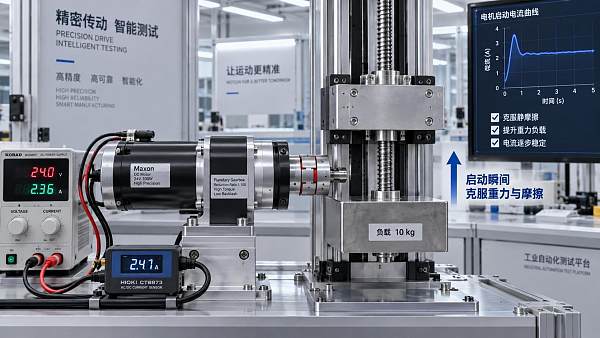
 Sep 15, 2026How to size DC gear motors for the required starting torqueGear motors DC sizing made practical: calculate starting torque, account for friction, gravity, inertia and voltage drop, then select a reliable motor with confidence.
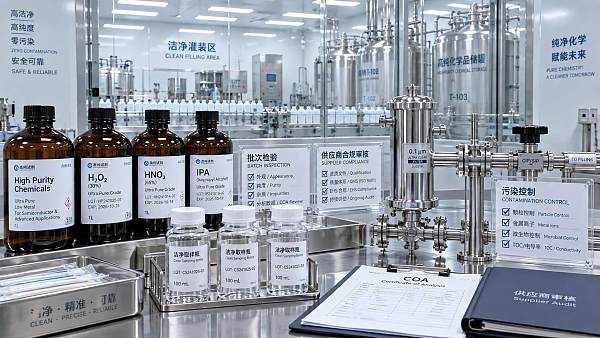
 Sep 14, 2026How to verify high purity chemicals compliance before supplier approvalHigh purity chemicals compliance: learn how to verify supplier quality systems, CoAs, traceability, testing, and change control before approval.
 Sep 13, 2026What permits are needed to operate mapping drones in Europe?Mapping drones Europe: discover the permits, EASA categories, airspace approvals, site access, and GDPR checks needed for compliant aerial surveys.
 Sep 12, 2026What lead time should I expect for automatic transmission components? Planetary Gearboxes delivery forecasting for OEM planningWhat lead time should I expect for automatic transmission components? Get dynamic, AI-powered planetary gearbox delivery forecasting—designed for OEMs building next-gen hybrid & commercial powertrains.
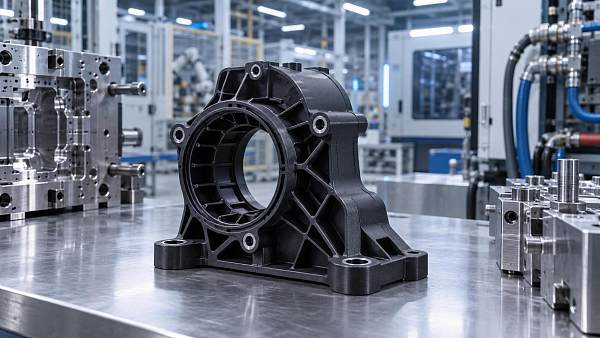
 Sep 12, 2026Can polyamide replace metal in load-bearing components? Polymer Pulse structural performance data for 2026 applicationsCan polyamide replace metal in load-bearing components? Discover Polymer Pulse’s 2026 structural data—real-world performance, weight savings, and reliability breakthroughs.
 Sep 12, 2026How to handle a power electronics warranty claim: Harmonic Reducers documentation and escalation pathHow do I handle a power electronics warranty claim? Get a fast, intelligent, evidence-driven resolution for harmonic reducers—no bureaucracy, just precision diagnostics and real-time escalation.
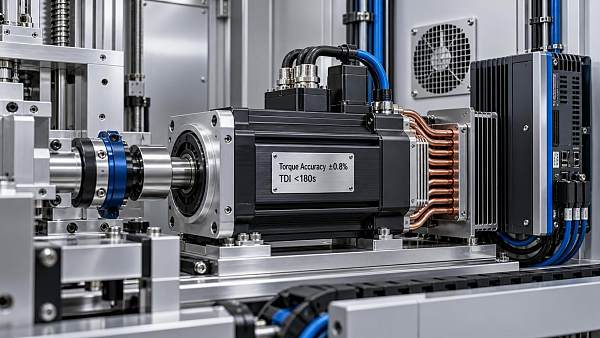
 Sep 12, 2026Which motion control specifications matter most before purchase? Torque Logic selection criteria for automation engineersWhich motion control specifications are most important before purchase? Discover Torque Logic—the 4 non-negotiable, AI-aligned criteria that cut TCO by 27–41% and boost motion system availability to 99.992%.
 Sep 13, 2026Is agentic AI reliable enough for supplier screening? Supply Chain LLM validation framework for procurement teamsIs agentic AI reliable enough for supplier screening? Discover a rigorous LLM validation framework built for procurement teams—grounded in material traceability, regulatory compliance, and real-world operational constraints.
 Sep 14, 2026How to maintain edge AI systems after deployment: Predictive Maint AI operational protocols for field techniciansHow do I maintain edge AI systems after deployment? Discover predictive, physics-aware operational protocols designed for real-world field technicians—sustaining intelligence where silicon meets steel.
 Sep 15, 2026What compliance documents must a bioplastics supplier provide? Bio-Plastics regulatory checklist for procurementWhat compliance documents should a bioplastics supplier provide? Get our actionable regulatory checklist for food, medical & EU-bound applications.
 Sep 16, 2026How to prevent PET film defects during production: Barrier Films process control best practicesHow can I prevent PET film defects during production? Discover physics-driven barrier film process control—thermal precision, dynamic tension management & surface energy optimization.
 Sep 17, 2026Are thermoplastics suitable for long-term outdoor use? Engineering Resins durability assessment in 2026 UV/weather exposureAre thermoplastics suitable for long-term outdoor use? Discover 2026’s engineering resin durability insights — UV/weather resistance ranked, tested & actionable.
 Sep 18, 2026What to do when a servo motor fails during production: A Servo Actuators troubleshooting guide for maintenance teamsWhat should I do if a servo motor fails during production? Get a field-tested, AI-aware troubleshooting guide for maintenance teams—minimize downtime, maximize OEE.
 Sep 12, 2026How to compare wholesale party supplies by minimum order valueCompare wholesale party supplies by minimum order value, freight, SKU flexibility, and stock risk to choose suppliers that protect margins and simplify replenishment.
 Sep 11, 2026How proportional solenoid linearity affects precision motion controlProportional solenoid linearity directly affects precision motion control, valve metering, stability, and calibration. Learn how to evaluate performance for reliable automation.
 Sep 10, 2026When does supplier information platform automation reduce onboarding delays?Supplier information platform automation reduces onboarding delays by streamlining data collection, routing, renewals, and compliance checks—without replacing expert technical review.
 Sep 09, 2026How to size robotic motion systems for AMR payload changesRobotic motion systems for AMR payload changes: learn how to size motors, wheels, gearing, traction, and controls for safer, reliable performance.
 Sep 08, 2026How to perform a cylinder rod buckling calculation for long strokesCylinder rod buckling calculation made practical: learn how to assess effective length, end conditions, rod stiffness, load forces, and safety margins for reliable long-stroke cylinder design.
 Sep 07, 2026How to estimate the cost of industrial mechanical components before orderingIndustrial mechanical components cost: learn how to estimate material, machining, tooling, inspection, logistics, and hidden expenses before ordering. Compare quotes confidently and reduce sourcing risk.
 Sep 07, 2026What Is a Product Standards Database Used For?Product standards database guide: learn how to compare requirements, verify revisions, control specifications, and reduce compliance risks across design, sourcing, and production.