Search News
Industry Portal
Popular Tags
Energy-Saving Hydraulic Technology Trends to Watch in 2026

Author
Time
Click Count
As manufacturers face rising energy costs, tighter sustainability targets, and accelerating digital transformation, energy-saving hydraulic technology trends are becoming a strategic priority for enterprise leaders. In 2026, the most important shift is not a single component upgrade, but a move toward integrated hydraulic systems that combine smarter controls, lower-loss architectures, advanced materials, and predictive intelligence. For decision-makers, the real question is which trends can deliver measurable efficiency, acceptable payback, and scalable operational resilience.
Enterprise buyers searching for energy-saving hydraulic technology trends usually want practical guidance, not broad theory. They need to know which technologies are mature enough for investment, where the business case is strongest, and how to avoid overpaying for features that do not translate into real plant performance. They are also concerned with retrofit feasibility, maintenance implications, and the impact on uptime, compliance, and total cost of ownership.
That means the most useful 2026 outlook should focus on decision criteria. Which hydraulic innovations reduce energy consumption under variable loads? Which ones improve controllability and machine availability at the same time? Which digital functions support procurement, ESG reporting, and long-term asset planning? The trends below are the ones most likely to influence capital allocation and industrial competitiveness in the next planning cycle.
Which energy-saving hydraulic technology trends matter most in 2026?

For most industrial operators, the leading energy-saving hydraulic technology trends in 2026 fall into five high-value categories: variable-speed drive hydraulics, electro-hydraulic smart control, low-leakage and low-friction component design, condition-based optimization, and system-level electrification hybrids. These trends stand out because they affect both energy use and operational performance.
Traditional hydraulic systems often waste energy through throttling losses, constant-speed pump operation, unnecessary pressure maintenance, heat generation, and oversized components. In many factories, these losses have been tolerated because hydraulics remain unmatched in power density and durability. In 2026, that tolerance is shrinking as energy pricing volatility and carbon accountability become board-level concerns.
What makes current trends different is the increasing ability to capture efficiency gains without sacrificing the strengths that make hydraulics valuable. New designs are not simply about using less power. They also improve motion precision, reduce thermal stress, lower maintenance frequency, and generate better operating data. For enterprise leaders, this turns hydraulics from a utility cost center into a strategic optimization opportunity.
The market is also moving away from isolated product upgrades toward architecture-level redesign. A more efficient pump alone may help, but the biggest gains usually come from matching the power source, fluid path, controls, actuator behavior, and data layer to the actual duty cycle. This broader perspective is where the strongest return on investment is now being found.
Why variable-speed pump systems are becoming the new baseline
Among all energy-saving hydraulic technology trends, variable-speed pump systems are the most widely applicable and commercially proven. Instead of running pumps continuously at fixed speed and dissipating excess energy through valves, these systems adjust motor speed to match real-time demand. The result is lower power consumption, reduced heat generation, and often quieter operation.
For executive teams, the appeal is straightforward. Variable-speed systems often deliver energy savings in applications with fluctuating loads, intermittent motion, or partial-cycle operation. Presses, injection molding platforms, machine tools, lifting systems, and automated handling equipment are common use cases where demand is rarely constant. In those environments, fixed-speed architectures can be structurally inefficient.
The business value extends beyond the electricity bill. Lower thermal loading can reduce cooling requirements and extend fluid life. That can translate into fewer maintenance interventions and less unplanned downtime. In facilities where heat management is already a bottleneck, this operational side effect may be almost as valuable as direct energy reduction.
Decision-makers should still assess duty cycle carefully. Variable-speed hydraulics do not produce identical returns in every application. Systems with steady, near-continuous high-load demand may see a more modest benefit. The most reliable way to judge fit is through load-profile analysis, not vendor claims. Plants that instrument current consumption, pressure behavior, and cycle timing are better positioned to estimate realistic savings.
How smart electro-hydraulic controls are changing efficiency economics
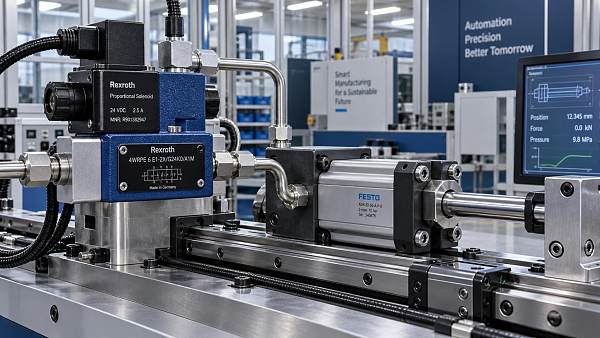
In 2026, energy efficiency increasingly depends on control intelligence as much as on hardware. Electro-hydraulic systems with advanced sensors, proportional control, and software-based optimization can reduce wasted motion, avoid unnecessary pressure buildup, and maintain more precise performance under changing conditions. This is especially important in complex lines where quality, speed, and repeatability are tightly linked.
For business leaders, smarter controls matter because they improve the economics of efficiency. A machine that only saves energy during ideal cycles offers limited value. A machine that adapts to product variation, operator behavior, and environmental conditions while keeping output stable creates a stronger financial case. Control systems are now the layer that turns hydraulic efficiency from a static design feature into a dynamic operating capability.
Digital control also supports enterprise-level reporting. More companies now need traceable data on energy intensity, machine utilization, and process deviations. Smart hydraulic platforms can provide more granular visibility into where energy is being used and why. That supports better decisions in maintenance, procurement, production planning, and sustainability disclosure.
However, organizations should avoid assuming that more software automatically means better outcomes. The real differentiator is whether the control strategy aligns with the process. Decision-makers should ask if the system can optimize pressure only when needed, manage standby modes intelligently, and integrate with existing manufacturing execution or asset monitoring infrastructure. Functional fit matters more than feature volume.
Why component efficiency and material innovation still deserve attention
Although software and system architecture receive more attention, component-level advances remain a significant part of energy-saving hydraulic technology trends. Improved sealing, tighter tolerances, lower internal leakage, surface engineering, and better tribological materials all contribute to lower energy loss. These gains may seem incremental, but across large installed fleets they can be substantial.
Advanced materials are particularly relevant in applications exposed to high pressure, aggressive duty cycles, or demanding thermal environments. Better wear resistance and reduced friction can preserve efficiency over longer operating periods, not just during the first months after installation. For enterprise asset owners, durability-adjusted efficiency is more important than headline efficiency under lab conditions.
This is where procurement teams should be careful. Low-cost components may appear competitive on purchase price but erode lifecycle performance through leakage, faster wear, unstable control response, or higher contamination sensitivity. In large operations, these hidden costs often exceed the original savings. The smarter purchasing approach is to evaluate component reliability, maintainability, and energy retention over service life.
Material innovation also connects to fluid compatibility and sustainability. As operators explore biodegradable fluids, fire-resistant fluids, or lower-viscosity formulations for efficiency reasons, component selection becomes more critical. A system designed around the wrong material pairings can lose efficiency and reliability quickly. By 2026, leading buyers will treat materials engineering as part of hydraulic strategy, not just as a supplier detail.
How predictive analytics and condition-based optimization reduce waste
Another major trend is the shift from reactive maintenance toward predictive and condition-based optimization. In hydraulic systems, energy waste often rises gradually through pump wear, valve drift, contamination, aeration, fluid degradation, or thermal imbalance. These issues may not trigger immediate failure, but they steadily reduce efficiency and increase operating cost.
Modern monitoring platforms can detect those changes earlier through pressure patterns, flow anomalies, temperature behavior, vibration, and power signatures. For decision-makers, this matters because preserving efficiency is often easier than restoring it after damage accumulates. Predictive insight can reduce both wasted energy and catastrophic downtime.
This trend is especially valuable for multi-site manufacturers that manage a broad asset base. Standardized condition monitoring allows maintenance teams to compare machine behavior across plants, identify underperforming equipment, and prioritize interventions based on business impact. It also supports capital planning by revealing which legacy systems are still economically viable and which are becoming structural inefficiencies.
The key caution is implementation discipline. Analytics only create value if data quality is reliable and response workflows are clear. Many organizations collect more machine data than they can act on. The better approach is to focus on a limited set of hydraulic indicators tied directly to energy loss, uptime, and product quality. A narrow, actionable monitoring strategy usually outperforms a broad but unfocused dashboard program.
Where hybrid hydraulic architectures make the most business sense
Not every efficiency decision is a choice between conventional hydraulics and full electrification. One of the more pragmatic energy-saving hydraulic technology trends for 2026 is the rise of hybrid architectures. These systems combine hydraulic power where high force density is essential with electric actuation or localized control where precision and energy responsiveness are more valuable.
For enterprise leaders, hybridization is attractive because it avoids false trade-offs. In many industrial processes, hydraulics remain the best option for force-intensive tasks, shock resistance, and compact power delivery. But integrating electric subsystems, accumulators, or decentralized power units can reduce idle losses and improve controllability. The result is often a more efficient and more flexible machine platform.
Hybrid designs are particularly relevant in applications with uneven load patterns, frequent starts and stops, or modular automation cells. They can also help companies modernize brownfield assets without complete process redesign. In capital-constrained environments, that makes hybrids a useful bridge strategy between legacy hydraulics and future-ready intelligent systems.
Still, hybrid systems should be evaluated carefully for integration complexity. More interfaces can mean more commissioning effort, more training requirements, and new maintenance dependencies. The strongest business cases usually appear where the process clearly separates high-force tasks from precision or standby tasks, allowing each technology to do what it does best.
What enterprise buyers should ask before investing
For decision-makers, the best response to energy-saving hydraulic technology trends is not to chase every innovation. It is to build a structured evaluation model. The first question should be where energy is actually being lost today: constant-speed pumping, excess pressure margins, leakage, thermal inefficiency, poor controls, outdated components, or maintenance-related degradation. Without that baseline, investment decisions are likely to be generic and suboptimal.
The second question is how efficiency affects business outcomes beyond utilities. In many cases, the most valuable benefit is not raw energy reduction but improved cycle stability, lower cooling load, less fluid replacement, extended component life, or fewer unplanned shutdowns. These adjacent gains can significantly shorten payback periods. A narrow focus on electricity alone may understate the true value of modernization.
Third, buyers should separate retrofit opportunities from new-build opportunities. Some technologies, such as digital monitoring or certain variable-speed upgrades, may be realistic for existing assets. Others are better suited to full machine redesign. A clear segmentation of the installed base helps organizations allocate capital more intelligently and avoid forcing advanced solutions into poor-fit legacy configurations.
Fourth, supplier evaluation should include data credibility. Buyers should ask for application-specific case evidence, measurement methodology, expected maintenance implications, and integration requirements. Claims about percentage energy savings are only meaningful if they are tied to similar duty cycles and production contexts. The right partner will discuss trade-offs openly rather than selling a universal answer.
How to turn 2026 trends into a practical roadmap
The most effective roadmap starts with asset classification. Group hydraulic systems by energy intensity, criticality, age, and controllability. This allows leadership teams to identify where efficiency improvements will have the greatest economic impact. High-energy, high-utilization, variable-load assets usually deserve attention first because they offer the clearest path to measurable returns.
Next, run targeted diagnostics on a limited set of representative machines. Measure power draw, pressure behavior, thermal load, cycle consistency, and maintenance history. This creates the fact base needed to compare options such as variable-speed drives, smart control retrofits, component upgrades, or predictive monitoring. It also improves internal alignment between operations, maintenance, finance, and procurement.
Then build the investment case using lifecycle thinking. Include direct energy savings, reduced cooling demand, lower consumables usage, maintenance effects, uptime improvements, and expected service life. For large manufacturers, scenario modeling is useful because it shows how returns shift under different production schedules, energy prices, and utilization assumptions. This approach supports more resilient capital decisions.
Finally, treat hydraulic modernization as part of a wider digital and sustainability strategy. The strongest returns often come when efficient hydraulics are linked to operational visibility, benchmarking, and standardized governance. Companies that combine physical efficiency with better data discipline will be in a stronger position to manage cost volatility, compliance pressure, and competitive performance in 2026 and beyond.
Conclusion: the winning trend is system intelligence with measurable business value
For enterprise decision-makers, the biggest takeaway is that energy-saving hydraulic technology trends in 2026 are not about replacing hydraulics as a category. They are about making hydraulic power more adaptive, data-aware, and economically efficient. Variable-speed drives, smarter electro-hydraulic controls, better materials, predictive optimization, and hybrid architectures are the most important directions to watch.
But not all trends deserve equal investment in every operation. The right priority depends on load profile, installed asset condition, production criticality, and digital readiness. Leaders who ground decisions in actual operating data will outperform those who rely on generic efficiency promises. In practice, the best projects are the ones that reduce energy waste while also improving uptime, controllability, and lifecycle resilience.
In other words, the most strategic hydraulic trend for 2026 is integration. Companies that align hardware, controls, materials, and analytics around real production needs will capture more than utility savings. They will strengthen operational agility, procurement intelligence, and long-term industrial competitiveness.
Recommended News
 Sep 19, 2026When can a supply chain LLM reduce time spent finding shipment updates?Supply chain LLMs can cut shipment-update search time by connecting carrier events, ERP data, and documents—giving teams traceable answers and faster exception response.
 Sep 18, 2026How industrial monitoring equipment helps prevent unplanned downtimeIndustrial monitoring equipment helps teams detect early asset issues, prioritize maintenance, and prevent costly unplanned downtime. Explore practical strategies for reliable operations.
 Sep 17, 2026What next-gen harmonic drive research means for robot joint accuracyNext-gen harmonic drive research reveals how backlash, stiffness, thermal drift, and sensing shape robot joint accuracy. Explore smarter validation strategies.
 Sep 16, 2026How Southeast Asian climates affect cylinder seal frictionCylinder seal friction Southeast Asia: learn how humidity, heat, monsoons, and contamination affect motion stability, wear, and seal selection.
 Sep 15, 2026How to size DC gear motors for the required starting torqueGear motors DC sizing made practical: calculate starting torque, account for friction, gravity, inertia and voltage drop, then select a reliable motor with confidence.
 Sep 14, 2026How to verify high purity chemicals compliance before supplier approvalHigh purity chemicals compliance: learn how to verify supplier quality systems, CoAs, traceability, testing, and change control before approval.
 Sep 13, 2026What permits are needed to operate mapping drones in Europe?Mapping drones Europe: discover the permits, EASA categories, airspace approvals, site access, and GDPR checks needed for compliant aerial surveys.
 Sep 12, 2026What lead time should I expect for automatic transmission components? Planetary Gearboxes delivery forecasting for OEM planningWhat lead time should I expect for automatic transmission components? Get dynamic, AI-powered planetary gearbox delivery forecasting—designed for OEMs building next-gen hybrid & commercial powertrains.
 Sep 12, 2026Can polyamide replace metal in load-bearing components? Polymer Pulse structural performance data for 2026 applicationsCan polyamide replace metal in load-bearing components? Discover Polymer Pulse’s 2026 structural data—real-world performance, weight savings, and reliability breakthroughs.
 Sep 12, 2026How to handle a power electronics warranty claim: Harmonic Reducers documentation and escalation pathHow do I handle a power electronics warranty claim? Get a fast, intelligent, evidence-driven resolution for harmonic reducers—no bureaucracy, just precision diagnostics and real-time escalation.
 Sep 12, 2026Which motion control specifications matter most before purchase? Torque Logic selection criteria for automation engineersWhich motion control specifications are most important before purchase? Discover Torque Logic—the 4 non-negotiable, AI-aligned criteria that cut TCO by 27–41% and boost motion system availability to 99.992%.
 Sep 13, 2026Is agentic AI reliable enough for supplier screening? Supply Chain LLM validation framework for procurement teamsIs agentic AI reliable enough for supplier screening? Discover a rigorous LLM validation framework built for procurement teams—grounded in material traceability, regulatory compliance, and real-world operational constraints.
 Sep 14, 2026How to maintain edge AI systems after deployment: Predictive Maint AI operational protocols for field techniciansHow do I maintain edge AI systems after deployment? Discover predictive, physics-aware operational protocols designed for real-world field technicians—sustaining intelligence where silicon meets steel.
 Sep 15, 2026What compliance documents must a bioplastics supplier provide? Bio-Plastics regulatory checklist for procurementWhat compliance documents should a bioplastics supplier provide? Get our actionable regulatory checklist for food, medical & EU-bound applications.
 Sep 16, 2026How to prevent PET film defects during production: Barrier Films process control best practicesHow can I prevent PET film defects during production? Discover physics-driven barrier film process control—thermal precision, dynamic tension management & surface energy optimization.
 Sep 17, 2026Are thermoplastics suitable for long-term outdoor use? Engineering Resins durability assessment in 2026 UV/weather exposureAre thermoplastics suitable for long-term outdoor use? Discover 2026’s engineering resin durability insights — UV/weather resistance ranked, tested & actionable.
 Sep 18, 2026What to do when a servo motor fails during production: A Servo Actuators troubleshooting guide for maintenance teamsWhat should I do if a servo motor fails during production? Get a field-tested, AI-aware troubleshooting guide for maintenance teams—minimize downtime, maximize OEE.
 Sep 12, 2026How to compare wholesale party supplies by minimum order valueCompare wholesale party supplies by minimum order value, freight, SKU flexibility, and stock risk to choose suppliers that protect margins and simplify replenishment.
 Sep 11, 2026How proportional solenoid linearity affects precision motion controlProportional solenoid linearity directly affects precision motion control, valve metering, stability, and calibration. Learn how to evaluate performance for reliable automation.
 Sep 10, 2026When does supplier information platform automation reduce onboarding delays?Supplier information platform automation reduces onboarding delays by streamlining data collection, routing, renewals, and compliance checks—without replacing expert technical review.
 Sep 09, 2026How to size robotic motion systems for AMR payload changesRobotic motion systems for AMR payload changes: learn how to size motors, wheels, gearing, traction, and controls for safer, reliable performance.
 Sep 08, 2026How to perform a cylinder rod buckling calculation for long strokesCylinder rod buckling calculation made practical: learn how to assess effective length, end conditions, rod stiffness, load forces, and safety margins for reliable long-stroke cylinder design.
 Sep 07, 2026How to estimate the cost of industrial mechanical components before orderingIndustrial mechanical components cost: learn how to estimate material, machining, tooling, inspection, logistics, and hidden expenses before ordering. Compare quotes confidently and reduce sourcing risk.
 Sep 07, 2026What Is a Product Standards Database Used For?Product standards database guide: learn how to compare requirements, verify revisions, control specifications, and reduce compliance risks across design, sourcing, and production.