Search News
Industry Portal
Popular Tags
Seamless Activewear Manufacturer: What Affects Product Quality
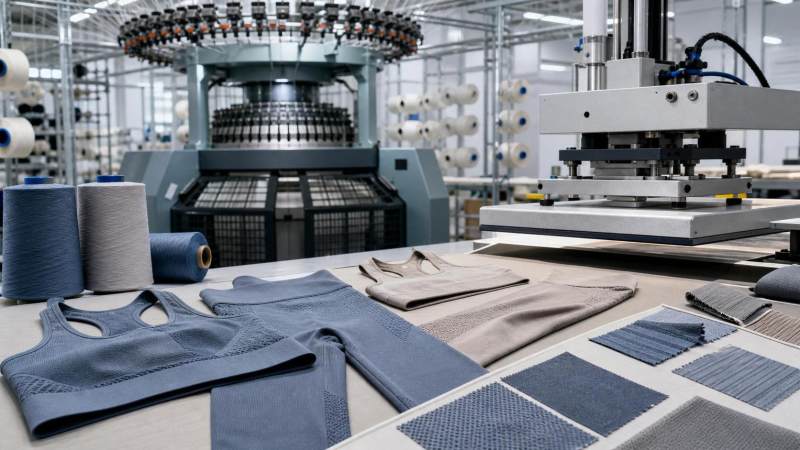
Author
Time
Click Count
Choosing a seamless activewear manufacturer goes far beyond comparing unit cost or lead time. It shapes how reliably garments perform, how safely they are produced, and how consistently each batch meets market expectations. In a category built on stretch, skin contact, and repeated motion, product quality depends on material science, process control, and inspection discipline working together.
That is why this topic has become more relevant across the broader industrial landscape. As G-AIE continues to benchmark the intersection of advanced materials and intelligent automation, seamless apparel stands out as a practical case where physical performance and digital control must align. A capable seamless activewear manufacturer is not only a supplier of garments, but also a manager of risk across fibers, machinery, bonding, finishing, and compliance.
Why quality in seamless activewear is different
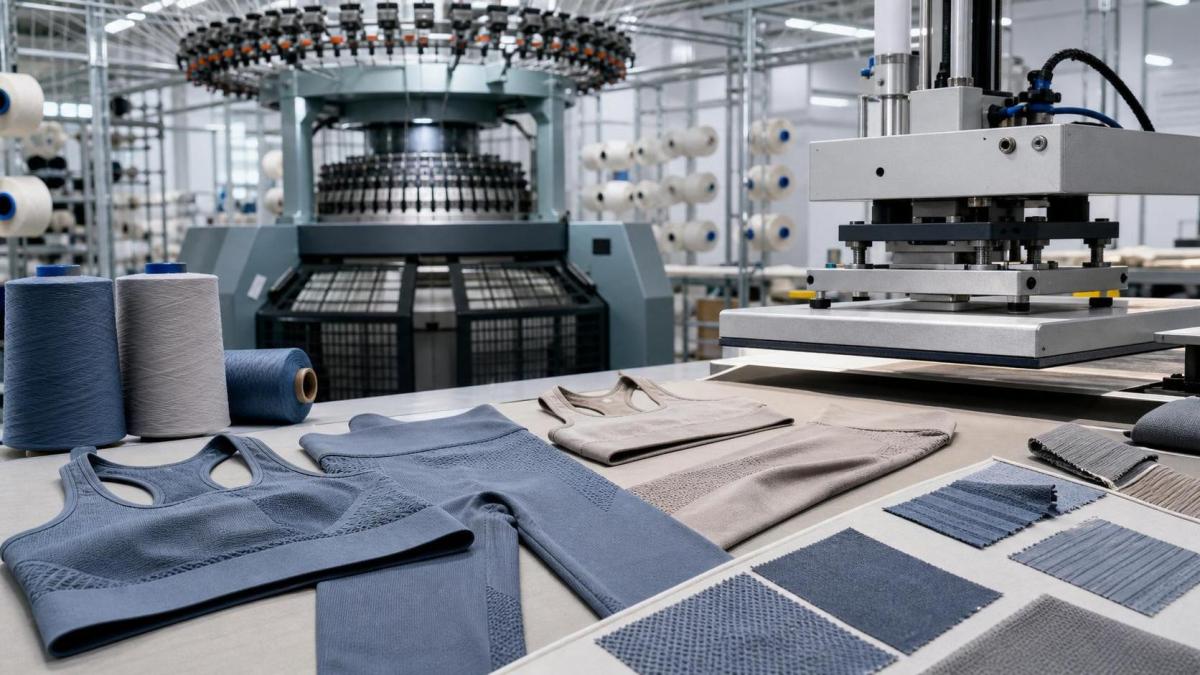
Seamless activewear is made with fewer stitched joins than conventional sportswear. The construction relies heavily on circular knitting, engineered zones, heat bonding, and controlled finishing. That changes the quality equation.
In ordinary cut-and-sew garments, defects often appear at seams or panel assembly points. In seamless products, failures may emerge in fabric recovery, pressure mapping, bonding edges, or uneven yarn behavior during wear.
This means a seamless activewear manufacturer must control both visible appearance and hidden structural behavior. A garment can look clean on the table and still fail after laundering, stretching, or extended contact with sweat and friction.
The material system sets the baseline
Quality starts with the yarn package. Nylon, polyester, elastane, recycled blends, and performance finishes all respond differently under tension, heat, and moisture. Small differences at input level can create large differences in final output.
For a seamless activewear manufacturer, the key issue is not simply fiber selection. It is the compatibility between yarn properties and machine settings. Recovery rate, denier variation, dye uptake, and filament uniformity influence how the garment behaves during knitting and post-treatment.
Breathability zones, compression panels, and body-mapped support rely on precise yarn performance. If elasticity varies too much, support zones may shift. If surface friction is inconsistent, the garment may pill early or irritate skin.
Material factors that affect performance
- Elastane stability under repeated extension and heat exposure
- Yarn lot consistency across color, tensile response, and moisture management
- Chemical finish durability after washing and perspiration contact
- Blend behavior in compression, softness, and odor control applications
When these factors are not aligned, inspection issues may appear later as customer complaints rather than factory defects. That delay makes early material validation especially important.
Knitting precision and machine condition matter more than expected
A seamless activewear manufacturer depends on advanced knitting equipment to create structure directly in the tube or body form. Machine gauge, needle condition, feeder accuracy, and program calibration all affect uniformity.
Even minor drift can create barre, density variation, distorted zones, or uneven stretch recovery. These issues may pass visual checks but become obvious during fit testing or extended use.
Machine maintenance is therefore a quality topic, not only an engineering topic. Preventive servicing, replacement cycles for wear parts, and calibration records help reduce variability between production runs.
In facilities using intelligent automation, sensor data can improve this control. Tension monitoring, pattern traceability, and real-time machine diagnostics support faster detection of hidden process drift. This is one area where the G-AIE perspective on digital intelligence directly connects to apparel manufacturing outcomes.
Bonding, finishing, and heat control define durability
Many seamless garments still include bonded hems, gussets, inserts, pads, or logos. These secondary operations often decide whether the product keeps its shape after real use.
A seamless activewear manufacturer may produce an excellent knitted body, yet lose quality at the bonding stage. Temperature, dwell time, adhesive chemistry, pressure uniformity, and cooling conditions all influence final adhesion.
Overheating can damage elastane and create brittle edges. Underheating may cause delamination after washing. Excessive pressure can mark the surface or reduce stretch where flexibility is needed most.
Dyeing and finishing introduce another layer of risk. Shade consistency, dimensional stability, hand feel, and residual chemical control must stay within target without degrading function.
Typical failure points after finishing
Quality consistency depends on process stability
One strong sample does not prove dependable manufacturing. What matters is whether the same specification can be repeated across colorways, seasons, and scale-up orders.
That is where process capability becomes more important than showroom presentation. A reliable seamless activewear manufacturer should demonstrate stable SOPs, change control, in-line testing, and traceable batch records.
Consistency is often challenged when production shifts between yarn lots, machine sets, or subcontracted finishing partners. Each handoff introduces variation unless controls are clearly defined and audited.
From a safety and compliance angle, process stability also reduces the risk of uncontrolled chemicals, labeling errors, and unauthorized substitutions. In global distribution, those risks can quickly become regulatory issues.
Signals of stronger manufacturing control
- Documented incoming material inspection with lot traceability
- In-process checks for weight, stretch, recovery, and appearance
- Wash, abrasion, and bonding validation before bulk approval
- Clear containment steps for nonconforming batches
- Controlled subcontracting for dyeing, printing, or finishing
Compliance is part of product quality, not a separate box
In activewear, quality is closely tied to user safety and regulatory fitness. Garments sit close to the skin, absorb sweat, and often contain finishes, adhesives, dyes, and trims that require control.
A seamless activewear manufacturer should be assessed on restricted substance management, colorfastness, fiber content accuracy, flammability relevance, and labeling consistency where applicable.
The practical question is simple: can the factory show evidence that compliance controls are embedded in development and production, rather than added only when customers request documents?
This approach aligns with the G-AIE view that resilient industrial performance comes from integrating physical output with measurable data. In apparel terms, compliance records, lab reports, and digital traceability support better quality decisions.
How to evaluate a seamless activewear manufacturer in real business conditions
Evaluation becomes more accurate when it moves beyond catalog claims. Factory capability should be judged under the conditions that usually expose weakness: repeated runs, complex structures, demanding finishes, and post-wash verification.
It helps to compare suppliers on a short list of evidence-based questions rather than broad promises. The goal is not to find the cheapest sample, but the most controlled route to repeatable quality.
Useful checkpoints during assessment
- Review fabric and yarn specifications together with actual test methods
- Check whether bonding parameters are standardized and recorded
- Ask for evidence of wash durability, recovery retention, and pilling resistance
- Examine how color consistency is maintained across bulk lots
- Confirm traceability from raw material intake to packed shipment
- Verify that corrective action closes the loop after any defect trend
These checkpoints are especially useful when comparing suppliers that appear similar on the surface. The real difference often sits in process discipline, data visibility, and response speed when something drifts out of tolerance.
Where the next decisions should focus
The strongest next step is to build a quality framework around actual product risk. Start with the intended use of the garment, then map the most sensitive variables: stretch retention, skin safety, bonding life, color stability, and fit repeatability.
From there, compare each seamless activewear manufacturer against the same technical and operational criteria. A structured scorecard usually reveals more than a polished presentation or an attractive sample board.
In practice, better decisions come from linking material data, machine control, finishing validation, and compliance evidence into one view. That is the point where product quality becomes more predictable and supply risk becomes easier to manage.
For any organization reviewing suppliers in this space, the most useful path forward is to test assumptions early, request proof instead of claims, and evaluate each seamless activewear manufacturer by repeatable performance rather than isolated results.
Recommended News
 Sep 19, 2026When can a supply chain LLM reduce time spent finding shipment updates?Supply chain LLMs can cut shipment-update search time by connecting carrier events, ERP data, and documents—giving teams traceable answers and faster exception response.
 Sep 18, 2026How industrial monitoring equipment helps prevent unplanned downtimeIndustrial monitoring equipment helps teams detect early asset issues, prioritize maintenance, and prevent costly unplanned downtime. Explore practical strategies for reliable operations.
 Sep 17, 2026What next-gen harmonic drive research means for robot joint accuracyNext-gen harmonic drive research reveals how backlash, stiffness, thermal drift, and sensing shape robot joint accuracy. Explore smarter validation strategies.
 Sep 16, 2026How Southeast Asian climates affect cylinder seal frictionCylinder seal friction Southeast Asia: learn how humidity, heat, monsoons, and contamination affect motion stability, wear, and seal selection.
 Sep 15, 2026How to size DC gear motors for the required starting torqueGear motors DC sizing made practical: calculate starting torque, account for friction, gravity, inertia and voltage drop, then select a reliable motor with confidence.
 Sep 14, 2026How to verify high purity chemicals compliance before supplier approvalHigh purity chemicals compliance: learn how to verify supplier quality systems, CoAs, traceability, testing, and change control before approval.
 Sep 13, 2026What permits are needed to operate mapping drones in Europe?Mapping drones Europe: discover the permits, EASA categories, airspace approvals, site access, and GDPR checks needed for compliant aerial surveys.
 Sep 12, 2026What lead time should I expect for automatic transmission components? Planetary Gearboxes delivery forecasting for OEM planningWhat lead time should I expect for automatic transmission components? Get dynamic, AI-powered planetary gearbox delivery forecasting—designed for OEMs building next-gen hybrid & commercial powertrains.
 Sep 12, 2026Can polyamide replace metal in load-bearing components? Polymer Pulse structural performance data for 2026 applicationsCan polyamide replace metal in load-bearing components? Discover Polymer Pulse’s 2026 structural data—real-world performance, weight savings, and reliability breakthroughs.
 Sep 12, 2026How to handle a power electronics warranty claim: Harmonic Reducers documentation and escalation pathHow do I handle a power electronics warranty claim? Get a fast, intelligent, evidence-driven resolution for harmonic reducers—no bureaucracy, just precision diagnostics and real-time escalation.
 Sep 12, 2026Which motion control specifications matter most before purchase? Torque Logic selection criteria for automation engineersWhich motion control specifications are most important before purchase? Discover Torque Logic—the 4 non-negotiable, AI-aligned criteria that cut TCO by 27–41% and boost motion system availability to 99.992%.
 Sep 13, 2026Is agentic AI reliable enough for supplier screening? Supply Chain LLM validation framework for procurement teamsIs agentic AI reliable enough for supplier screening? Discover a rigorous LLM validation framework built for procurement teams—grounded in material traceability, regulatory compliance, and real-world operational constraints.
 Sep 14, 2026How to maintain edge AI systems after deployment: Predictive Maint AI operational protocols for field techniciansHow do I maintain edge AI systems after deployment? Discover predictive, physics-aware operational protocols designed for real-world field technicians—sustaining intelligence where silicon meets steel.
 Sep 15, 2026What compliance documents must a bioplastics supplier provide? Bio-Plastics regulatory checklist for procurementWhat compliance documents should a bioplastics supplier provide? Get our actionable regulatory checklist for food, medical & EU-bound applications.
 Sep 16, 2026How to prevent PET film defects during production: Barrier Films process control best practicesHow can I prevent PET film defects during production? Discover physics-driven barrier film process control—thermal precision, dynamic tension management & surface energy optimization.
 Sep 17, 2026Are thermoplastics suitable for long-term outdoor use? Engineering Resins durability assessment in 2026 UV/weather exposureAre thermoplastics suitable for long-term outdoor use? Discover 2026’s engineering resin durability insights — UV/weather resistance ranked, tested & actionable.
 Sep 18, 2026What to do when a servo motor fails during production: A Servo Actuators troubleshooting guide for maintenance teamsWhat should I do if a servo motor fails during production? Get a field-tested, AI-aware troubleshooting guide for maintenance teams—minimize downtime, maximize OEE.
 Sep 12, 2026How to compare wholesale party supplies by minimum order valueCompare wholesale party supplies by minimum order value, freight, SKU flexibility, and stock risk to choose suppliers that protect margins and simplify replenishment.
 Sep 11, 2026How proportional solenoid linearity affects precision motion controlProportional solenoid linearity directly affects precision motion control, valve metering, stability, and calibration. Learn how to evaluate performance for reliable automation.
 Sep 10, 2026When does supplier information platform automation reduce onboarding delays?Supplier information platform automation reduces onboarding delays by streamlining data collection, routing, renewals, and compliance checks—without replacing expert technical review.
 Sep 09, 2026How to size robotic motion systems for AMR payload changesRobotic motion systems for AMR payload changes: learn how to size motors, wheels, gearing, traction, and controls for safer, reliable performance.
 Sep 08, 2026How to perform a cylinder rod buckling calculation for long strokesCylinder rod buckling calculation made practical: learn how to assess effective length, end conditions, rod stiffness, load forces, and safety margins for reliable long-stroke cylinder design.
 Sep 07, 2026How to estimate the cost of industrial mechanical components before orderingIndustrial mechanical components cost: learn how to estimate material, machining, tooling, inspection, logistics, and hidden expenses before ordering. Compare quotes confidently and reduce sourcing risk.
 Sep 07, 2026What Is a Product Standards Database Used For?Product standards database guide: learn how to compare requirements, verify revisions, control specifications, and reduce compliance risks across design, sourcing, and production.