Search News
Industry Portal
Popular Tags
Material Science Research Trends Shaping Advanced Polymers in 2026
Author
Time
Click Count
Material science research is setting the pace for advanced polymers in 2026, not only by improving heat resistance, strength, and chemical stability, but also by changing how industrial systems evaluate performance. For companies balancing automation, sustainability, and supply security, polymer innovation is no longer a lab topic. It is becoming a strategic filter for investment, qualification, and long-horizon competitiveness.
That shift matters because advanced polymers now sit at the intersection of digital manufacturing, electrification, lightweight engineering, and circular design. In practical terms, better materials influence machine uptime, product lifespan, energy consumption, certification pathways, and total lifecycle cost. This is why material science research is increasingly linked to technical benchmarking and intelligent decision models across the wider industrial landscape.
Why advanced polymers are getting closer attention in 2026
The market is asking more from polymers than simple substitution for metal or commodity plastics. Components must perform under tighter thermal windows, higher voltages, harsher chemicals, and faster production cycles.
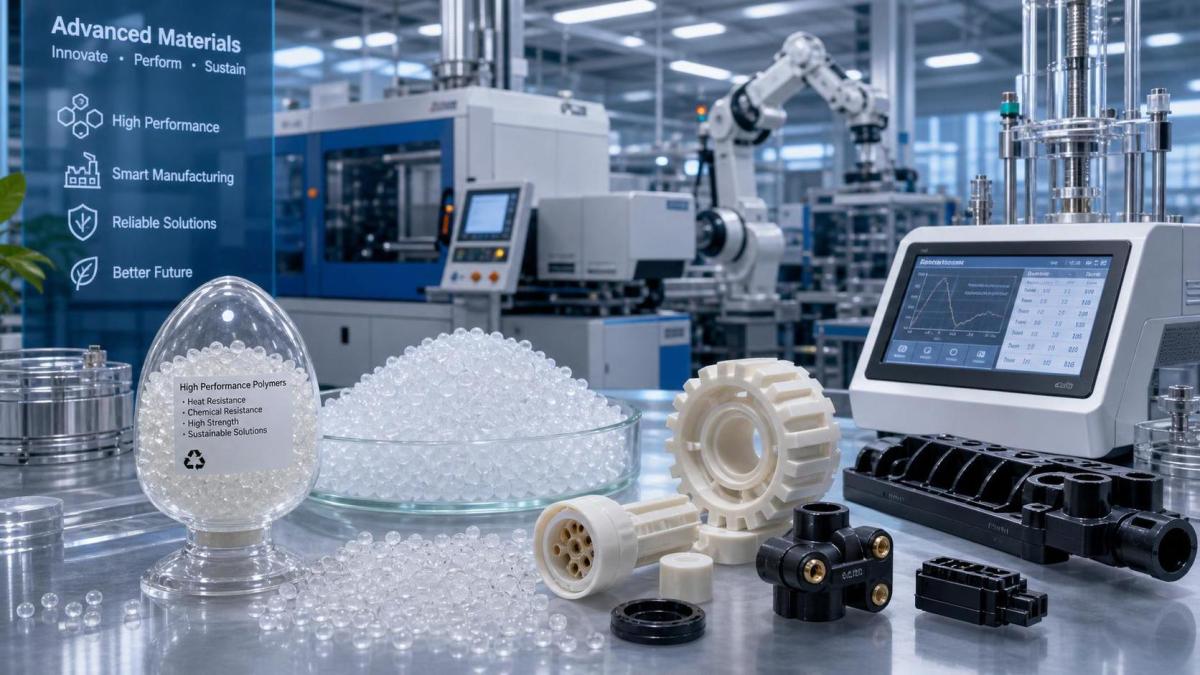
At the same time, reporting expectations are growing. Material choices are now judged against carbon intensity, recyclability, process yield, and traceability across global supply networks.
This is where material science research becomes especially relevant. It helps explain not just what a polymer is, but how formulation, processing, and data-driven validation affect real operating value.
Within ecosystems such as G-AIE, the emphasis is increasingly on connecting physical material performance with intelligent automation. That means a polymer is assessed as part of a system, not as an isolated material specification.
What today’s material science research is really measuring
In 2026, material science research around advanced polymers is moving beyond headline metrics. Tensile strength and temperature resistance still matter, but they are no longer enough on their own.
Researchers and industrial evaluators are focusing on how materials behave across full operating contexts. That includes processability, repeatability, aging, and interaction with connected manufacturing environments.
Core dimensions now shaping polymer evaluation
- Thermal endurance under continuous and cyclical loads.
- Electrical behavior for sensors, battery systems, and miniaturized electronics.
- Barrier performance against moisture, solvents, and aggressive media.
- Compatibility with automated molding, extrusion, and additive workflows.
- Recyclability, reprocessing potential, and material passport traceability.
This broader view reflects a simple reality. A technically impressive polymer can still fail commercially if it introduces unstable yields, long qualification cycles, or supply concentration risk.
The research trends shaping the next generation of polymers
Several material science research trends are standing out because they align with industrial demand rather than theoretical novelty alone. Their importance comes from deployment relevance.
High-performance polymer blends and hybrid architectures
Blending is being used more strategically to balance stiffness, toughness, flame resistance, and manufacturability. Instead of chasing one extreme property, developers are creating more stable performance envelopes.
This is useful in sectors where parts face mixed conditions, such as thermal cycling, vibration, and chemical exposure in one operating environment.
Bio-based and circular feedstock integration
Sustainability is no longer limited to end-of-life claims. Material science research is now testing how renewable or recycled feedstocks affect purity, consistency, and long-term mechanical reliability.
The main question is no longer whether circular polymers are possible. It is whether they can achieve industrial-grade repeatability at scale.
AI-guided formulation and accelerated screening
Vertical AI is changing research speed. Machine learning models can narrow candidate chemistries, predict failure modes, and shorten iteration cycles between lab formulation and pilot validation.
For industrial users, the value is not just faster discovery. It is faster confidence in which material families deserve qualification resources.
Smart polymers for responsive systems
Another emerging direction involves polymers that respond to temperature, stress, light, or electrical input. These materials are gaining attention in sensors, adaptive surfaces, and precision industrial assemblies.
Not every application needs responsiveness, but this research is expanding the functional role of polymers beyond passive structure.
Where the business value becomes visible
The business case for advanced polymers becomes clearer when performance is translated into operational outcomes. Material science research is most useful when it reduces uncertainty in those outcomes.
Seen this way, material science research supports decisions in capital planning, sourcing strategy, product redesign, and risk management. It becomes a business intelligence input, not only a technical function.
Common industrial scenarios for advanced polymer adoption
Advanced polymers are entering more varied environments because they solve different constraints at once. The same material family may serve lightweighting in one sector and electrical insulation in another.
High-value use cases gaining momentum
- Battery housings, connectors, and insulation systems that demand heat control and dielectric integrity.
- Automation equipment components where friction, dimensional stability, and uptime are closely linked.
- Medical and analytical devices requiring purity, sterilization resistance, and precise molding.
- Aerospace and mobility assemblies where mass reduction must not compromise durability.
- Packaging and barrier systems designed around shelf life, compliance, and lower material intensity.
Across these scenarios, the best-performing option is rarely the polymer with the strongest datasheet. It is usually the one with the most balanced system fit.
How to interpret research signals without overcommitting
A common mistake is treating emerging materials as immediate replacements. In practice, advanced polymers should be evaluated through staged evidence, especially when qualification costs are high.
Useful decision filters
- Check whether lab performance holds under real duty cycles and processing variation.
- Compare single-source innovation risk against multi-source maturity.
- Look at total conversion cost, not only raw material pricing.
- Review digital traceability and documentation readiness for regulated markets.
- Assess whether the material supports future automation rather than current processes alone.
This is where platforms like G-AIE add context. Technical benchmarking across materials, process routes, and intelligent automation layers helps separate durable trends from short-lived excitement.
What to watch next
The next phase of material science research will likely focus on faster validation, cleaner feedstocks, and polymers designed for interoperability with digital manufacturing environments.
More attention will also move toward lifecycle intelligence. Materials will increasingly be selected for how well they generate, preserve, and communicate performance data over time.
For organizations reviewing advanced polymers in 2026, the most practical next step is to build a comparison framework that links material properties to process capability, compliance exposure, and long-term sourcing resilience. That approach makes material science research actionable, measurable, and aligned with broader industrial strategy.
Recommended News
 Sep 19, 2026When can a supply chain LLM reduce time spent finding shipment updates?Supply chain LLMs can cut shipment-update search time by connecting carrier events, ERP data, and documents—giving teams traceable answers and faster exception response.
 Sep 18, 2026How industrial monitoring equipment helps prevent unplanned downtimeIndustrial monitoring equipment helps teams detect early asset issues, prioritize maintenance, and prevent costly unplanned downtime. Explore practical strategies for reliable operations.
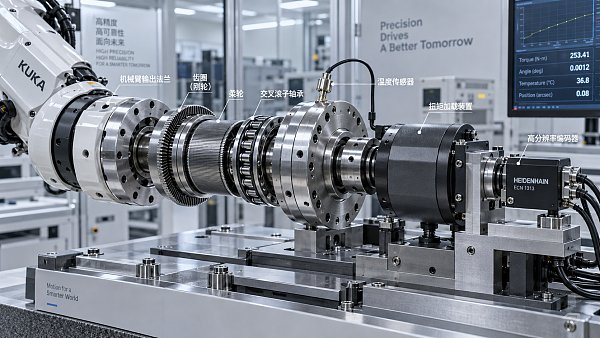
 Sep 17, 2026What next-gen harmonic drive research means for robot joint accuracyNext-gen harmonic drive research reveals how backlash, stiffness, thermal drift, and sensing shape robot joint accuracy. Explore smarter validation strategies.
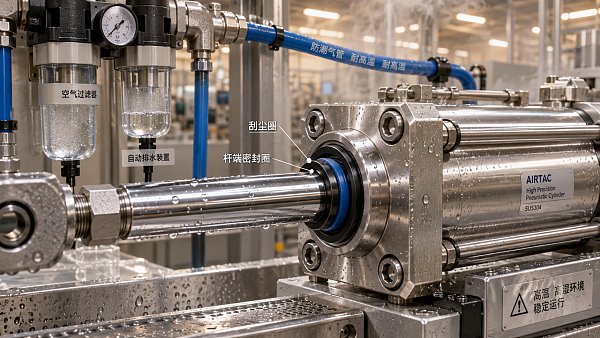
 Sep 16, 2026How Southeast Asian climates affect cylinder seal frictionCylinder seal friction Southeast Asia: learn how humidity, heat, monsoons, and contamination affect motion stability, wear, and seal selection.
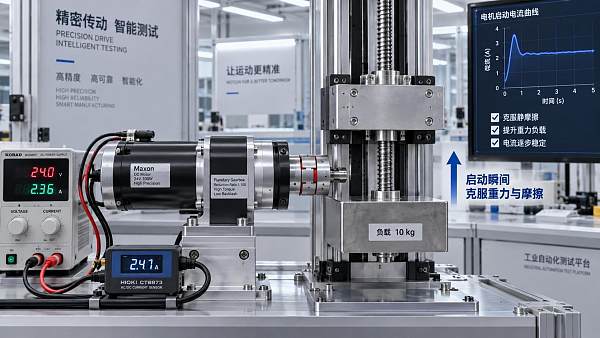
 Sep 15, 2026How to size DC gear motors for the required starting torqueGear motors DC sizing made practical: calculate starting torque, account for friction, gravity, inertia and voltage drop, then select a reliable motor with confidence.
 Sep 14, 2026How to verify high purity chemicals compliance before supplier approvalHigh purity chemicals compliance: learn how to verify supplier quality systems, CoAs, traceability, testing, and change control before approval.
 Sep 13, 2026What permits are needed to operate mapping drones in Europe?Mapping drones Europe: discover the permits, EASA categories, airspace approvals, site access, and GDPR checks needed for compliant aerial surveys.
 Sep 12, 2026What lead time should I expect for automatic transmission components? Planetary Gearboxes delivery forecasting for OEM planningWhat lead time should I expect for automatic transmission components? Get dynamic, AI-powered planetary gearbox delivery forecasting—designed for OEMs building next-gen hybrid & commercial powertrains.
 Sep 12, 2026Can polyamide replace metal in load-bearing components? Polymer Pulse structural performance data for 2026 applicationsCan polyamide replace metal in load-bearing components? Discover Polymer Pulse’s 2026 structural data—real-world performance, weight savings, and reliability breakthroughs.
 Sep 12, 2026How to handle a power electronics warranty claim: Harmonic Reducers documentation and escalation pathHow do I handle a power electronics warranty claim? Get a fast, intelligent, evidence-driven resolution for harmonic reducers—no bureaucracy, just precision diagnostics and real-time escalation.
 Sep 12, 2026Which motion control specifications matter most before purchase? Torque Logic selection criteria for automation engineersWhich motion control specifications are most important before purchase? Discover Torque Logic—the 4 non-negotiable, AI-aligned criteria that cut TCO by 27–41% and boost motion system availability to 99.992%.
 Sep 13, 2026Is agentic AI reliable enough for supplier screening? Supply Chain LLM validation framework for procurement teamsIs agentic AI reliable enough for supplier screening? Discover a rigorous LLM validation framework built for procurement teams—grounded in material traceability, regulatory compliance, and real-world operational constraints.
 Sep 14, 2026How to maintain edge AI systems after deployment: Predictive Maint AI operational protocols for field techniciansHow do I maintain edge AI systems after deployment? Discover predictive, physics-aware operational protocols designed for real-world field technicians—sustaining intelligence where silicon meets steel.
 Sep 15, 2026What compliance documents must a bioplastics supplier provide? Bio-Plastics regulatory checklist for procurementWhat compliance documents should a bioplastics supplier provide? Get our actionable regulatory checklist for food, medical & EU-bound applications.
 Sep 16, 2026How to prevent PET film defects during production: Barrier Films process control best practicesHow can I prevent PET film defects during production? Discover physics-driven barrier film process control—thermal precision, dynamic tension management & surface energy optimization.
 Sep 17, 2026Are thermoplastics suitable for long-term outdoor use? Engineering Resins durability assessment in 2026 UV/weather exposureAre thermoplastics suitable for long-term outdoor use? Discover 2026’s engineering resin durability insights — UV/weather resistance ranked, tested & actionable.
 Sep 18, 2026What to do when a servo motor fails during production: A Servo Actuators troubleshooting guide for maintenance teamsWhat should I do if a servo motor fails during production? Get a field-tested, AI-aware troubleshooting guide for maintenance teams—minimize downtime, maximize OEE.
 Sep 12, 2026How to compare wholesale party supplies by minimum order valueCompare wholesale party supplies by minimum order value, freight, SKU flexibility, and stock risk to choose suppliers that protect margins and simplify replenishment.
 Sep 11, 2026How proportional solenoid linearity affects precision motion controlProportional solenoid linearity directly affects precision motion control, valve metering, stability, and calibration. Learn how to evaluate performance for reliable automation.
 Sep 10, 2026When does supplier information platform automation reduce onboarding delays?Supplier information platform automation reduces onboarding delays by streamlining data collection, routing, renewals, and compliance checks—without replacing expert technical review.
 Sep 09, 2026How to size robotic motion systems for AMR payload changesRobotic motion systems for AMR payload changes: learn how to size motors, wheels, gearing, traction, and controls for safer, reliable performance.
 Sep 08, 2026How to perform a cylinder rod buckling calculation for long strokesCylinder rod buckling calculation made practical: learn how to assess effective length, end conditions, rod stiffness, load forces, and safety margins for reliable long-stroke cylinder design.
 Sep 07, 2026How to estimate the cost of industrial mechanical components before orderingIndustrial mechanical components cost: learn how to estimate material, machining, tooling, inspection, logistics, and hidden expenses before ordering. Compare quotes confidently and reduce sourcing risk.
 Sep 07, 2026What Is a Product Standards Database Used For?Product standards database guide: learn how to compare requirements, verify revisions, control specifications, and reduce compliance risks across design, sourcing, and production.