Search News
Industry Portal
Popular Tags
K-REACH Supply-Strained Substances Registration Exception Launched

Author
Time
Click Count
South Korea’s Ministry of Environment announced on May 24, 2026 the launch of a special registration pathway under K-REACH for ‘supply-strained substances’, granting a six-month registration grace period to exporters of functional barrier films—particularly those relying on fluorinated or siloxane-based monomers. The measure directly addresses recent delays in customs clearance faced by Chinese barrier film manufacturers following the expansion of South Korea’s new chemical substance inventory.
Event Overview
The Korean Ministry of Environment initiated the K-REACH ‘supply-strained chemical substances’ special registration channel on May 24, 2026. Eligibility is limited to imported functional coating materials exceeding 50 metric tons per year—including core monomers used in fluorinated and siloxane-based barrier films (Barrier Films). Applicants must submit production capacity certification issued by China’s Ministry of Ecology and Environment to qualify for a six-month registration deferral.
Industries Affected
This regulatory adjustment impacts multiple tiers of the advanced packaging and functional materials supply chain:
Direct Exporters (Trade Enterprises)
Chinese manufacturers exporting Barrier Films to South Korea face immediate procedural relief: the six-month grace period postpones mandatory pre-market registration, reducing the risk of shipment holds or customs rejection during transition. However, eligibility hinges entirely on timely submission of valid capacity documentation—delays or discrepancies in certification may negate the benefit.
Raw Material Procurement Entities
Suppliers of fluorinated/siloxane monomers—especially those serving upstream film producers—must now anticipate increased demand for auditable production records and formal capacity attestations. While not directly subject to K-REACH registration, their ability to support downstream exporters’ compliance becomes operationally critical—and potentially contractual.
Processing & Manufacturing Firms
Film coaters, laminators, and functional layer integrators using imported monomers or pre-coated substrates may experience indirect pressure: importers may require tighter traceability, extended lead times for certified batches, or revised quality assurance protocols aligned with K-REACH data requirements—even if the final product itself falls outside scope.
Supply Chain Service Providers
Regulatory consultancies, testing labs, and customs brokers specializing in chemical trade must rapidly update service offerings to include K-REACH supply-strain pathway verification—e.g., capacity document review, timeline mapping for deferred registration, and alignment with Korean Notifying Authority (NA) submission formats. Demand for bilingual (Korean–English) technical dossier support is expected to rise.
Key Considerations and Recommended Actions
Verify Eligibility Criteria Before June 2026
Exporters must confirm whether their monomer imports meet the ≥50 t/year threshold *and* fall within the functional coating category defined by Korean authorities. Volume calculations must reflect actual 2025 annualized import data—not projections.
Secure Capacity Certification from MEE Without Delay
The Ministry of Ecology and Environment (MEE) certificate is non-transferable and time-sensitive. Firms should initiate the application process immediately, as MEE processing timelines are currently averaging 4–6 weeks—and late submissions disqualify applicants from the grace period.
Map Substance Identity Against Updated Korean New Chemical Inventory
Even with the grace period, substances newly added to Korea’s inventory remain subject to full registration post-deferral. Companies should cross-check CAS numbers against the May 2026 updated list to assess long-term obligations and potential data-sharing needs.
Editorial Perspective / Industry Observation
Analysis shows this exception is not a relaxation of K-REACH but a pragmatic calibration—designed to prevent market disruption while maintaining regulatory integrity. Observably, Korea is prioritizing continuity over speed: the six-month window allows time for data generation and coordination, yet mandates verifiable domestic capacity proof, signaling tightened scrutiny on foreign supply chain claims. From an industry perspective, this reflects a broader regional trend—where chemical regulation increasingly functions as both a compliance framework and a tool for industrial policy leverage. Current more relevant interpretation is that ‘supply strain’ status is being used strategically to incentivize transparency, localization of technical documentation, and deeper bilateral regulatory alignment—not merely to ease administrative burden.
Conclusion
This special registration channel marks a calibrated response to real-world trade friction—not a policy reversal. For the global barrier film ecosystem, it underscores that regulatory agility is now as vital as material performance. The lasting significance lies less in the six-month reprieve and more in the precedent it sets: formal recognition of supply-chain interdependence, coupled with enforceable accountability for upstream capacity claims.
Source Attribution
Official announcement issued by the Republic of Korea Ministry of Environment, May 24, 2026 (Notice No. 2026-47); supplementary guidance published via the Korea Chemicals Management Association (KCMA) portal. Capacity certification requirements referenced from China’s Ministry of Ecology and Environment Circular MEEM-2026-12. Note: Implementation details—including NA acceptance criteria for MEE certificates and scope clarification for ‘functional coating materials’—remain subject to further notice and are under active monitoring.
Recommended News
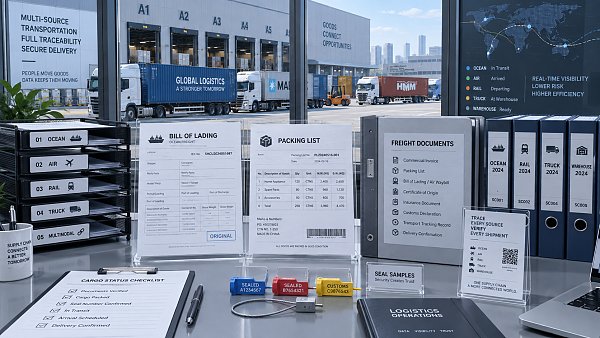
 Sep 19, 2026When can a supply chain LLM reduce time spent finding shipment updates?Supply chain LLMs can cut shipment-update search time by connecting carrier events, ERP data, and documents—giving teams traceable answers and faster exception response.
 Sep 18, 2026How industrial monitoring equipment helps prevent unplanned downtimeIndustrial monitoring equipment helps teams detect early asset issues, prioritize maintenance, and prevent costly unplanned downtime. Explore practical strategies for reliable operations.
 Sep 17, 2026What next-gen harmonic drive research means for robot joint accuracyNext-gen harmonic drive research reveals how backlash, stiffness, thermal drift, and sensing shape robot joint accuracy. Explore smarter validation strategies.
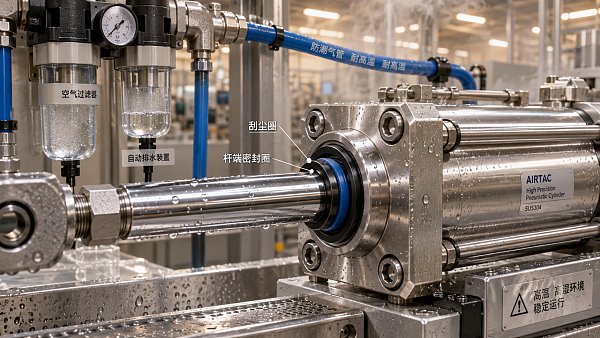
 Sep 16, 2026How Southeast Asian climates affect cylinder seal frictionCylinder seal friction Southeast Asia: learn how humidity, heat, monsoons, and contamination affect motion stability, wear, and seal selection.
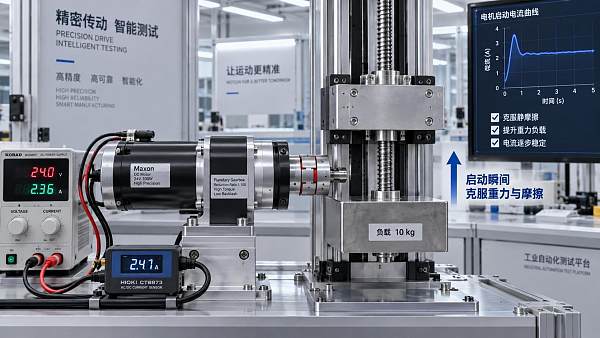
 Sep 15, 2026How to size DC gear motors for the required starting torqueGear motors DC sizing made practical: calculate starting torque, account for friction, gravity, inertia and voltage drop, then select a reliable motor with confidence.
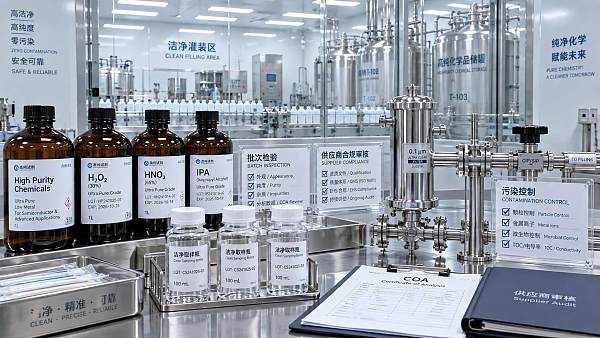
 Sep 14, 2026How to verify high purity chemicals compliance before supplier approvalHigh purity chemicals compliance: learn how to verify supplier quality systems, CoAs, traceability, testing, and change control before approval.
 Sep 13, 2026What permits are needed to operate mapping drones in Europe?Mapping drones Europe: discover the permits, EASA categories, airspace approvals, site access, and GDPR checks needed for compliant aerial surveys.
 Sep 12, 2026What lead time should I expect for automatic transmission components? Planetary Gearboxes delivery forecasting for OEM planningWhat lead time should I expect for automatic transmission components? Get dynamic, AI-powered planetary gearbox delivery forecasting—designed for OEMs building next-gen hybrid & commercial powertrains.
 Sep 12, 2026Can polyamide replace metal in load-bearing components? Polymer Pulse structural performance data for 2026 applicationsCan polyamide replace metal in load-bearing components? Discover Polymer Pulse’s 2026 structural data—real-world performance, weight savings, and reliability breakthroughs.
 Sep 12, 2026How to handle a power electronics warranty claim: Harmonic Reducers documentation and escalation pathHow do I handle a power electronics warranty claim? Get a fast, intelligent, evidence-driven resolution for harmonic reducers—no bureaucracy, just precision diagnostics and real-time escalation.
 Sep 12, 2026Which motion control specifications matter most before purchase? Torque Logic selection criteria for automation engineersWhich motion control specifications are most important before purchase? Discover Torque Logic—the 4 non-negotiable, AI-aligned criteria that cut TCO by 27–41% and boost motion system availability to 99.992%.
 Sep 13, 2026Is agentic AI reliable enough for supplier screening? Supply Chain LLM validation framework for procurement teamsIs agentic AI reliable enough for supplier screening? Discover a rigorous LLM validation framework built for procurement teams—grounded in material traceability, regulatory compliance, and real-world operational constraints.
 Sep 14, 2026How to maintain edge AI systems after deployment: Predictive Maint AI operational protocols for field techniciansHow do I maintain edge AI systems after deployment? Discover predictive, physics-aware operational protocols designed for real-world field technicians—sustaining intelligence where silicon meets steel.
 Sep 15, 2026What compliance documents must a bioplastics supplier provide? Bio-Plastics regulatory checklist for procurementWhat compliance documents should a bioplastics supplier provide? Get our actionable regulatory checklist for food, medical & EU-bound applications.
 Sep 16, 2026How to prevent PET film defects during production: Barrier Films process control best practicesHow can I prevent PET film defects during production? Discover physics-driven barrier film process control—thermal precision, dynamic tension management & surface energy optimization.
 Sep 17, 2026Are thermoplastics suitable for long-term outdoor use? Engineering Resins durability assessment in 2026 UV/weather exposureAre thermoplastics suitable for long-term outdoor use? Discover 2026’s engineering resin durability insights — UV/weather resistance ranked, tested & actionable.
 Sep 18, 2026What to do when a servo motor fails during production: A Servo Actuators troubleshooting guide for maintenance teamsWhat should I do if a servo motor fails during production? Get a field-tested, AI-aware troubleshooting guide for maintenance teams—minimize downtime, maximize OEE.
 Sep 12, 2026How to compare wholesale party supplies by minimum order valueCompare wholesale party supplies by minimum order value, freight, SKU flexibility, and stock risk to choose suppliers that protect margins and simplify replenishment.
 Sep 11, 2026How proportional solenoid linearity affects precision motion controlProportional solenoid linearity directly affects precision motion control, valve metering, stability, and calibration. Learn how to evaluate performance for reliable automation.
 Sep 10, 2026When does supplier information platform automation reduce onboarding delays?Supplier information platform automation reduces onboarding delays by streamlining data collection, routing, renewals, and compliance checks—without replacing expert technical review.
 Sep 09, 2026How to size robotic motion systems for AMR payload changesRobotic motion systems for AMR payload changes: learn how to size motors, wheels, gearing, traction, and controls for safer, reliable performance.
 Sep 08, 2026How to perform a cylinder rod buckling calculation for long strokesCylinder rod buckling calculation made practical: learn how to assess effective length, end conditions, rod stiffness, load forces, and safety margins for reliable long-stroke cylinder design.
 Sep 07, 2026How to estimate the cost of industrial mechanical components before orderingIndustrial mechanical components cost: learn how to estimate material, machining, tooling, inspection, logistics, and hidden expenses before ordering. Compare quotes confidently and reduce sourcing risk.
 Sep 07, 2026What Is a Product Standards Database Used For?Product standards database guide: learn how to compare requirements, verify revisions, control specifications, and reduce compliance risks across design, sourcing, and production.